Follow Us on Google
From Juliana Taiwo-Obalonye, Abuja
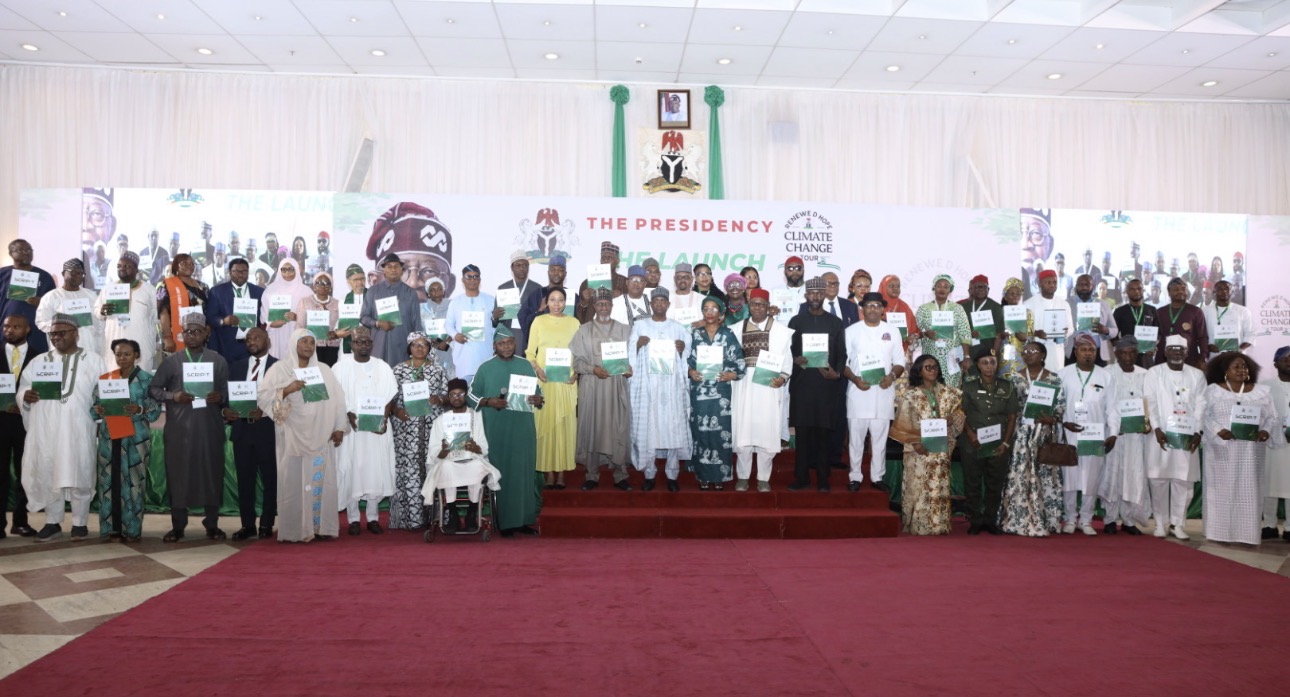
President Bola Tinubu launched the Renewed Hope Climate Change Awareness Tour (REHCCAT) on Tuesday, kicking off a nationwide push for climate resilience and sustainable development.
Represented by Environment Minister Balarabe Abbas Lawal at State House Conference Centre, venue of the event, the President urged governors, private sector leaders, and stakeholders to lead Nigeria’s shift to low-carbon growth. He stated,
“Today we launch a movement, the Renewed Hope Climate Change Awareness Tour, it is more than a program of events across our state, it is a national call to action, a call to innovation and opportunity.
“Climate change is no longer a distant focus. It is here. It affects our farmers in the north who are facing encroachment of the drought. It affects our coastal communities in the south, who are confronted with erosion and flooding across the country. It affects our businesses, management of energy costs and supply chain disruption and it affects our young people whose future depends on the choices we make today.
“Let me be clear. Climate change is not only about risk. It’s about opportunity, Nigeria stands at a defining moment in history. The global transition to low-carbon development is accelerating. Capital is shifting. Markets are evolving. Technology is transforming industries. And the nations that position themselves wisely today will lead tomorrow. We intend to be one of those nations.
“Through this tour, we will take climate awareness beyond conference halls into communities. We will engage governors and traditional rulers. We will work with students, innovators, entrepreneurs, farmers and financial institutions. We will identify bankable projects, we will unlock local solutions and we will strengthen Nigeria’s capacity to mobilize climate finance on scale.”
Tinubu stressed that Nationally Determined Contributions demand real action backed by investment, saying, “But commitments must be matched with action. And action must be supported by investment. This tour helps bridge that gap. We will use it to catalyze project pipelines, at the sub-national level, we will also use it to deepen our understanding of carbon markets and green finance.
“We will use it to mobilise partnerships between the public and the private sector. And we will use it to inspire a new generation of climate leaders.
“To our governors, we are set as the engine of climate resilience and green growth. To our private sector, the future economy will reward those who innovate boldly and invest responsibly. To our development partners, Nigeria is ready to collaborate with transparency, ambition and accountability.
“As our young people, this transition belongs to you. Your ideas, your technology, your entrepreneurship will shape the Nigeria of tomorrow. This aligns with our Renewed Hope Agenda. An agenda that recognizes that sustainable development, energy security, food security and economic growth are not competing priorities. There are interconnected pillars of national prosperity. Climate finance is not a charity. It is a strategic investment.”
He added that “Climate resilience is not optional, it is national security and climate leadership is not a budget. It is a result we accept with confidence. As we plan this tour today, let us know that Nigeria chooses leadership over hesitation.”
Minister Lawal, represented by Director of Forestry Halima Bawa, called for stronger state climate governance through rankings, reforms, and collaborations to position Nigeria as Africa’s climate leader. He noted impacts from northern desertification to southern erosion and erratic rains, stating,
“Climate change is no longer an abstract global discussion. It is here with us, from desert encroachment in the North, to flooding across our riverine communities, to coastal erosion in the South, and changing rainfall patterns affecting our farmers nationwide, showing the impacts are real, and actions, urgent.
“Nigeria has responded with decisive leadership. The enactment of the Climate Change Act 2021 established a historic legal framework for coordinated climate governance, carbon budgeting, and a pathway to net-zero emissions by 2060. It institutionalized climate action across all sectors in the country, signaled Nigeria’s solemnity under the Paris Agreement. However, climate governance must move beyond the federal level, it must be domesticated at the subnational and grass root levels levels.”
The Ministry has partnered with states to appoint climate directors and desks. Lawal continued, “Climate future lies with the youth, through the Eco-School Initiative, we are mainstreaming environmental education and climate awareness in schools across States in Nigeria.
“Furthermore, the Ministry implemented the Youth Climate Innovation Hub, a platform designed to harness climate innovative ideas and continued interface with young people for the implementation of practical climate solutions.
“The Uni-Go-Green Initiative aims to empower young Nigerians with skills and mentorship in green entrepreneurship, climate technology, renewable energy, sustainable agriculture, circular economy solutions, and digital climate services. We want Nigerian youths not only to advocate for climate action but also to build businesses and careers around it.”
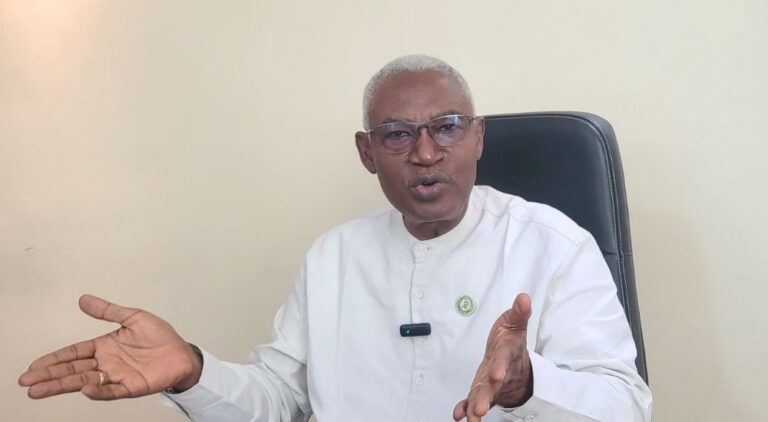
REHCCAT Committee Chairman Yussuf Olatunji Kelani described the tour as a movement for knowledge-sharing, subnational alignment, and investment mobilization. He stated, “The Renewed Hope Climate Change Awareness Tour was conceived to do three critical things: Democratize climate knowledge — ensuring that citizens understand both the risks and the opportunities of climate action. Bridge federal and subnational action — aligning state-level implementation with Nigeria’s Nationally Determined Contributions (NDCs), Energy Transition Plan, and National Adaptation Plan.
“Mobilise partnerships and investment — unlocking innovation, climate finance, green jobs, and private sector participation. This Tour is not about speeches alone. It is about activation.
“Following today’s historic launch, REHCCAT will proceed across Nigeria’s six geopolitical zones, beginning with two strategic states per zone in the first phase. In each zone, the Tour will convene: High-Level Policy Dialogues with Governors, Commissioners, and State Legislatures; Town Hall Meetings bringing together youth, women, traditional institutions, farmers, artisans, private sector actors, and community leaders; Technical Roundtables with development partners and implementing agencies; Innovation Showcases highlighting clean energy, methane abatement, waste-to-value, climate-smart agriculture, and green enterprise solutions.”
Guest speaker, Babajide Alo advocated community-led adaptation using local knowledge. He stated, “To secure our Climate future, develop our economy and improve our resilience, built on sustainable development, we should therefore revisit our priorities and living styles, imboibe reesponsible cpnsumption and production, enforcement of reduction of carbon footprints in all sectors in line with the severity of emerging Climate Change challenges.
“We need to drastically improve our subnationals -the States – climate action and climate readiness by improving their capacities. Increase climate education and awareness at the subnational level, especially at the grassroots and empower our Local Governments and communities at the Subnational levels and enhance their access to resources and capacity to implement. Through that we, we can foster sustainable, adaptive, and prosperous communities.”
Alo added, “Climate policies should be designed with the local context in mind, involving local communities in the decision-making especially as Climate impacts can change over time, and mapping at the subnational level allows for continuous monitoring and resTRATEGISING of policies and priorities Continuous monitoring and evaluation is crucial to address emerging challenges.
“We should strengthen our enforcement mechanisms through partnerships with the public, private sectors and NGOs
“Empowering communities is not only a strategy for survival; it is a proactive way to build a more equitable and sustainable world, ensuring that, as the climate changes, livelihoods and ecosystems are secured for future generations.”
Tinubu also named Ibrahim Shelleng as Senior Special Assistant on Climate Change and Olamide Fagbuji as Special Assistant on Climate Change Financing, both co-chairing the committee with Kelani.
Other News