Follow Us on Google
• Sanwo-Olu says financial centre must outlive political administrations
• Finance Minister: LIFC can accelerate Nigeria’s $1tr economy drive
• Says centre must be built around Nigeria’s laws
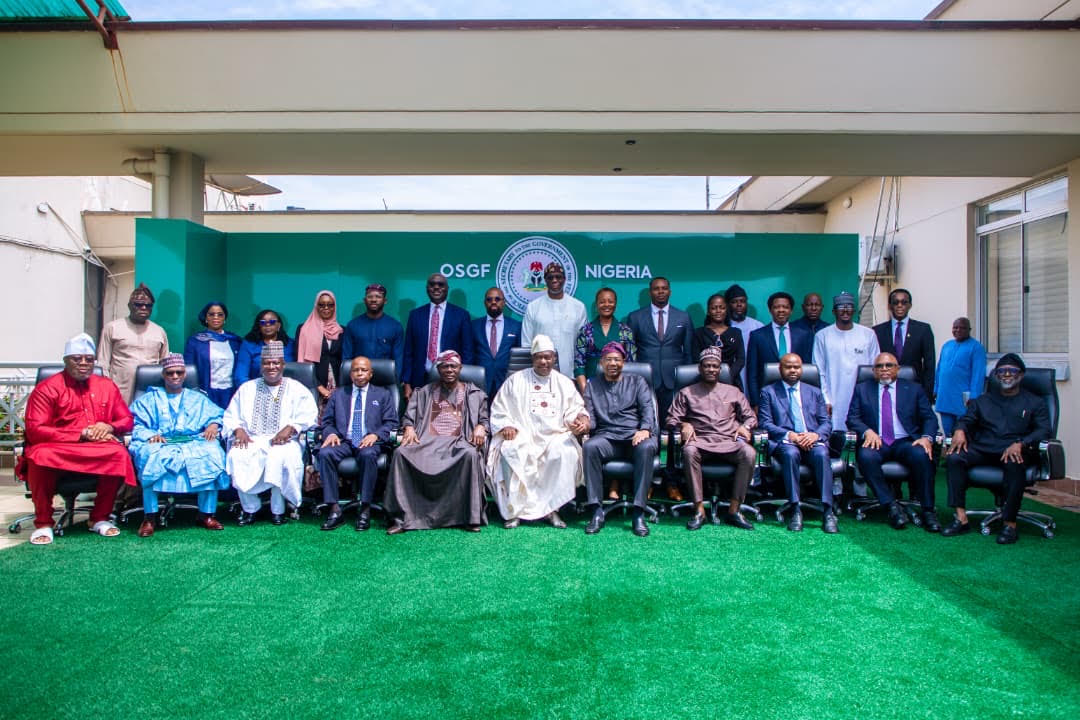
Federal Government on Wednesday formally activated President Bola Tinubu’s directive to establish the Lagos International Financial Centre (LIFC), inaugurating a National Steering Committee to drive what officials described as a major national strategy to attract global capital, deepen Nigeria’s financial markets and strengthen the country’s position as Africa’s investment hub.
Secretary to the Government of the Federation, George Akume, who inaugurated the committee in Abuja, said the LIFC had received presidential endorsement as a strategic national economic priority, with his office directed to coordinate Federal Government support for its implementation.
The inauguration brought together the Federal Government, Lagos State, key financial and economic regulators and private-sector stakeholders, with the promoters targeting a soft launch of the proposed financial centre in the first quarter of 2027.
Akume said the inauguration of the committee marked “an important step” towards establishing a globally competitive financial centre that would enhance Nigeria’s position as a leading financial and investment destination in Africa.
He said the committee’s inaugural meeting marks “an important step towards advancing the establishment of a globally competitive financial centre that will enhance Nigeria’s position as a leading financial and investment hub in Africa.”
He said the initiative was designed to deepen Nigeria’s capital markets, attract domestic and international investment, promote financial innovation and strengthen the country’s financial ecosystem.
“The establishment of the LIFC is a strategic initiative designed to deepen Nigeria’s capital markets, attract domestic and international investment, promote financial innovation, strengthen our financial ecosystem and contribute to sustainable economic growth,” the SGF said.
“It also presents an opportunity to leverage Lagos’ strategic position and Nigeria’s economic potential to create a financial centre of international standing.”
Akume said Tinubu had personally endorsed the initiative and directed the Office of the Secretary to the Government of the Federation to coordinate Federal Government support.
“His Excellency, Bola Ahmed Tinubu, President and Commander-in-Chief of the Armed Forces of the Federal Republic of Nigeria, has endorsed the LIFC Initiative as a strategic national economic priority and directed my Office to coordinate Federal Government support for its implementation,” he said.
According to him, the inauguration was the practical implementation of that presidential directive.
“The inauguration of this Committee is, therefore, a practical step towards giving effect to the Presidential directive,” Akume said.
“The Committee brings together relevant Federal Government institutions, the Lagos State Government and other key stakeholders to ensure effective coordination and collaboration.”
The SGF charged members to urgently address policy, legal, regulatory, institutional and infrastructure issues that could affect the successful establishment of the centre.
“I urge members to approach this assignment with commitment and urgency, particularly in addressing policy, legal, regulatory, institutional and infrastructure issues that may affect the successful establishment and operation of the Centre,” he said.
Akume stressed that the project could only succeed through a coordinated national effort.
“The success of the LIFC will depend on a strong whole-of-government approach and effective partnership between the Federal Government, Lagos State Government and the private sector,” he said.
“We must therefore work collectively to create a globally competitive financial ecosystem that enhances Nigeria’s attractiveness to investors and strengthens our position in the global financial system.”
He assured members of the committee that his office would provide the necessary support to enable them to carry out their assignment.
“I assure you of the full support of the Office of the Secretary to the Government of the Federation in facilitating the discharge of your mandate,” Akume said.
The committee is chaired by the SGF, with Lagos State Governor Babajide Sanwo-Olu serving as co-chair.
Sanwo-Olu said the initiative represented the type of institution leaders should leave behind after leaving office.
The governor, who said he had less than 265 days remaining in office, declared that he would leave office on May 29, 2027, insisting that his administration was focused on creating institutions capable of surviving political transitions.
“I have less than 265 days to go as Governor. No matter how good I may be, or how many people call me their Governor, on May 29, 2027, I will take a bow. I do not intend to stay one day longer,” Sanwo-Olu said.
“But the pride of any leader is to leave behind institutions that will outlive them—to leave policies, projects and programmes that will give direction long after they have left office.
“Today is one of those days.”
He said the LIFC was neither about his administration nor Lagos alone.
The governor described the proposed centre as “strategic national infrastructure,” arguing that international financial centres were deliberate instruments used by countries to attract capital and connect their economies to global markets.
“The Lagos International Financial Centre is strategic national infrastructure,” Sanwo-Olu declared.
“Let me repeat that: an International Financial Centre is strategic national infrastructure.”
According to him, successful financial centres were built on trust, regulatory quality, legal certainty and international connectivity.
“Capital goes where it feels safe, where it can grow and where there is confidence in the environment,” he said.
Sanwo-Olu also sought to dispel concerns about the nature of the proposed centre.
“It is not a tax haven. It is not a place for regulatory arbitrage or bypassing compliance requirements. It is not a safe haven for illicit funds,” he said.
“Rather, it is a trusted platform through which nations compete for capital.”
He said the initiative was crucial to Nigeria’s ambition of achieving a $1 trillion economy.
“You do not set such a target and simply go to sleep. There must be intentionality,” he said.
“You must run a marathon with the urgency and discipline of a sprinter.”
Chairman of EnterpriseNGR, Aigboje Aig-Imoukhuede, on his part, said Nigeria’s ambition to establish the Lagos International Financial Centre (LIFC) would succeed only if the country deliberately builds a globally trusted ecosystem capable of attracting, retaining and deploying international capital.
He said capital was highly mobile and would only flow to jurisdictions where investors had confidence in the safety, growth prospects and institutional strength of the environment.
“Nigeria is powerful, and Nigeria needs capital,” he said.
“Capital is perhaps the most discerning visitor that I know. I call it a visitor because it can come and stay permanently, but it can also leave very quickly.
“Capital goes where it feels safe. It goes where it believes it can grow. It goes where it feels comfortable.”
He said the proposed centre was designed to create the conditions that would make Nigeria more competitive in the global race for investment.
Aig-Imoukhuede said the project was the product of almost two years of consultations, fact-finding and consensus-building involving the Federal Government, Lagos State, the private sector and international partners.
“I have not seen many national opportunities where technocrats and very senior government officials have come together in such a coordinated, whole-of-government manner,” he said.
“This process has demonstrated strong public-private sector collaboration. It has demonstrated sovereign and sub-national collaboration. It has brought together indigenous Nigerians and international partners.
“I believe this will become a case study that will be written about in history as an example of how Nigeria can truly work.”
He said significant progress had already been made, with the strategic blueprint completed and KPMG engaged to develop the detailed business plan, institutional operating model and implementation economics for the proposed financial centre.
“We have completed the strategic blueprint. The vision, mission and broad planning have been established,” he said.
“Right now, KPMG has been engaged to develop a detailed business plan, an institutional operating model and the implementation economics for the project.”
He added that capacity-building programmes were underway, while federal and state legislative instruments were being drafted following a legal and regulatory gap review.
Aig-Imoukhuede said the success of the Lagos International Financial Centre would depend on four critical areas that must guide the work of government institutions, regulators and private-sector stakeholders.
The first, he said, was legal and regulatory certainty.
Investors, he stressed, must have confidence that the rules governing their investments are clear, predictable and consistently enforced.
The second area is regulatory quality, which requires Nigerian institutions to operate at standards capable of competing with leading global financial centres.
The third is institutional responsiveness, which he said was critical to ensuring that investors and businesses could interact efficiently with public institutions.
The fourth area is commercial depth, which requires Nigeria to build deeper markets, stronger financial products and a more sophisticated ecosystem capable of supporting major investments.
According to him, Nigeria already possesses several strong institutions, but the challenge is ensuring that they work together in a manner that inspires confidence among global investors.
“At the level of individual institutions, several Nigerian institutions—particularly federal institutions—already demonstrate many of these qualities,” he said.
“However, the collective interaction and coordination among these institutions do not always reinforce these qualities in the mind of an investor.
“That is what this project must address.”
He said the proposed centre would bring together the Central Bank of Nigeria, Securities and Exchange Commission, Ministry of Finance, Nigeria Revenue Service, Ministries of Justice, Foreign Affairs, Industry and Trade, Interior and digital infrastructure institutions.
“Every institution holds a critical piece of the Lagos International Financial Centre,” Aig-Imoukhuede said.
“The question is how we coordinate them and ensure that they interact effectively at the level required by global investors.”
The EnterpriseNGR chairman also rejected the notion that the project would benefit Lagos alone, describing it as a national assignment whose economic gains would spread across the country.
“This is a national assignment. The benefits of this project will go far beyond Lagos,” he said.
“Pools of capital may enter Nigeria through Lagos, but I do not see them remaining only in Lagos.
“I see capital coming in through Lagos and flowing into projects across the country and across multiple sectors—including technology, agriculture and many other areas of the economy.”
Aig-Imoukhuede said the LIFC would create an environment in which existing institutions, markets and economic initiatives could work together.
“What an International Financial Centre does is connect all these elements so that they can work together,” he said.
“The result is that the whole becomes much greater than the sum of its individual parts.”
He said the initiative would create high-value jobs, strengthen the formal economy and contribute to higher tax revenues, national income and economic growth.
Aig-Imoukhuede disclosed that the project was now approaching its third and final phase before its launch, with promoters targeting the first quarter of 2027 for a soft launch.
“We are now approaching the third and final phase before the launch,” he said.
“Our desire is to have the launch in the first quarter of 2027.
“It will be a globally anticipated event.”
Attorney-General of the Federation and Minister of Justice, Lateef Fagbemi, SAN, said legal certainty would be central to the success of the proposed financial centre.
“When an investor is considering where to invest, one of the first things they ask about is the legal regime,” Fagbemi said.
“Beyond every other consideration, investors want to know the nature and certainty of the laws governing their investments. That gives them confidence and assurance.”
He welcomed Sanwo-Olu’s assurance that the centre would not become a haven for illicit financial flows.
“It is heartwarming to note… that this initiative is not intended to become a safe haven for illicit financial flows,” the AGF said.
“We must ensure that the initiative is properly understood and that we do not expose ourselves to unnecessary suspicion or sabotage.”
Fagbemi assured the committee that the Justice Ministry would support the development of the necessary legal framework.
“Our laws are substantially up to date, although they may require adjustments and updates as the need arises,” he said.
Other News
“We will not shirk our responsibilities in ensuring that the necessary legal framework is put in place.”
He later called for the immediate identification of laws requiring amendment, enhancement or repeal.
“We need to immediately swing into action and identify the areas that require adjustment, enhancement or repeal,” Fagbemi said.
“Nigeria operates a federal system that recognises the constitutional powers and rights of the sub-nationals to make laws.”
Minister of Industry, Trade and Investment, Jumoke Oduwole, described the proposed LIFC as a catalytic economic project that could accelerate Nigeria’s journey towards a $1 trillion economy, saying the target could even be achieved ahead of the 2030 deadline.
She said the proposed financial centre could create the enabling environment required to attract and retain global capital in Nigeria, with Lagos serving as a critical gateway.
“As the minister responsible for the investment mandate, I believe this is a catalytic project that can hold the Nigerian economy in good stead,” Oduwole said.
“Indeed, the $1 trillion economy target for 2030, as set by Mr President under the Renewed Hope Agenda, could potentially be achieved even before then with interventions such as this.”
She said the success of the initiative would depend on the ability of government institutions to work together to create an environment that gives investors confidence.
“When we create an enabling environment—and everyone knows how passionate I am about that—it can deliver investor confidence and create an environment where capital can be domiciled here in Nigeria, with Lagos State serving as an important entry point,” she said.
Oduwole noted that Lagos was already one of Africa’s biggest economies and was well positioned to become a leading international financial centre on the continent.
“Lagos State is already one of the leading economies in Africa in terms of size and GDP. Therefore, it is only fitting that we seek to position it as a leading international financial centre on the continent,” she said.
However, the minister cautioned that establishing the financial centre would require considerable work, coordination and alignment among government institutions and regulators.
“One thing I would say, however, is that while the idea sounds attractive and perhaps simplistic, the presentations by Mr Governor and Mr Aig-Imoukhuede have also made it clear that this is a project that will require considerable work, coordination and alignment,” she said.
“But Mr President has caught the vision and he supports it.”
She urged ministries, departments and agencies to embrace the initiative and work collectively towards its implementation.
“Therefore, with the leadership of the Secretary to the Government of the Federation, I urge all ministries, departments and agencies to key into the initiative,” Oduwole said.
Drawing from her experience leading Ease of Doing Business reforms, the minister said government agencies must be prepared to review existing procedures and embrace potentially difficult changes.
“Change is probably one of the most difficult things to achieve,” she said.
“Having led Ease of Doing Business interventions for many years, I understand the challenge involved in examining existing processes and determining what needs to change.”
According to her, establishing an internationally competitive financial centre could require Nigeria to develop new processes, legislation and regulations different from those operating elsewhere in the country.
“This financial centre will require us to look carefully at our processes,” she said.
“It may require separate processes, separate legislation and separate regulations from those that currently apply across the rest of the country.
“That is something we should be prepared to do.”
Oduwole said other countries had successfully adopted similar models and expressed confidence that Nigeria could achieve the same result through deliberate planning and effective coordination.
“Other countries have successfully implemented similar models,” she said.
“If we are organised and deliberate, this is a system that can work very well for Nigeria.”
She urged members of the Steering Committee to approach the technical phase of the project with openness and a determination to deliver tangible benefits for Nigerians.
“Therefore, as we move into the technical phase, I urge everyone to come with an open mind and to be prepared to deliver real impact for over 200 million Nigerians,” she said.
The minister also disclosed that President Tinubu had approved a Steering Committee for the establishment of a Digital Free Zone, expected to be the first of its kind in Africa.
She said efforts were already underway to ensure that both initiatives complemented each other.
“The President has also approved a Steering Committee for the establishment of a Digital Free Zone, which is expected to be the first of its kind in Africa,” Oduwole said.
“The committee has been given the mandate to develop the necessary framework and ensure its implementation.”
She added that discussions were ongoing to ensure “proper alignment and synergy” between the proposed Digital Free Zone and the Lagos International Financial Centre.
“There are areas where these initiatives can complement one another and address existing asymmetries,” she said.
Oduwole said the alignment of the two initiatives would become increasingly important as the framework for the Lagos International Financial Centre takes shape, particularly in determining its physical and institutional structure.
“So, as we continue to develop the framework, these are areas that should also be properly aligned and synergised,” she said.
Executive Chairman of the Nigeria Revenue Service, Zacch Adedeji, urged the committee to move rapidly from planning into implementation.
“Rather than simply calling this a Steering Committee, we should quickly move towards establishing an Implementation Committee,” Adedeji said.
“We need to begin thinking from execution backwards.”
He said the promoters needed to answer practical questions about what exactly constituted an international financial centre within Nigeria’s legal and constitutional framework.
“When we talk about a Lagos International Financial Centre, what exactly does that mean?” he asked.
“Is it a physical structure? Do we designate a particular geographical area for it? Or is it a digital framework?”
Adedeji warned against simply replicating foreign models.
“That kind of isomorphic mimicry—simply copying a model and ticking boxes—will not work for us,” he said.
“Nigeria has its own peculiar legal and constitutional structure.”
He said legal certainty would be critical to the success of the project.
“If certainty is our number one objective, that certainty can only come when the necessary provisions are clearly established in an Act of Parliament and supported by our constitutional framework,” he said.
Adedeji urged the committee not to wait until every component was completed before beginning implementation.
“We do not need to wait until we have built everything before we begin implementation,” he said.
“We can begin with the smaller and easier components and build gradually.”
The Ministry of Foreign Affairs pledged to deploy Nigeria’s diplomatic network to promote the proposed financial centre internationally.
A representative of the ministry said its support would include diplomatic advocacy, investment diplomacy and partnerships with established international financial centres.
“Our support will include international diplomatic advocacy and promotion, as well as building strategic partnerships with other international financial centres around the world,” the representative said.
“We will also engage in investment diplomacy and bilateral engagements with relevant international organisations.”
The ministry said Nigerian missions abroad would also be mobilised to promote the initiative.
“Our missions abroad will continue to engage with their counterparts and relevant stakeholders across the world in support of this initiative,” the representative said.
The official described the LIFC as a practical platform for translating Nigeria’s economic diplomacy into tangible investments.
“We are particularly pleased that we now have a concrete pipeline through which our economic diplomacy can be translated into reality,” the representative said.
The Minister of Finance and Coordinating Minister of the Economy, Taiwo Oyedele, assured that the ministry would play a critical role in aligning the initiative with Nigeria’s broader macroeconomic and investment reforms.
The Central Bank of Nigeria (CBN) pledged its full support for the proposed Lagos International Financial Centre (LIFC), saying Nigeria must put the necessary economic, legal and regulatory fundamentals in place to attract global capital and achieve its ambition of building a $1 trillion economy.
CBN’s Deputy Governor, Economy Policy Directorate, Philip Ikeazor, said Lagos was naturally positioned to host the initiative because of its longstanding role as Nigeria’s commercial and financial capital.
“Lagos State is naturally positioned as Nigeria’s commercial capital and has occupied that position for a long time,” he said.
“Lagos accounts for a significant proportion of Nigeria’s economic and financial activities, making it the natural location for such an initiative.”
He said Nigeria was also strategically positioned as a growth hub for West Africa and the African continent, adding that recent investment inflows had demonstrated sustained global confidence in the country.
“Investments have continued to come into the country. Even at periods of heightened global uncertainty and geopolitical tensions, investment interest in Nigeria did not disappear,” Philip Ikeazor said.
“That confidence is there. The market believes in us. The global market believes in us.
“What we need to do now is put the necessary fundamentals in place.”
The CBN representative said developing Lagos into an international financial hub would help Nigeria attract long-term capital needed to address its infrastructure deficit and drive economic growth.
“Creating Lagos as an international financial hub… is very important. It will help us attract the kind of capital that can go a long way towards addressing our infrastructure deficit and supporting economic growth,” he said.
“Indeed, it is an integral part of our ambition to build a $1 trillion economy.”
He assured the committee that the CBN was “fully aligned” with the initiative and would deploy an in-house team to work directly with stakeholders to ensure its timely delivery.
However, he stressed that the proposed financial centre must not create opportunities for regulatory arbitrage or increase risks associated with money laundering and terrorism financing.
“One of our major concerns from the beginning has been to ensure that there is no regulatory arbitrage,” he said.
“We must also ensure that the initiative does not create heightened risks relating to anti-money laundering and countering the financing of terrorism.”
He said Nigeria must also address legal and regulatory gaps, particularly in emerging areas such as virtual assets, foreclosure and the speedy resolution of commercial disputes.
“The world is watching,” he said.
“Sometimes, the problem is not necessarily that there is something wrong with the law itself. The issue may be how effectively and efficiently the law is implemented.”
The CBN representative said the necessary reforms should be substantially completed ahead of the proposed first-quarter 2027 launch.
“By then, a significant amount of the necessary work should have been completed, and in the first quarter of 2027, we should essentially be in a position to announce that we are ready to go,” he said.
The National Steering Committee includes the Minister of Finance and Coordinating Minister of the Economy, alongside the Attorney-General of the Federation, Minister of Foreign Affairs, Minister of Interior, Minister of Industry, Trade and Investment, Minister of Communications, Innovation and Digital Economy, Governor of the Central Bank of Nigeria, Director-General of the Securities and Exchange Commission and the Executive Chairman of the Nigeria Revenue Service.
Other members include the Chairman of EnterpriseNGR, while the Director of Legal Services in the Office of the SGF, Mrs Kamilatu Kida, and EnterpriseNGR Chief Executive Officer, Ms Obi Obiekwe, will serve as members of the secretariat.
The inauguration of the committee formally moves the Lagos International Financial Centre from years of consultations and planning into a coordinated national implementation phase, with its promoters now racing to position Nigeria as a trusted destination for global capital ahead of the proposed first-quarter 2027 launch.