Follow Us on Google
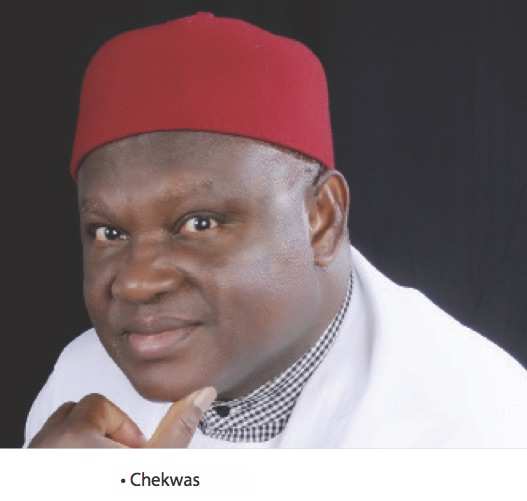
…Urges president to learn from Buhari’s mistakes
By Daniel Kanu
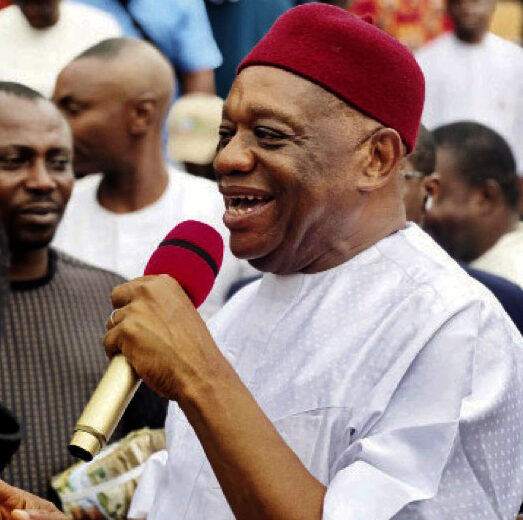
Chief Chekwas Okorie has been in the political space for a long tim, thus becoming one of the moving political encyclopedias of Nigeria’s politics that you cannot ignore.
He was the pioneer national chairman of the All Progressive Grand Alliance, APGA. He later founded the United Progressive Party, UPP, and was the national chairman of the party as well as its presidential candidate in the 2015 general elections.
He is today a chieftain of APGA, a party he founded 20 years ago.
He speaks to Sunday Sun on crucial national issues, including the removal of fuel subsidy, the challenge before President Bola Tinubu, blueprint for the national assembly, controversy surrounding the students’ loan act, and the challenge of legitimacy of the Tinubu’s government.
Excerpt:
Let’s begin with the removal of fuel subsidy by President Bola Tinubu and its implication, how do you see it?
Honestly, I think it’s a very bold and courageous step that the president has taken. Many people have known a long time that what was called fuel subsidy was a big scam that deprived Nigerians of important revenue. But the fear has been what we are witnessing now that once it is removed, people will capitalize on it and make life miserable for the people. Now, my own thinking is that this is a necessary sacrifice we have to go through, that we are to endure to pass through the situation. The benefit that will come from fuel subsidy removal will at the end of the day justify the action that has been taken. The distortion in this major revenue earner for the country has been enormous and most times scandalous considering that subsidy is based by consumption of about 60 million litres of petroleum, PMS in particular, every day. Now, within a short time it has dropped to 40 million, and I am sure it will still drop further to a realistic figure in daily consumption. So, you can see the difference between what is being paid for as subsidy and what is being consumed. And the reports available now is that neighbouring countries especially, Niger Republic, Republic of Benin, are even feeling it more than we do. They are the ones receiving these products that are not often available to our people and the people are making so much money out of it. So, I support it and I urge my fellow Nigerians to do so as sacrifice we have to pay for something better ahead. For me, I am also feeling the pinch, I don’t have any government benefit accruing to me to sustain me and my staff and my retinue of dependants. So, I also feel the pain and I know it will not be forever. But I do believe in a few months we will get adjusted to it. What we are witnessing also comes with some kind of self-discipline that many people do over look. People are beginning to make better use of what they have, the fuel they have for their vehicles and for their generators unlike when it was considered affordable commodity. Some of the generators were running even when they were not needed. Some people now park their vehicle and take cheaper public transport to go to where they want to go to. Remember, some of them, before now felt that going with their vehicle was more of a status symbol, but people are being more realistic today. What I will plead with the government also is to endeavour to plough the profit back so that Nigerians will have a relief and feel happy for the sacrifices made. Even in the consumption of electricity people are also becoming disciplined on how not to on our lights when not in use. Nobody leaves their lights on every time again unlike before when people will leave their lights on and go to office and return in the evening and the lights will still be on. Now, you move from one room to another, you switch off the room that you have left, just to conserve energy consumption. People are getting more and more organized and disciplined on how to avoid waste in the use of amenities.
What do you consider as priority task before President Bola Tinubu?
Number one is security. This is because security is the key to every other thing and that is why I am pleased that he did not hesitate to appoint fresh hands to take over the leadership of security establishments and he has been commended for the choices he has made, not only because it is balanced, but it’s a far cry from the nepotistic tendency of his predecessor. They are young men whose track records are verifiable and who have come with greater zeal from all that they have said so far, they are ready to work. What we need to do is to provide them with what is needed to carry out their job. There is the need to look at the security architecture, especially the police to ensure that the issue of state police and community policing is given priority, that in fact, will give every Nigerian a sense of participation in the security of their own environment. Everybody becomes immediate stakeholder of security issues around them and their community. Also the palliatives that they are working out for workers and they should bear in mind that there are so many others who are not under salary, they are not civil servants, so they must also be captured to make life bearable under this excruciating condition. Government should speed up with the palliative issue. He has inherited tremendous challenges especially with the debt profile that we have, but what is happening now is that more revenue will be recorded, at least, with the fuel subsidy removal, so we should not have difficulty to generate revenue to give out palliatives in a meaningful manner, not in any doubtful manner like the issue of the N5, 000 for every vulnerable person that was never, never verifiable. Of course, he is a man that is known to have succeeded in Lagos to plug to a large extent leakage in internally-generated revenue, so we want him to apply the same strategy because there are so many leakages in the system that when you listen to experts like PriceWater and others, they will tell you that Nigeria can generate over N40 trillion from taxes, without having to increase taxes, but just by blocking leakages. And you can ask yourself: what has actually been our annual budget throughout the period of the PDP in power and the President Buhari APC? So, if from plugging the leakages and stopping unnecessary and doubtful waivers the sky will be our limit. It means that monies borrowed to build infrastructure will not have a problem in paying back if what will be generated will be used judiciously. Also to expand the economy the coastal seaports along the coastal lines must be paid adequate attention. The revenue that is supposed to come through increased trade through the ports have not been coming, and many people have been lamenting on it. We need to rehabilitate other seaports as part of growing the economy. Road transportation is another area that will help. Infrastructure is key to the development of the country. By the time you tackle insecurity, it will positively reflect on the economy and all other sectors will equally witness positive results. He should not make the mistakes of Buhari, he should avoid ethnic chauvinism.
The National Assembly is through with key principal officers. What blueprint are you expecting from the law makers?
I expect them to take the issue of lawmaking more seriously. The quality of legislation we have seen in the past especially down to the 9th Assembly have not been far-reaching enough to make meaningful impact. There are so many areas requiring serious amendment and review of the provisions. This country is too centralized, in fact, suffocatingly centralized, so it is the duty of the legislature to look at ways and means of working out something better so that the federating units will have the latitude to develop at their own pace.
What the new president has done in the power sector, which will be signed into law is in the right direction, but a lot more needs to be done. Then, this idea of padding of the budget during budget making must be stopped, we don’t want to hear that anything is padded anymore. Also their oversight function must be transparent because what you see in most oversight function is just transactional.
Some appointments have been made by President Tinubu, what is your impression so far?
Well, so far, so good. Actually when the president started with the appointment of his 14-man transition committee, many of us were rattled, we were alarmed that nobody from the Southeast was included in an entire 14-member committee. We felt that if this is a sign of what to expect then there is problem coming. But perhaps, he listened to criticisms because many of us spoke out and I think now that he has started making full appointments I have seen some balance. Let no area, no zone be exempted or shortchanged. In terms of political zones and religion, let there be good balancing. Look, let me tell you, all the ministries or portfolio are not equal. During the first government of President Obasanjo under the PDP, they classified the ministries into A, B, C and so they classified the parastatals, the agencies, so when they were now giving appointments they made sure it went round the political zones in terms of the categories. Throughout the Buhari presidency, category C ministries were the ones reserved for the Southeast. We saw all that but what could anybody do, so he thinks. We could only talk and protest, but he did nothing. But as life is, today he is no longer there. President Tinubu should avoid such discrimination, yes… he should hate discrimination else it will ruin his government. I gave President Buhari a lot of open support, but when it came to the issue of appointments, his choices, I made it also clear that he has divided Nigeria more than any person before him, but when it comes to infrastructure, things that were not happening in the Southeast began to happen in terms of road constructions among others. I did not mince words in commending him too, like the Second Niger Bridge and others, but his appointments were simply horrible. It made Nigerians suspect each other, nobody felt again that the other person is his brother or sister. Ethnic consciousness became deepened under the Buhari administration. So, I will want to see this president promote nationalism and reduce ethnic consciousness by his actions, appointments and in terms of the quality of projects that are sited in different parts of the country. But one thing also that Buhari did well was that he didn’t come cancelling contracts that the PDP government has set up. So, let him follow that line, ensuring that on-going projects are completed.
The students loan act which President Tinubu has signed has continued to receive strong criticisms that the bill is a smokescreen as it is very difficult to access. What is your take on it?
It is something that is long expected. He didn’t submit the bill; it wasn’t his own executive bill, but when it came to the issue of signing he just did it. But nothing stops any person to take it up for further amendment. It was a bill that was passed before he was sworn-in. What I will tell those who are criticizing it is for them to come up with a better way they think it can be done, then they will push it, and come up with amendment bill. The important thing is that the act is now existing. It is like the PIA, Petroleum Industry Act, which the Niger Delta were protesting about. It took several years before it came to existence. It is one of the credits that should be given to Buhari for even signing it. Now what they need to do is to look at the credibility of some of those Acts, including the students loan issue and then come up with further amendments. The good thing is that there is PIA in existence. That the president signed the students loan is commendable, then if there are difficulties, let those difficulties be reflected in the proposal for further amendment.
Most Nigerians still believe that the Tinubu-led government is still lacking legitimacy…?
(Cuts in) Yes, I agree that if you look at the aggregate number of those who did not vote for him, nearly twice the vote that gave him the victory, so it is trite to say that majority of Nigerians did not vote for him to become president, but considering that this is democracy and the way our democracy has designed somebody who will win, what the criteria to meet to win and he has met the criteria. What he has to appreciate is that there is job to do, that job is to win over people who didn’t vote for him to begin to see that after all, even if they didn’t vote for him, he is not disappointing anybody. But he has a lot of work to do in terms of healing the deeply divided nation. But I think the healing process has begun, I commend him for that. Of course, in a democracy you have right to appeal if you feel dissatisfied with the election and that is what his opponents have done. They have democratic right to challenge his election. And that is why they are in court. It is now left for the judiciary to prove or determine who won. Let the judiciary be honest and ensure justice is done in their decision.