Follow Us on Google
The Permanent Secretary, Federal Ministry of Marine and Blue Economy (FMMBE), Mrs Fatima Sugra Tabi’a Mahmood, has reaffirmed the Federal Government’s commitment to supporting the United States Department of Agriculture (USDA) Food for Progress Programme in Nigeria, describing the initiative as a strategic intervention with significant potential to strengthen the country’s fisheries and aquaculture value chain.
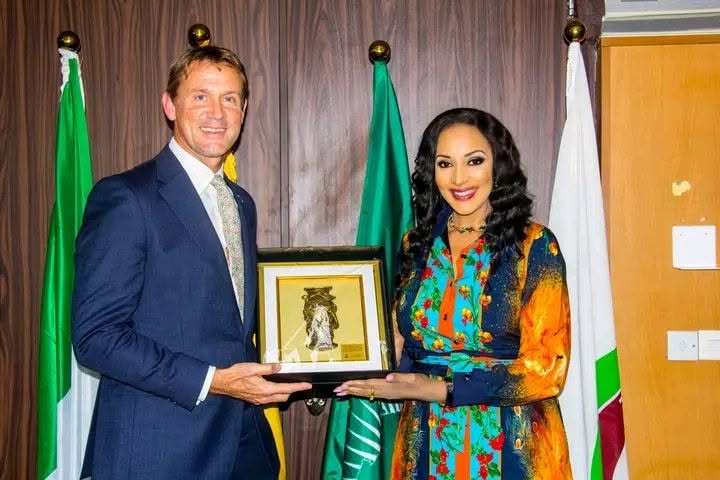
Mahmood stated this when she received a delegation from Partners of the Americas, the implementing partner for the USDA Food for Progress Programme in Nigeria, led by Mr Gustavo Galdo, in Abuja.
She assured the delegation of the Ministry’s readiness to provide the necessary policy guidance, institutional support and coordination to facilitate the effective implementation of the programme.
Furthermore, she emphasised that the Ministry of Marine and Blue Economy is committed to unlocking the vast potential of Nigeria’s blue economy as a catalyst for food security, employment generation, poverty reduction and sustainable economic growth.
According to her, strengthening the fisheries and aquaculture sector is particularly important to Nigeria’s food security objectives, given its potential to increase domestic fish production, improve livelihoods and create opportunities across the entire value chain.
The Permanent Secretary further assured the delegation that the Ministry would work closely with Partners of the Americas and other development partners to ensure that the programme complements existing Federal Government initiatives and delivers tangible and measurable benefits to Nigerian fishers, aquaculture operators, processors, marketers and other value-chain actors.
Other News
Earlier, Mr Gustavo Galdo introduced the USDA Food for Progress Nigeria Programme to the Ministry, outlining its objectives, implementation strategy and expected outcomes, with particular emphasis on improving productivity, strengthening resilience and promoting sustainable growth in the fisheries and aquaculture sector.
Galdo explained that the programme is designed to enhance agricultural productivity and expand trade in developing countries, noting that its focus on fisheries and aquaculture in Nigeria would contribute to improved livelihoods, increased access to protein and the development of more resilient food systems.
He highlighted key areas of intervention, including improved access to quality inputs and finance, strengthened market systems, enhanced productivity and increased private-sector participation across the fisheries and aquaculture value chain.
He also disclosed that baseline studies are currently underway to provide the evidence required to guide targeted interventions and ensure that programme activities respond effectively to identified gaps and opportunities within the sector.
Galdo sought the Ministry’s continued engagement and institutional guidance to ensure that the programme remains aligned with Nigeria’s national priorities and contributes meaningfully to the sustainable development of the fisheries and aquaculture industry.
The meeting also provided an opportunity for both sides to explore areas of collaboration and strengthen alignment with the Ministry’s strategic priorities, particularly in addressing productivity gaps, financing constraints, market access limitations and policy bottlenecks affecting the sustainable growth and competitiveness of Nigeria’s fisheries and aquaculture sector.