Follow Us on Google
By Chinelo Obogo, [email protected]
Since President Bola Tinubu assumed office on May 29, 2023, the nation’s aviation sector has battled severe operational storms, with local carriers flying on broken wings as they struggle to sustain buoyancy.
From scathing double-digit interest rate on loans to scarcity of foreign exchange and decrepit infrastructure, the industry is yet to ‘breathe’ freely as the operating space remains toxic.
While it is fair to state that President Tinubu inherited most of the challenges tormenting the industry, he promised to soothe operators’ pains with appropriate action plans.
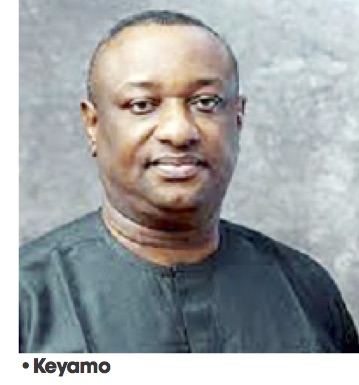
Expectedly, hopes were high when Festus Keyamo assumed office as Nigeria’s Minister of Aviation and Aerospace Development in August 2023 with a five point agenda designed to plant the industry on growth path. They are; strict compliance with national laws, regulations and international operations; improvement and development of infrastructure for passenger convenience; support of the growth and sustenance of local airline businesses; human capacity development and optimisation of revenue generation. Nine months afterwards, aviation stakeholders have given their verdict, insisting that things were worsening rather than improving. They said the aforelisted factors and other challenges continue to hold back the sector.
For the Airline Operators of Nigeria (AON), a major restructuring of the industry to make it run smoother and more efficiently by adopting international best practices while remaining sensitive to local realities is what was demanded when a delegation from the body visited the minister in his Abuja office. They outlined in detail, the problems that have continued to plague the industry, making it one of the toughest operating environments to profitably run an airline business and emphasised the need for improved infrastructure, access to funding and more favorable government policies to create a thriving and competitive aviation sector.
The body highlighted the difficulty airlines face due to high-interest rates and limited access to long-term funding options and proposed establishing a dedicated support line for domestic airlines to access foreign exchange and exploring funding opportunities through international organizations like EXIM Bank.
They also complained about unfavorable government policies that hinder growth, including: Minimum of six aircraft fleet size requirement for scheduled operations which they see as excessive, six-monthly simulator checks for flight crews, which they consider unnecessary and arbitrary maintenance cycles imposed on airlines which they say is wasteful. They then proposes revising these policies in favor of an annual simulator check with additional line proficiency checks and following manufacturers’ recommended maintenance intervals
High taxes, fees, charges
The AON argues that Nigeria has the highest aviation taxes and fees in West Africa and this includes charges levied by the Nigeria Civil Aviation Authority (NCAA), the Federal Airport Authority of Nigeria (FAAN) the Nigeria Airspace Management Agency (NAMA) and Nigerian Customs Service. It proposes reviewing all these charges to ensure their fairness and exploring a unit cost model instead of the current system.
The body also highlighted critical infrastructure issues that affect efficiency and safety, including: Outdated passenger facilitation and baggage handling equipment, lack of proper bird hazard management and Foreign Object Damage (FOD) programs at airports and proposes prioritising the modernisation of passenger handling equipment and implementing bird hazard and FOD programs nationwide.
Missed targets, foreign domination
Giving his assessment of the performance of the minister, aviation security expert, John Ojikutu who spoke to the Daily Sun, painted a picture of an aviation industry struggling to meet its target. He said the industry fell significantly short of passenger traffic goals set in 2000 for 2020 and that there are no signs the goals would be met in 2024.
He also complained about foreign airlines expanding their presence in Nigeria, offering more frequent flights and serving more destinations within the country and said the lack of a national carrier and the demise of domestic airlines has left the market vulnerable to foreign domination. He pointed out that efforts to establish a national airline haven’t been successful, leaving Nigeria without a strong competitor in the global market. Like the AON, Ojikutu argues for a comprehensive restructuring of the industry which includes focusing on efficiency, addressing foreign exchange issues, tackling skill shortages, and limiting political interference.
“We are far behind what we planned in 2000 for 2020. We wanted to carry 20 million passengers in 2020 but we were still below it in 2023 and not likely to make it in this 2024. We planned to have a national carrier, so we can remain in competition in the global market with the foreign airlines but unfortunately the many efforts made have not yielded fruitful results. The foreign airlines are penetrating more into our domestic routes with multiple frequencies and multiple destinations. Not less than 10 domestic airlines that could have been upgraded as national flag carriers have collapsed just as the Nigeria Airways went defunct.
“Rather than concession the airports in compliance with the Act of 2000 Concession, Privatisation and Commercialisation, more airports are been built just as there are increased numbers of new airlines and aircraft even when there had been no significant increase in passengers and cargo traffic. Government has been spending more money as subsidies for the public services in commercial aviation just as it has been giving intervention funds or debts concessions to the private airlines operators. The foreign airlines that contribute more than 70% of our revenue earnings are finding it difficult to repatriate to their home countries their sales earnings. All these have affected the development of the sector and therefore the contribution to the national economy.
“The effect can also be seen in the manpower development for skills acquisition to sustain periodic maintenance of systems infrastructure for safety and security services. Above all these, there are many interferences from political office holders in the administration and management of the agencies that retard the progress of the sector. To move forward, we must go back to the drawing board of the 2007 ministerial and presidential recommendations on the manpower development and infrastructure management. We must discard the idea of national carrier and substitute it with the establishment of two flag carriers one for regional and continental and the other intercontinental.
“Concession all the airports and not only the international ones. Each international airport must go into concessions with four of the domestic airports. However only the non-aeronautical services (passengers terminal buildings, tollgates, car parks, land areas), should go for concessions and the management of aeronautical services particularly the runways and taxiways and their lightings should be excised to NAMA. The foreign airlines should be restricted to Lagos or Abuja and not Lagos and Abuja; but they are free to make a second addition from the alternate geographical area of their first choice,” he said.
Single-digit loans, eradicating bottlenecks for cargo
Speaking to Daily Sun on strategies to make the industry more profitable and vibrant, Amos Akpan proposed securing guaranteed access to long-term funding (7-15 years) with single-digit interest rates for Nigerian airline operators which would make acquiring and maintaining aircraft more affordable. He also calls for aligning the training curriculum at the Nigerian College of Aviation Technology (NCAT) with the specific needs of the industry which would ensure that graduates have the necessary skills to fill current job gaps.
He urged the government to prioritise infrastructure maintenance and upgrades at existing airports and establish performance indicators to track progress and a system to ensure swift intervention and repairs when equipment breaks down. He proposes streamlining cargo export procedures at airports which should involve reducing the number of inspection points, paper documents, and emphasising electronic documentation and screening machines. These, he said should be achieved this within the government’s second year. He then suggests a change in the Federal Airports Authority of Nigeria (FAAN) approach and said instead of the agency viewing itself as “doing favors” to users, it should strive to create a user-friendly airport experience focusing on passenger comfort and satisfaction.
“The government should get a guaranteed means for operators to access funds on single-digit interest rates and a minimum tenor of seven to 15 years and encourage existing Maintenance Repairs and Overhaul Organisations to get more space and equipment to accommodate aircraft operated by Nigerian airlines. I’m referring to the existing MROs that are certified by the Nigerian Civil Aviation Authority (NCAA) and are currently carrying out categories A to C maintenance on aircraft operated by Nigerian airlines.
“Align the training curriculum of the Nigerian College of Aviation Technology (NCAT), Zaria, to meet the manpower needs of the operators in the industry. Determine the personnel and equipment NCAA needs to carry out effective oversight on the operators in the industry and provide them. Too much gap currently exists. NCAA needs capacity to oversee compliance of aviation fuel suppliers, catering suppliers, handling companies, maintenance and training organisations, travel and airfreight agencies, federal and state airport authorities and the airlines.
“This government should include in their key performance indicators, monitoring and ensuring existing infrastructures and facilities are maintained, repaired on time and upgraded. This government should set up a yardstick that keeps these facilities functioning at installed capacity, plus install intervention program for predictable return to service when any equipment breaks down. It should change the concept of the Federal Airport Authority of Nigeria (FAAN) from, “doing favour to airport users”, to “making sure the end users of all their infrastructures and facilities are happy”. FAAN should strive to make the airport friendly for the users.
“This government should adopt consultation with stakeholders, accommodate opinions and be able to sift recommendations to use what fits into their policy agenda. It should set timelines to eliminate the obstacles to cargo export in our airports. Streamline the procedures, reduce number of inspection points, cutoff the papers, emphasise the screening machines and electronic documentation. Target it as their second year achievement.
“By May 2027, I hope to see travelers from West African cities arrive Abuja and Lagos then connect international airlines to other cities in the world because we would have enabled easy transit facilities in Abuja and Lagos airports. I hope to see freighters depart daily from our agro airports because we would have sorted our compliance to international standards. I hope to see Nigerian airlines have flight schedules that link West, Central, East and South Africa,” he said.