Follow Us on Google

By Lawrence Agbo
Thousands of protesters flooded the streets of Geneva on Sunday to oppose the Group of Seven (G7) nations, as world leaders prepared to gather for their annual summit in neighbouring France.
Carrying banners condemning global inequality, imperialism and war, protesters assembled along the shores of Lake Geneva before marching through heavily secured streets under the watch of a large police presence and surveillance helicopters.
Organisers said the protest was intended as a challenge to policies promoted by the world’s most powerful economies, which they accuse of deepening global conflicts, climate crises and economic disparities.
The march attracted a diverse coalition of activists, trade unions and civil society groups advocating for causes ranging from Palestinian rights and climate justice to feminism and anti-capitalist reforms. Demonstrators chanted slogans and waved placards bearing messages such as “No to the G7” and “Abort the G7.”
Swiss police initially estimated attendance at around 7,000 people, but the crowd grew significantly as the march progressed, with observers putting the figure at roughly 15,000 by late afternoon.
Among the protesters was Michel, a 69-year-old retiree carrying a Palestinian flag, who criticised the influence of the G7 on global affairs.
“I’m here because decisions taken by these leaders affect people across the world, yet most of us have no say in them,” he said.
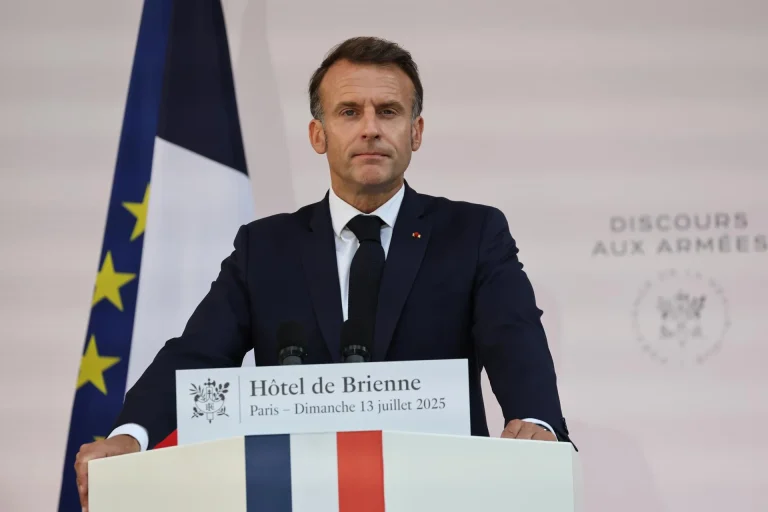
The demonstration comes ahead of the three-day summit in Evian, hosted by French President Emmanuel Macron. Leaders from Britain, Canada, France, Germany, Italy, Japan and the United States are expected to discuss a range of pressing international issues, including the ongoing conflict involving Iran and efforts to stabilise the Middle East.
The gathering will mark one of the first major international meetings since the United States and Israel launched military operations against Iran earlier this year, a development that has heightened geopolitical tensions and complicated diplomatic relations among Western allies.
Security concerns dominated preparations for the summit. Authorities in Geneva and neighbouring French regions remained on high alert, mindful of the violent anti-G8 demonstrations that erupted in the Swiss city in 2003, causing extensive damage and clashes with police.
Other News
Businesses, public institutions and residential buildings along potential protest routes took precautionary measures, boarding up windows and reinforcing entrances. Geneva’s main hospital also established emergency facilities to respond quickly to any major incidents.
Police reported confiscating several items from protesters, including knives, axes, gas canisters and pyrotechnic devices that could potentially be used as weapons.
Despite the heightened security environment, protest organisers insisted the march was intended to remain peaceful.
Laure, a member of the “No to the G7” collective, accused authorities of exaggerating fears surrounding the demonstration.
“The atmosphere created by officials does not reflect reality,” she said, pointing to family-friendly activities organised along the route, including music and entertainment for children.
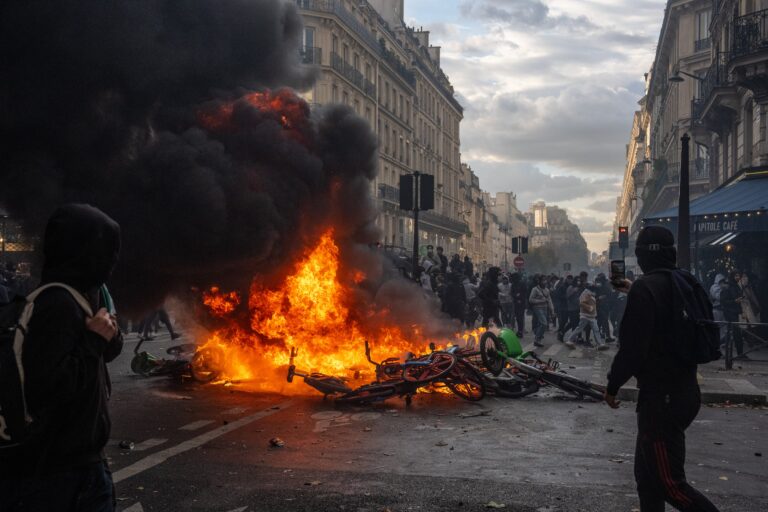
While much of the event remained peaceful, journalists witnessed isolated incidents involving masked protesters. A luxury residential property was briefly targeted after demonstrators breached a protective barrier, while a Tesla vehicle was reportedly set ablaze and vandalised with anti-wealth slogans.
One of the most striking displays during the march was a large effigy of US President Donald Trump, depicted with red paint streaming from his eyes and mouth and holding a cocktail glass marked “Cuba.”
To prevent disruptions in the city centre, Swiss authorities approved a route that kept protesters away from Geneva’s luxury shopping districts and diplomatic quarters.
Meanwhile, planned anti-G7 activities across the border in France were scaled back after restrictions imposed by French authorities led organisers to cancel a proposed counter-summit in Annemasse.
Security operations surrounding the summit remain extensive. Switzerland has mobilised up to 4,000 troops to support local police, while France has deployed nearly 16,000 security personnel, including police officers, soldiers, firefighters and border guards, around Evian and surrounding areas.