Follow Us on Google
From Isaac Anumihe, Abuja
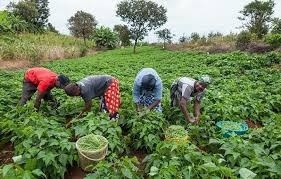
In spite of the herders/ farmers clashes, in the North East and parts of the country, Federal Government, at the weekend, disclosed that Nigeria has over 42 million agricultural households, predominantly small-holder family farms.
Speaking at the 2nd Biannual Meeting of the Agrifood Systems Working Group (ASWG), convened by the Federal Ministry of Agriculture and Food Security in Abuja, Minister of Budget and Economic Planning, Senator Atiku Bagudu described the small-holder farmers as the backbone of the nation’s food system.
He said that supporting these households in becoming more productive and profitable remains critical to ensuring food security, generating surplus production, reducing poverty, and stimulating economic growth.
“The success of Nigeria’s food system depends on empowering our millions of farming households with the support, technology, financing, and market opportunities they need to produce more efficiently and improve their incomes,” he said.
The minister noted that President Ahmed Tinubu’s Renewed Hope Agenda recognises the strategic importance of agriculture citing key institutional reforms, including the establishment of the Federal Ministry of Livestock Development and the integration of fisheries into the Ministry of Marine and Blue Economy, to strengthen specialised interventions across the agricultural value chain.
He also highlighted ongoing government initiatives to de-risk agriculture, including increased support for the National Agricultural Development Fund (NADF) and the National Agricultural Land Development Authority (NALDA), to expand agricultural financing, improve land development, and promote climate-resilient farming practices.
Bagudu emphasised that agriculture must no longer be seen solely as the responsibility of the Ministry of Agriculture and Food Security, describing it as a sector that requires co-ordinated contributions from science, technology, finance, women, youth, research institutions, and the private sector.
He underscored the need to modernise agricultural production through innovation and scientific research, noting that improved technology would increase productivity and profitability and attract greater investment into the sector.
Describing Nigeria’s agricultural sector as predominantly private-sector driven, the minister said government policies are focused on creating an enabling environment that allows farmers and agribusinesses to thrive, while ensuring co-ordinated support across all levels of government.
The minister further called for stronger collaboration among stakeholders to address domestic and global challenges affecting food systems, including rising fertiliser and energy costs driven by international conflicts, as well as trade distortions that threaten local agricultural production through subsidised imports.
While acknowledging that security challenges have affected agricultural productivity in parts of the country, he said significant progress has been made in restoring farming activities in previously affected communities, particularly in the North-East, where improved harvests demonstrate the resilience of Nigerian farmers.
He stressed that sustaining these gains would require ongoing collaboration among government institutions, development partners, the private sector, and farming communities.
The minister expressed confidence that through co-ordinated action and sustained stakeholder engagement, Nigeria is well positioned to build a more resilient, productive, and inclusive agrifood system that can guarantee food security and drive national economic prosperity
Bagudu commended the Minister of Agriculture and Food Security, Senator Abubakar Kyari, for leading the implementation of the Comprehensive Africa Agriculture Development Programme (CAADP) 2026–2035, noting that the continental framework aligns with Nigeria’s long-standing commitment to building a resilient and inclusive food system.
He stressed that although the African Union’s agricultural agenda runs from 2026 to 2035, President Bola Ahmed Tinubu has set an even more ambitious national target to lift Nigerians out of poverty by 2030 through inclusive economic growth, food security, and improved livelihoods.
According to the minister, food security is central to Nigeria’s development agenda and is enshrined in the Constitution, which describes agriculture as a shared responsibility of the Federal, State, and Local Governments within the country’s cooperative federal system.
. ENDS