Follow Us on Google
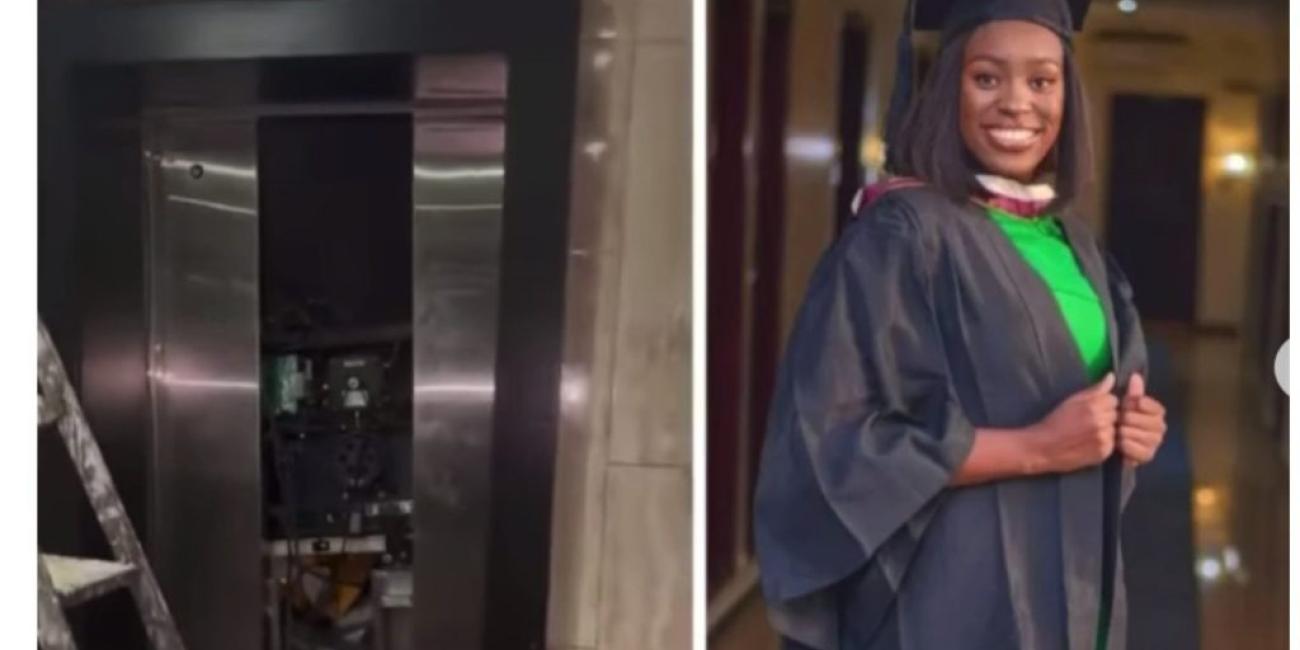
The avoidable death of Vwaere Diaso, a medical doctor, on July 26, 2023 at the General Hospital, Odan, Lagos, on account of a faulty elevator is regrettable. According to reports, the promising young house doctor met her tragic death following injuries sustained in a faulty elevator. The deceased, a graduate of Medicine from the Babcock University, Ilisan Remo, Ogun State, died barely two weeks to the end her internship in the state’s hospital. She was reportedly moving from the 10th floor to the ground floor to pick up her meal from a dispatch rider when the incident occurred. The tragic death elicited public outcry and condemnations.
The Lagos State branch of the medical guild ordered the 100 doctors housed in that quarters to vacate the premises, even as the Lagos chapter of the Nigeria Medical Association (NMA) embarked on indefinite strike following the incident. The Lagos State House of Assembly set up an 8-man ad-hoc committee to investigate the incident. The Lagos State government also instituted a probe panel, while the Delta State Government, where the late medic hailed from, urged the Lagos State government not to sweep the matter under the carpet. Other groups and individuals also flayed the incident. Based on initial findings, the Lagos State Government has sacked and blacklisted the facility managers, while the General Manager of the Infrastructure and Asset Management Agency has reportedly been suspended. However, the government later denied the report.
The installation and maintenance contractors have also been handed over to the police for further investigations and likely prosecution, among others. We commend the government’s measures to avert such incident. But, it must not take the death of a citizen before the government should wake up to its responsibilities.
Beyond the unfortunate death of Vwaere, the government should do an audit to determine the state of the nation’s public infrastructure, including elevators in public buildings. Overtime, Nigerians have grappled with dilapidated infrastructure. Our maintenance culture is so poor. Consequently, most public edifices are allowed to rot on account of inadequate maintenance. It is likely that poorly maintained elevators can be found in many public buildings in Nigeria.
The failure to repair the faulty elevator is condemnable. After all, the primary purpose of government is the security and welfare of the people. The perennial neglect of public facilities is lamentable. Apparently alluding to the culture of neglect, the Chief Medical Director of the University of Calabar Teaching Hospital (UCTH), Thomas Agan, recently stated that 90 per cent of deaths recorded in Nigerian hospitals are due to poor and negligent attitude of health workers.
In 2022, for instance, 96 people were electrocuted, and 74 injured in power related incidents owing to negligence. In the health sector, deaths and disabilities caused by the negligence of doctors, nurses, and other care givers are too many to recount. The public works sector is worst hit with a legion of dilapidated roads and buildings under distress. The fact that elevator accidents kill about 30 people and seriously injure about 1,700 people each year in Nigeria ought to make government to be more pro-active in averting them.
Therefore, we call for the review of the law establishing the Lagos State Safety Commission to cover the monitoring, installation, and maintenance of elevators in all public and private buildings above four floors. The review should ensure that installation and maintenance programmes are covered by law. In addition, an external examination officer must periodically check the state of the elevators and when they are due for maintenance. People should not be allowed to use a faulty elevator.
We call for a thorough investigation of the death of Vwaere Diaso and those found culpable should be sanctioned. It is unfortunate that the crashed elevator was reportedly installed just a few years ago, in 2021, and had already developed such faults that caused the death of a medical doctor. The police should expand its investigative net to rein-in others who may be complicit in the death of the doctor. Let companies and institutions use this case to maintain their elevators and other public facilities.
We commiserate with the family of the deceased, the Nigerian Medical Association, the government and people of Delta and Lagos states. Although no amount of money will bring back the lost life, the Lagos State government should adequately compensate the Diaso family. Besides, Dr. Vwaere Diaso should also be immortalised by the Lagos State government.