Follow Us on Google
•Human connections behind Tinubu’s visit to Brazil
By Juliana Taiwo-Obalonye, who was in Brasilia, Brazil
In the vibrant city of Brasília, where towering modernist architecture intersects with the pulse of diplomatic activity, President Bola Tinubu’s historic state visit to Brazil became a watershed moment not just for two nations but for the many lives touched by this journey. Amid the grand halls where leaders deliberated the future of bilateral cooperation, a deeply human story unfolded—a story of shared histories, cultural ties and resonant similarities that bind Nigeria and Brazil across continents and centuries.
The connection between these two nations is profound. Brazil’s rich Afro-Brazilian culture carries vivid traces of Nigeria’s Yoruba people, whose descendants were forcibly brought across the Atlantic during the dark centuries of the transatlantic slave trade. From religion to music and cuisine, the echoes of Nigeria beat strongly in Brazil’s cultural heart. The rhythms of samba bear resemblance to ancestral Yoruba songs, and Candomblé, a religion practiced widely in Brazil, retains African spiritual roots. In the 19th century, freed Afro-Brazilian slaves, known as the Agudas, returned to West Africa and settled in Lagos, bringing a unique cultural blend infused with Brazilian architectural styles, culinary traditions, and religious practices.
Today, this heritage continues to flourish in both countries, a living testament to a shared past and enduring bond. But it is not only culture that unites Nigeria and Brazil.
Both countries are bent under the tropical sun, blessed with vast natural resources, abundant agricultural potential, and youthful, teeming populations. Nigeria is Africa’s most populous nation; Brazil leads in South America. Both face common challenges in harnessing their resources for widespread development while balancing environmental stewardship and economic needs. Their colonial histories, while under different European powers, left comparable legacies of legal, political, and social structures, shaping their post-independence nations in a similar mould of resilience and resistance.
In this historic visit, President Bola Tinubu and Brazilian President Luiz Inácio Lula da Silva embodied the very similarities of their nations in their personal histories and leadership styles. Both are men forged in the crucible of democratic struggles, having endured political imprisonment for their convictions. Tinubu, a stalwart of Nigerian democracy, and Lula, a champion of Brazil’s working class, share a vision of inclusive development rooted in social justice. Their leadership represents the hopes of millions in two vast nations eager to transform potential into progress.
The state visit was an affirmation of this kinship and shared destiny.
President Tinubu’s state visit to Brazil in August 2025 was a journey of reconnection, ambition, and renewed partnership between two nations separated by an ocean but linked by common history and shared futures.
For the Nigerian delegation, including journalists, the initial encounter with the Portuguese-speaking city brought its own quiet challenge. English, the language of global affairs, was scarcely the everyday tongue here, and navigating the city’s vibrant streets, taxis, and shopping centers became a test of patience and ingenuity.
The initial failure to communicate frightened smaller tasks into near impossibilities, until the lifeline of technology—the Google Translator AI—revealed itself as indispensable. Brazilians met language barriers not with frustration but with a warm willingness to bridge the divide, pulling out their own phones and inviting voice translations or typed messages to facilitate understanding.
This unexpected kindness made the city’s imposing officialdom feel warm and accessible. The translator app was no longer a minor convenience; it became, in the words of the journalist, the best thing since sliced bread.
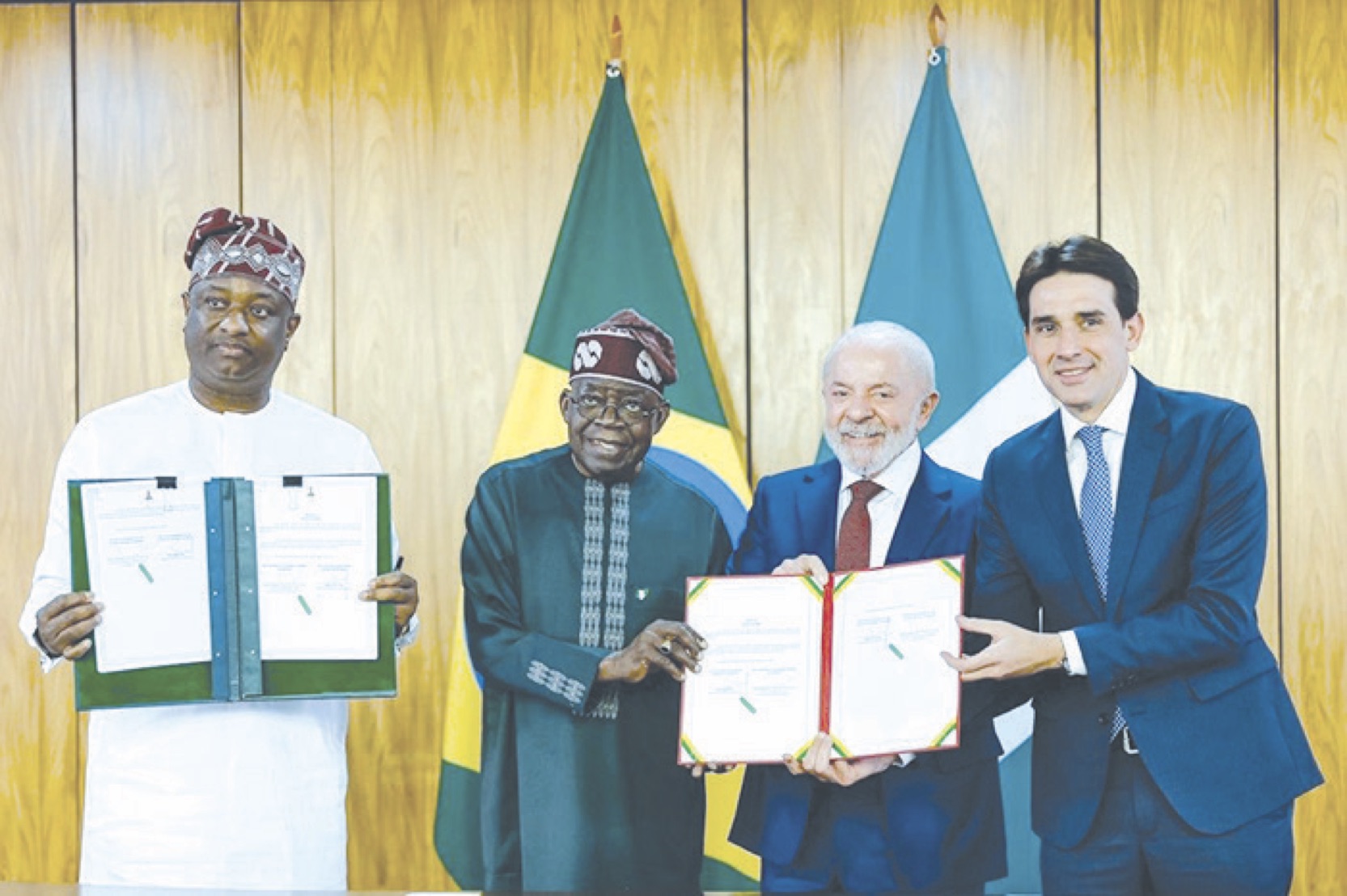
Beyond the human angle of language and cultural exchange, the visit unfolded as a landmark for Nigeria and Brazil’s bilateral relations. President Tinubu, at the grand joint press conference in Brasília alongside Brazilian President Luiz Inácio Lula da Silva, announced the rejuvenation of diplomatic and economic ties that promise to ripple across multiple sectors. Among the most symbolic was the official welcome of Petrobras’s imminent return to Nigeria, signaling restart after the Brazilian state-owned oil giant had paused joint ventures five years prior. “We have the largest gas repository,” Tinubu said emphatically. “So I don’t see why Petrobras doesn’t join as a partner in Nigeria as soon as possible. I appreciate President Lula’s promise that this will be done as soon as possible.” His words resonated as a powerful invitation not only to Petrobras but to Brazilian industry at large to invest in Nigeria’s untapped potential.
President Lula matched that optimism with a reaffirmation of Brazil’s commitment to free trade and cooperative development. “At a time when protectionism and unilateralism have returned, Nigeria and Brazil reaffirm their bet on free trade and productive integration,” he declared. Linking the continents through heritage, commerce, and culture, Lula highlighted sectors ripe for joint exploration, including agriculture, oil and gas, fertilizers, aircraft, and machinery, with a particular emphasis on enhancing direct connectivity through the soon-to-launch Air Peace flights between Lagos and São Paulo—a game-changer poised to shrink geographical and economic distances.
The significance of these direct flights was not lost in the many discussions and interviews alongside the official events. Mr Allen Onyema, CEO of Air Peace, described the Bilateral Air Services Agreement as a milestone, a vital catalyst for unlocking economic symbiosis between Latin America’s largest economy and Africa’s biggest. “Without aviation, it’s very, very difficult for some of these things to be actualized,” Onyema said. He outlined plans to start thrice-weekly flights by November or December 2025, linking Lagos, Rio, and São Paulo, opening new corridors for business, tourism, and cultural exchange previously hampered by prohibitively long travel times exceeding 24 hours through Europe or the Middle East. The new route cuts that travel time to roughly seven hours, setting Nigeria on course to become a pivotal hub for transit and trade across the South Atlantic.
Echoing this, Nigeria’s Minister of Information and National Orientation, Mohammed Idris, unpacked the broad implications of the visit and the agreements signed. He framed the event as a renaissance of strategic partnerships that had lain dormant for too long. More than just bilateral diplomacy, he emphasized, this was a reclaiming of relations that bear the weight of centuries, referencing the painful legacy of 350 years of slavery. Both presidents have committed to not only economic collaboration but to healing and rebuilding social, cultural, and financial ties that have long been fractured.
The walk from symbol to reality, Idris explained, is buoyed by the practical steps taken during the visit. He highlighted the sweeping reforms President Tinubu has championed since taking office—reforms that may have been challenging at first but are now yielding dividends visible in more accessible schooling, streamlined foreign exchange operations, and a crackdown on corruption that has cleared significant barriers previously obstructing investment and economic growth. “Nigeria has changed. We have a destination now. Everyone wants to come to Nigeria,” he said.
Governor Uba Sani of Kaduna State further emphasised the transformative nature of these efforts. Drawing on his firsthand knowledge of the financial sector’s challenges, he praised the president’s bold move to clear nearly $7 billion in forest backlog payments—a move that has drastically reduced investment risk and encouraged capital inflows. “We don’t have any obstacle now,” he said, highlighting the removal of bureaucratic and corrupt impediments that had suffocated trade and business for years. He argued that Nigeria was now on course to emerge as a leading economy in Africa, marked by structural reforms in tax and infrastructure, and geared toward welcoming investors with open arms.
The visit’s impact was also tangible in the defense sector. Nigeria’s Minister of Defence, Mohammed Badaru Abubakar, shared insights into agreements forged on military cooperation, joint training exercises, and enhanced security efforts, particularly in the strategically important Gulf of Guinea. He described plans to develop Nigeria’s domestic defense industry with Brazilian partnership, citing ongoing discussions with Brazilian defense companies. This cooperation marked an ambitious step toward technological advancement and regional security, ensuring the agreements signed would be followed with prompt action and sustained monitoring.
As the ceremonial and policy-driven elements of the visit unfolded, moments of heartfelt connection illuminated the visit’s genuine human dimension. Speaker of the House of Representatives, Tajudeen Abass, captured the emotional gravity of the occasion in his engagement with Nigerians living in Brazil. He reflected on the profound historical connections spanning over 300 years, finding renewed pride and hope in the rekindling of relationships between diaspora communities and their ancestral homelands. Abass spoke with optimism about the foundations laid during the visit, foreseeing a future where Nigeria and Brazil’s partnership would become a generational legacy of cultural and economic prosperity.
Throughout the three-day visit, the dialogue between the two nations was shaped by shared struggles and mutual respect. President Tinubu and President Lula are more than heads of state; both men are democratic warriors who endured imprisonment for their causes, forging a bond in political resilience and vision. Tinubu highlighted this common narrative as a foundation for South-South cooperation, stressing the importance of technology transfers, energy partnerships, and economic diversification as pillars for sustainable development. “Only we can develop our economies to help our sovereignty,” he insisted, placing Nigeria and Africa as pivotal players in the global economic landscape rather than passive recipients.
The visit also marked a critical juncture in scientific collaboration. Nigeria’s Minister of Innovation, Science, and Technology, Geoffrey Nnaji, and his Brazilian counterpart, Luciana Santos, signed an MOU focused on biotechnology, ocean science, digital transformation, and renewable energy. This leap towards innovation-based cooperation underscored the role of science and technology as engines of growth, positioning Nigeria to benefit from Brazil’s mature ecosystem in these fields.
Agricultural development was another cornerstone. The Bank of Agriculture representing Nigeria and Brazil’s National Bank for Economic and Social Development signed agreements to boost agricultural financing and joint projects. With Nigeria’s agricultural sector holding potential estimated at trillions in Naira, these agreements symbolized not just investment but a commitment to food security and rural economic transformation.
To the Nigerian diaspora gathered in Brazil, the visit was more than diplomatic—it was a homecoming and a source of pride. Their presence was a testament to the living links between continents, cultures, and families, woven through difficult histories but now redefined by shared aspirations. The community saw in Tinubu’s leadership a new era of opportunity, a chance to contribute meaningfully to the rebirth of Nigeria’s global stature.
On the sidelines of the visit was cultural and heritage event held in the Legislative Chambers of Brasília on August 25, 2025, Nobel laureate Professor Wole Soyinka praised Nigerian President Tinubu and Brazilian President Lula da Silva for their unwavering commitment to fostering cultural exchange between Africa and its diaspora. Soyinka’s “Return to Africa” project, symbolizing a spiritual and cultural reconnection with African roots, took center stage as a bold initiative tracing the historic transatlantic slave trade route, culminating in the symbolic “Point of No Return” in Badagry, Nigeria.
Soyinka described the project as more than a physical journey. “It is a symbolic Return,” he explained. “Not about physically going back, but spiritually reconnecting with our African heritage, highlighting the resilience and strength of the African people.” He emphasised that the collaboration between Nigeria and Brazil, under the leadership of Presidents Tinubu and Lula, is vital for this renewed cultural alliance.
“Leaders like President Tinubu and President Lula are showing a collaborative effort that is crucial for cultural exchange and mutual understanding,” Soyinka affirmed.
During his visit, Soyinka presented President Lula with his book Mito, Literatura e o Mundo Africano (Myth, Literature, and the African World), a profound exploration of Yoruba mythology and African intellectual traditions, symbolizing the enduring cultural ties binding Africa and Brazil. The presentation underscored the literary and cultural dimension enriching diplomatic relations between the two nations, complementing Tinubu’s bilateral talks with Lula on trade, energy, agriculture, and defense.
Central Bank of Nigeria Governor, Yemi Cardoso celebrated the significance of the visit as well. “This state visit and the signature of MOUs have reinforced the importance of collaboration between Brazil and Nigeria,” Cardoso said. He added, “President Lula mentioned how trade has dropped between us and stressed the urgency to reverse that.” Reflecting on the cultural depth of the gathering, Cardoso remarked, “As an Afro-Brazilian descendant, I take great pride in this moment of connection and mixing of peoples.” He also underlined the practical impact of new direct flights, calling them a “game changer” expected to bolster business and cultural exchanges.
CEO of Nigerians in Diaspora Commission (NIDCOM), Abike Dabiri-Erewa, outlined the significance of the “heritage dialogue and future” symbolized by the historic “Door of Return” project in Lagos. “We are preparing to open the permanent Door of Return on October 18,” she said. “It’s a symbolic gateway connecting the diaspora back to their motherland—historically, spiritually, economically.” Dabiri-Erewa noted the strong African roots among Brazilians, saying, “Many here practice African ancestral religions and bear African names, yet they have never been to the continent.”
She remarked on the Baobab tree in Rio, revered as a symbol of hope for eventual return to Africa. She credited the new direct flights between Brazil and Nigeria launched during Tinubu’s visit as a “game changer” that will boost tourism, socio-economic development, and cultural collaboration between these two globally significant nations with the largest Black populations outside and inside Africa, respectively.
Ifa Muyiwa, a cultural representative tracing African roots within the Brazilian diaspora, expressed deep appreciation for the event, stating, “Having Wole Soyinka here is crucial for us in the diaspora. He teaches us about tradition and the liberation struggle.”
Muyiwa highlighted the need for strengthened connections facilitated by government support: “I believe DNA tests should be provided to all people of African descent, helping us trace our roots more effectively. The planned direct flights to Nigeria will also make it easier for those practicing African religions like Ifa and Candomblé to visit the continent and deepen their spiritual and cultural knowledge.”
The journey ahead is long, yet well-begun. With leaders who understand the trials of democratic struggle and the promise of collaborative progress, Nigeria and Brazil have set forth on a path where technology, culture, and commerce converge. And alongside the grand political theater, the small moments of shared humanity—the generous gesture of a phone screen offering translation, the mutual smiles across language divides—remind us that peace and partnership begin with connection, wherever that connection may be found.
The state visit, with its five striking MOUs, the rekindling of Petrobras’s partnership, the inauguration of direct flights, and commitments in science, agriculture, and defense, was more than one visit. It was an eloquent statement of renewed hope and bold cooperation. For Nigeria, it meant stepping into a new space of influence and opportunity on the global stage. For Brazil, it was a chance to reaffirm its historic bond with Africa and to participate in shaping the continent’s future.