Follow Us on Google
•Rapidly evolving technology to the rescue of Nigeria’s 18 million out-of-school children
By Chinenye Anuforo
At 18, Yemisi Ayoola should be preparing for university admission. Instead, she spends her days learning hairdressing and makeup artistry at a vocational centre in Ilesa, Osun State, hoping the skills she acquires will help her build a future that poverty almost denied her.
Yemisi’s education was interrupted after Junior Secondary School. Her parents could no longer afford to keep her in school.
“It was when I wanted to continue that there was no money,” she recalled. “If government can help me go back to school, I will be happy.”

Her story is one of millions scattered across Nigeria. According to UNICEF, nearly 18 million Nigerian children are currently out of school, the highest number recorded anywhere in the world. Behind the statistics are children and young people whose dreams have been interrupted by poverty, family circumstances, insecurity, cultural barriers and lack of access to educational opportunities.
In an era increasingly driven by technology and artificial intelligence, governments, development agencies and education stakeholders are now exploring whether digital learning platforms and AI-powered tools can help reconnect many of these children to learning and skills development.

The question is particularly relevant in Osun State, where nearly 297,000 children are estimated to be out of school, the highest rate in the South-West region.
One place attempting to provide answers is the Princess Ruth Ainu Ataiyero Skills Acquisition Centre in Ilesa. Established barely a year ago by philanthropist Prince Chief Samson Ataiyero in memory of his late wife, the centre has become a lifeline for young people who might otherwise have been left behind by the education system.
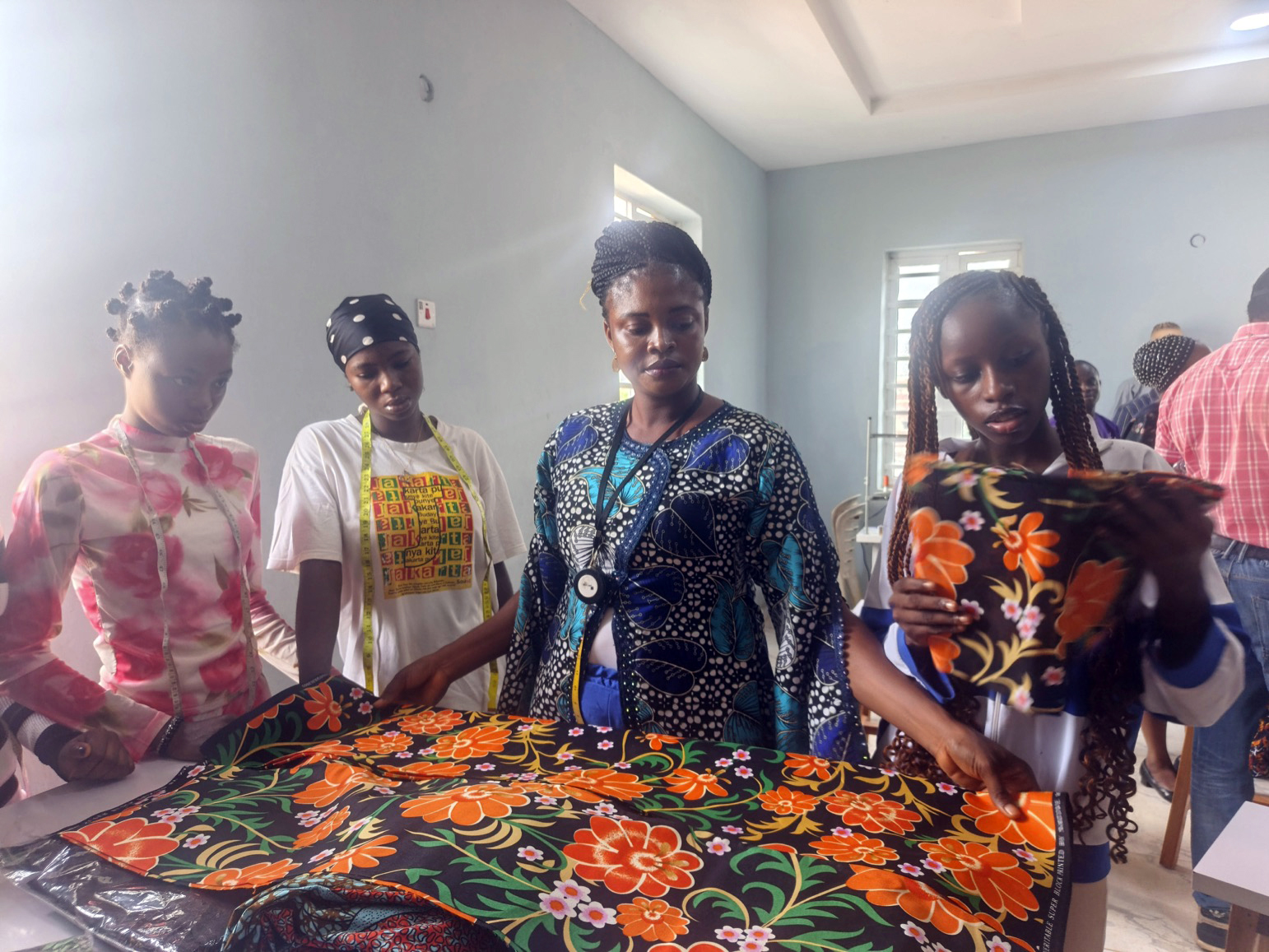
Inside the centre, students move between classrooms dedicated to fashion design, ICT, catering, event planning, plumbing, hairdressing and beauty therapy. Before practical sessions begin, they gather for entrepreneurship lessons designed to prepare them for life after training.
What distinguishes the centre is that every service is offered free of charge. According to the centre’s director, Mrs Gladys Olanubi Fadahunsi, the initiative was created to provide opportunities for young people who lack the means to pursue further education or acquire vocational skills.
“Last year, we graduated 48 students and about 70 per cent of them were out-of-school youths,” she said. “The remaining were students waiting for admission into higher institutions. Rather than staying idle at home, they came here to learn.”
She explained that the centre charges no fees for registration, tuition or practical training materials.
“We don’t collect anything from them. Everything is free,” she said.
The challenge, however, lies beyond the classroom. While students receive training, resources are often insufficient to provide them with the tools needed to start businesses after graduation.
Akindu Ajayi, Administrative Assistant to the Bishop of the Ilesa Anglican Diocese, said the centre dreams of providing startup kits to all graduates but lacks the financial capacity to do so.
“Our desire is to provide startup kits for everyone that graduates from here, but we really don’t have that capacity yet. We have managed to support a few, but we need partnerships to expand what we are doing”, he said.
According to him, the centre welcomes people regardless of religion, tribe or social background.
“We have Yoruba, Igbo, Christians and Muslims here. This is about empowering young people and giving them opportunities,” he said.
For education authorities, centres like this represent an opportunity to integrate digital learning into vocational training. Officials from the Osun State Ministry of Education recently visited the centre as part of efforts to expand the use of the Nigeria Learning Passport, a digital learning platform supported by UNICEF.
The platform contains more than 15,000 educational resources and is designed to help learners access quality content through digital devices.
Ministry officials believed combining vocational skills with digital learning could significantly improve outcomes for out-of-school children and young people.
The strategy is already producing early results. Seventeen-year-old Salvation Arimorn spoke enthusiastically about how artificial intelligence has changed his understanding of learning.
“I communicate with AI like a physical person,” he said. “If there is something I don’t understand, I ask it questions.”
Through digital learning tools, he has developed an interest in graphic design and content creation. He explained that AI has helped him understand concepts that once seemed difficult and introduced him to opportunities he never knew existed.
“It helped me understand more about computers and phones. It made me realise I can create things myself,” he said.
For education experts, stories like Salvation’s demonstrate the transformative potential of technology. A student in a small town can now access learning resources that previously existed only in major cities or expensive institutions.
Yet technology alone cannot solve Nigeria’s education crisis. Many of the challenges facing out-of-school children remain rooted in poverty and inequality. When asked whether she had access to a smartphone capable of supporting digital learning, Yemisi explained that her mother only owns a basic phone without internet access.
Such realities continue to limit the reach of digital education initiatives.
Even the skills acquisition centre faces infrastructure challenges. Power supply is unreliable, forcing the centre to rely on generators and shared solar facilities to support training activities.
Fadahunsi acknowledged these limitations but insisted that the benefits still outweigh the difficulties.
For some learners, the opportunity itself is transformative. Among the students is 62-year-old Victoria Olushola, who returned to fashion training decades after abandoning it because her parents could not afford the costs.
“When I was young, I started learning fashion design but I could not complete it because there was no money,” she said. “When I heard everything here was free, I came back.”
Today, she sits alongside teenagers and young adults, learning skills she once thought she had lost the opportunity to acquire. Her story serves as a reminder that the desire to learn does not disappear with age. What often disappears is access.
UNICEF officials warned that Nigeria is also facing a learning crisis, with millions of children who attend school still struggling to acquire basic literacy and numeracy skills.
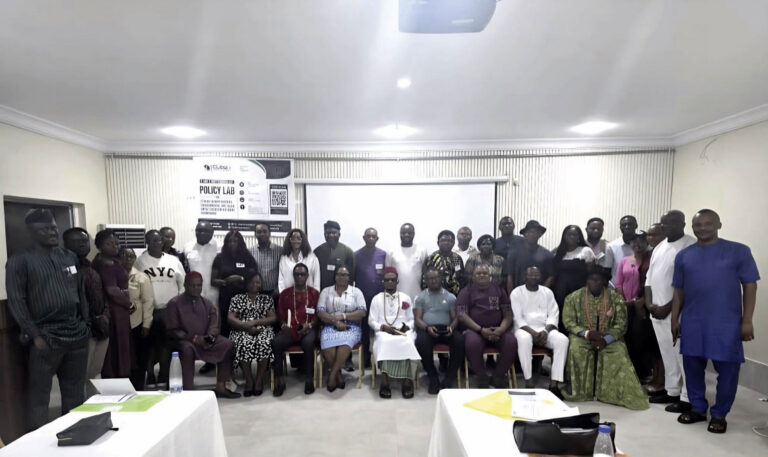
Speaking during the Media Dialogue on Digital Learning, Artificial Intelligence and Skill Development for Out-of-School Children in Osogbo, Chief of UNICEF’s Lagos Field Office, Celine Lafoucriere, painted a troubling picture of the country’s education landscape.
“Think about that for one second. Of all the children in Nigeria who actually go to school, only one in four can read properly and do basic math at age 14. And we are only talking about the children who make it to school,” she said.
According to Lafoucriere, the implications are enormous in a world increasingly driven by technology and artificial intelligence.
“The children who know how to use these technologies will have a chance. The ones who don’t will be left out. Right now, out-of-school children in Nigeria are the ones being left out,” she warned.
Her concern is shared by UNICEF Education Specialist, Harold Kpojime, who said recent survey findings place Nigeria’s out-of-school population at nearly 18 million children, making it the largest in the world.
He explained that the figure emerged from extensive household and child assessments conducted across the country and reflected a challenge that extends beyond school enrolment.
“If you do not know how many children are out of school, it becomes difficult to solve the problem. You cannot claim success if you do not know exactly who these children are,” Kpojime said.
According to him, poverty, insecurity, cultural practices, gender disparities and location remain some of the strongest factors determining whether a child receives an education.
He noted that while digital learning platforms and AI cannot replace schools and teachers, they can provide alternative pathways for vulnerable children who would otherwise remain excluded from learning opportunities.
For UNICEF and its partners, the growing adoption of AI-powered learning tools is therefore not simply about technology. It is about ensuring that millions of children do not become permanently excluded from the opportunities of the digital age.
The implication is that Nigeria faces a dual challenge: millions of children are excluded from education altogether, while many who attend school are not acquiring the skills they need to thrive in a rapidly changing world.
Artificial intelligence and digital learning platforms may offer part of the solution. They can personalise learning, expand access to educational content and help learners develop skills relevant to the modern economy.
However, experts insisted that technology must be accompanied by broader investments in education, infrastructure, poverty reduction and community support.
For Yemisi and millions like her, the issue is not merely about access to technology. It is about access to opportunity. The figure of 18 million out-of-school children may sound like a statistic. But behind every number is a story, a dream deferred and a future still waiting to be written.
Whether artificial intelligence becomes a powerful bridge to that future will depend not only on technology itself but on Nigeria’s willingness to ensure that no child is left behind.