Follow Us on Google
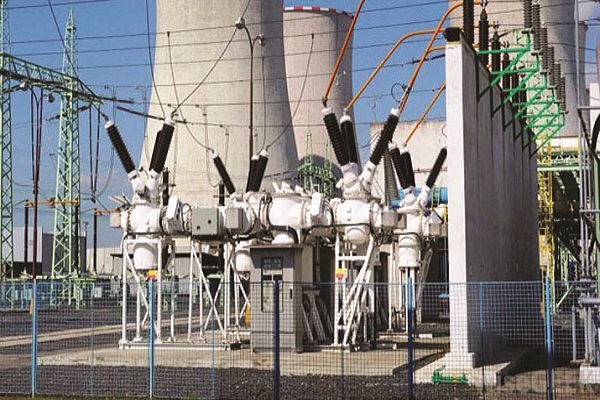
It is disappointing that Nigeria’s power challenge has remained intractable despite huge investments in the beleaguered sector by successive administrations. Undoubtedly, the current state of electricity generation, transmission and distribution in the country is a reflection of the multiple crises facing the economy. In spite of the installed electricity generation capacity of about 13,000 mw, actual generation capacity delivered to the national grid for transmission to consumers in the past eight years has not surpassed an average of 4,000mw. This is far below the 10,000mw promised by President Muhammadu Buhari in 2016.
More worrisome is the latest report that with the little improvement in electricity supply across the country, tariff has been hiked by over 168 per cent from 2015 till date, with billing sometimes raised from an average of N23.5 per kilowatt hour (kWh) in 2015 to N63 kWh as of January 2023. This is discouraging and exploitative to consumers and business operators. In addition, many households are saddled with estimated bills for unavailable power supply. This literally amounts to paying for ‘darkness.’
This comes amid recent data from a United Kingdom-based research company, Cable, which shows that over 100 countries offer cheaper electricity than Nigeria. Nigeria is ranked 109th on the list of countries with the cheapest electricity tariff in the world at N56 for one kWh. This is how bad the power sector value chain has broken down in Nigeria. This calls for urgent action to revamp the power sector.
Failure to fix the power sector will continue to hamper industrial development, productivity and investment inflows in the country. Renewable energy is one of the solutions to the power sector crisis. Statistics show that between 2013 and now, the national grid collapsed 134 times, and 99 times under the Buhari government. The economic loss due to grid collapse is estimated at two per cent of the nation’s Gross Domestic Product (GDP).
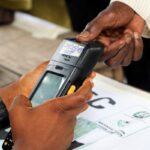
The promise made by the Nigerian Electricity Regulatory Commission (NERC) to provide over 4 million prepaid meters to consumers is yet to be fulfilled, even as the prices of prepaid meters have been hiked by over 100 per cent.
According to the 2020 Ease of Doing Business report, 47 per cent of Nigerians lack access to electricity supply. Many MSMEs have identified unreliable electricity as a major challenge to their businesses.
Figures from the Nigerian Electricity Regulatory Commission (NERC) showed that in the last one year, electricity consumers were billed N1.12trillion, out of which N750bilion was paid as tariffs. According to the World Bank report, due to poor power supply in Nigeria, businesses lost in excess of N96.4trillion in the last ten years, at a yearly estimate of $29billion. The loss to the economy is almost double the cumulative national budget of N76 trillion from 2013 to 2022.
Data from the Manufacturers Association of Nigeria (MAN) showed that between 2015 and 2019, about 320 firms shut down operations as a result of unstable power supply, while scores relocated to some West African countries. Small and big businesses that depend on diesel for their operations are struggling to survive due to high cost of the product that increased by over 300 per cent between January and September this year.
It remains to be seen how committed the Federal Government is in revamping the power sector, in spite of billions of dollars investment since 1999. One of the recent investments include the Memorandum of Understanding (MoU) with German-based Siemens and loans from the African Development Bank (AfDB) and the World Bank.
The AfDB announced three years ago that it would partner with the government on a $410million transmission project and an additional $200 million through the Rural Electrification Agency (REA) that would make electricity available for the rural areas. Unfortunately, the project is stalled. The deal with Siemens worth $2.3billion was meant to stabilise electricity supply in with 11,000mw.
The Siemens deal looked promising when the MoU was signed. But the timelines have passed. Therefore, the incoming government should look into the details of the deal and take necessary action. According to the World Bank, over 80 million Nigerians or 37 per cent of the population have no access to grid electricity. In 2020, the World Bank approved Power Sector Recovery Operation (PSRO) loan to ensure the supply of 4,500mw/h of electricity to the national grid.
This is in addition to the $550 million loan to the government to develop more grids and solar systems. Last year, the government stated that 10 power transformers and 10 mobile substations would be procured, delivered and installed by May. Few days to the end of the Buhari administration, that has not done. This is also contrary to the assurance by the Minister of Power, Abubakar Aliyu, that Nigerians will enjoy the cheapest electricity supply.
Overall, the state of the power sector, and the frequent hike in tariff should be re-examined. Tariff must be cost-effective and cost-reflective, with improved efficiency and high levels of protection for the consumers. There should be access to cheap funds for infrastructure development in the power sector. We advise the incoming administration to make the power sector one of its priorities in its 100 days in office.