Follow Us on Google

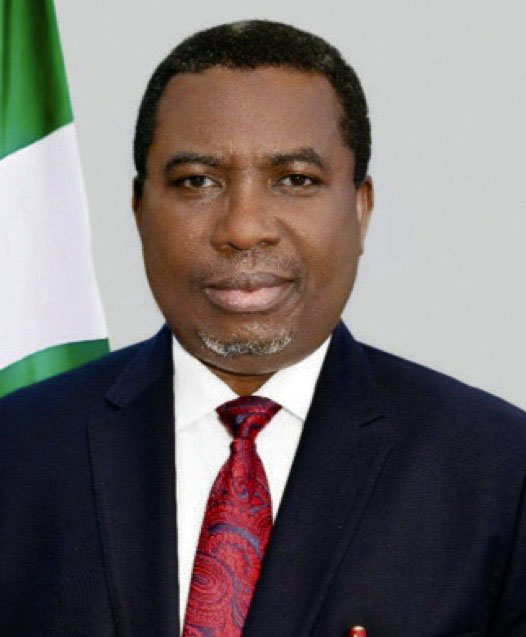
The chairman of the Independent National Electoral Commission (INEC), Prof. Joash Amupitan, recently declared that his allegiance is to the Nigerian Constitution and the Electoral Act ahead of the 2027 general elections. The INEC boss stated this at Chatham House in London at the high-level dialogue organised in partnership with the Kimpact Development Initiative (KDI).
He also reassured Nigerians and the international community that the 2027 general elections would reflect the will of the Nigerian people. “My loyalty is solely to the Constitution of the Federal Republic of Nigeria and the Electoral Act,” Amupitan stated.
Amupitan’s solemn declaration on electoral integrity is commendable. However, we urge him not to betray his promise of a free, fair and credible poll in 2027. We recall that his predecessor, Prof. Mahmood Yakubu, made similar promises and yet faltered. We enjoin Amupitan not to fail Nigerians and himself. He should be concerned with his legacy and the judgement of history. He should write his name in gold by conducting an election where the loser will congratulate the winner. Anything short of this vision is unacceptable.
As the nation marches toward the Presidential and National Assembly polls scheduled for January 16, 2027, Amupitan faces an uphill task. To secure the confidence of Nigerians, the INEC chairman must recognise that constitutional loyalty is not a mere declaration of intent. It must be demonstrated through institutional independence, operational transparency, and fairness. His primary duty is to defend the constitution, shun partisanship and conduct a free, fair and credible election next year.
It is laudable that Amupitan acknowledged that the controversies surrounding the 2023 presidential election inflicted a severe trust deficit on INEC – damage from which the commission has still not fully recovered. For an institution long accustomed to defensive posturing, admitting past institutional trauma is a necessary first step toward healing. Having learnt from history, Amupitan outlined concrete measures to improve electoral transparency in the future. He also admitted that operational improvements in recent off-cycle governorship elections in Anambra, Osun, and Ekiti states, led to results being declared within a day of voting rather than dragging on for days.
He also announced new validation safeguards for the INEC Result Viewing Portal (IReV) to stop over-voting figures and inaccurate collation sheets from reaching the public domain, alongside a nationwide mock accreditation exercise scheduled for November 28, 2026. He pledged that he would not accept any political or diplomatic appointment after leaving office, drawing a sharp contrast with past precedents.
However, at the event in London, diaspora protesters demanded answers over alleged irregularities in the preliminary voters’ register. Critics and opposition leaders have raised the alarm over suspected duplicate entries, deceased registrants, and artificial intelligence-generated photographs in the register.
Other News
While INEC has purged over 1.6 million invalid registrations and identified 54 individuals for disciplinary action, there are still more questions to answer. The House of Representatives’ decision to summon the INEC chairman over election readiness and voter disenfranchisement in insecurity-ravaged areas underscores the seriousness of the matter.
There are also questions about his perceived neutrality and controversy surrounding the alleged partisan social media post – which Amupitan has firmly denied and referred to security agencies for forensic investigation. There are also concerns over INEC’s handling of internal leadership disputes within opposition parties like the African Democratic Congress (ADC). Again, when an electoral umpire is appointed by the executive branch, overcoming the perception of executive capture demands extraordinary transparency.
This is where Amupitan’s promise of loyalty to the Constitution and the Electoral Act 2026 must be demonstrated. The conduct of the immediate past INEC chairman, Mahmood Yakubu, apparently eroded the trust of Nigerians in INEC. If the INEC chairman truly wants to win the confidence of Nigerians before January 2027 election, three imperatives must guide his next steps.
First, transparency around the voters’ register must be thorough. Rather than simply assuring citizens that the anomalies have been rectified, INEC should open the cleaned register to independent audits by civil society organisations and technology experts well ahead of statutory deadlines. When citizens can verify the integrity of the register themselves, conspiracy theories lose their potency.
Second, the November 28 nationwide mock accreditation exercise must serve as a genuine stress test rather than a choreographed public relations event. INEC should deploy the Bimodal Voter Accreditation System (BVAS) and IReV transmission protocols in difficult terrains and network blind spots, publishing a transparent post-mortem of every technical glitch encountered. Voters do not expect perfection, but they demand honesty about how errors will be mitigated during election.
Third, Amupitan must enforce the Electoral Act without fear or favour. He recently issued a stern warning against political thugs, voter intimidation, and attacks on election officials. INEC should collaborate with security agencies to prosecute electoral offenders regardless of party affiliation. The 2027 election is very consequential. We believe that INEC under Amupitan will deliver the best election ever in the history of the country.