Follow Us on Google
The issues discussed in this article cannot be exhausted in a single publication. They touch on the way we build, the way we manage public infrastructure, and, more importantly, the culture of maintenance that Nigeria has neglected for far too long.
For that reason, this article will be published in two parts. In this first part, the focus is on why maintenance should become a national priority and why I believe Nigeria should begin the conversation on establishing a Federal Ministry of Maintenance.
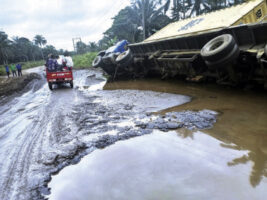
We are once again in the heart of the rainy season, and, sadly, the story is the same.
Across the country, roads have been washed away, homes have been flooded, businesses have suffered losses, and families have been left counting the cost of what many now see as a yearly occurrence. A few weeks ago, we wrote about this in an article on flooding in Nigeria, pointing out that while we often blame nature, many of these disasters are made worse by our failure to maintain the infrastructure that should protect us.
After that article was published, I had a long and engaging conversation with my cowriter, Onyia Chidera Melissa. As we discussed the issues raised in the article, our conversation gradually moved beyond flooding itself. We found ourselves asking a much bigger question: why do we keep building new infrastructure while paying so little attention to maintaining what we already have? The more we talked, the clearer it became that many of the problems confronting Nigeria today have their roots in one simple failure; the absence of a strong culture of maintenance.
From that conversation came the idea for this article. I encouraged Melissa to explore the subject further, and what follows is her reflection on why Nigeria should begin to treat maintenance as a national priority and why the establishment of a Federal Ministry of Maintenance deserves serious consideration:
One rainy evening, I returned home to a scene I will never forget. Our compound was completely flooded. Rainwater had accumulated so rapidly that every tenant was outside in the middle of the downpour, desperately searching for a way to save our homes. The force of the flow was so immense that it began pushing against the perimeter fence. Fearing that the entire fence would collapse, some residents quickly broke sections of the wall to create an outlet for the water to escape. Unfortunately, it was too late. Despite our efforts, the pressure of the rushing water was simply too great. Within moments, the fence gave way and collapsed. As I stood there watching the destruction, one question echoed repeatedly in my mind: Why did this happen?
The answer was surprisingly simple. The drainage gutter directly in front of our compound gate had become completely blocked with dirt, sand, leaves, plastic waste, and other debris. The rain itself was not the real problem. The problem was that the water had nowhere to go. A drainage system that should have directed the storm water away had been neglected. With its natural path obstructed, the water built up pressure until it forced its way through our compound, destroying property in the process. That experience left me with a profound realization: many disasters are not caused by nature alone; they result from poor management and little or no respect for nature. Across Nigeria, similar stories unfold every rainy season. Streets become rivers, homes are submerged, businesses suffer losses, and lives are disrupted. Yet, in many cases, these tragedies could have been prevented through something as simple as clearing drainage channels, maintaining canals, inspecting public infrastructure, and responding to small problems before they become disasters. That night changed the way I viewed development. It made me realize that the greatest challenge facing Nigeria is not simply the construction of infrastructure it is the maintenance of what we build. Nigeria spends billions of naira every year constructing roads, bridges, schools, hospitals, drainage systems, public housing, and other critical infrastructure. These projects are commissioned with great celebration because they symbolize progress and development. However, after the ribbon-cutting ceremonies are over, many of these valuable public assets receive little or no attention. Roads begin to crack. Drainage systems become clogged.
Other News
Canals fill with refuse. Bridges weaken over time. Public buildings deteriorate.
Instead of addressing these issues while they are still minor, we often wait until complete reconstruction becomes the only option. This reactive approach wastes enormous public resources and deprives citizens of the full value of government investments. Development should not be measured only by the number of projects a nation builds. It should also be measured by how well those projects are preserved for future generations. This is why I believe Nigeria should establish a Federal Ministry of Maintenance a ministry dedicated to protecting, monitoring, maintaining, and managing the nation’s public assets throughout their lifespan.
Learning from the past. During a conversation with my mentor and co-writer, he shared how road maintenance was once handled in Nigeria. According to him, the government employed road overseers, each assigned to a specific stretch of road.
They were provided with bicycles or motorcycles to patrol their designated routes and were equipped with bitumen rollers and other basic repair materials. Their responsibility was straightforward but remarkably effective. Whenever they noticed small cracks beginning to form on the road surface, they repaired them immediately before the damage developed into potholes or structural failures. It was a system built on prevention rather than reaction. Today, that culture has largely disappeared.
Roads are often left unattended until they become severely damaged. By then, government is forced to spend billions reconstructing roads that could have remained in good condition through routine inspections and timely repairs. Sometimes the most economical repair is the one carried out before the damage becomes visible.
There is an urgent need to enforce contractor accountability. One of the responsibilities of a Federal Ministry of Maintenance should be enforcing the Defect
Liability Period in public construction contracts. Contractors should remain responsible for completed projects for an agreed period after commissioning. During this time, any defects arising from poor workmanship or construction should be corrected at the contractor’s expense. This would encourage higher construction standards while ensuring that public projects continue to meet quality expectations after completion. Routine inspections should also be conducted throughout the liability period to identify and correct problems before they become worse.
Maintenance should never depend solely on emergency government interventions.
A practical solution would be to reserve approximately five percent of every public infrastructure project’s budget as a dedicated maintenance fund. This fund would support regular inspections, preventive maintenance, emergency repairs, replacement of damaged components, and periodic rehabilitation. Such a policy would significantly extend the lifespan of public infrastructure while reducing the enormous financial burden of rebuilding assets that should never have deteriorated in the first place. Preventive maintenance is far less expensive than reconstruction.
Every naira invested in routine maintenance today can save several naira that would otherwise be spent rebuilding infrastructure tomorrow. One of the greatest causes of infrastructure failure in Nigeria is poor storm water management.