Follow Us on Google
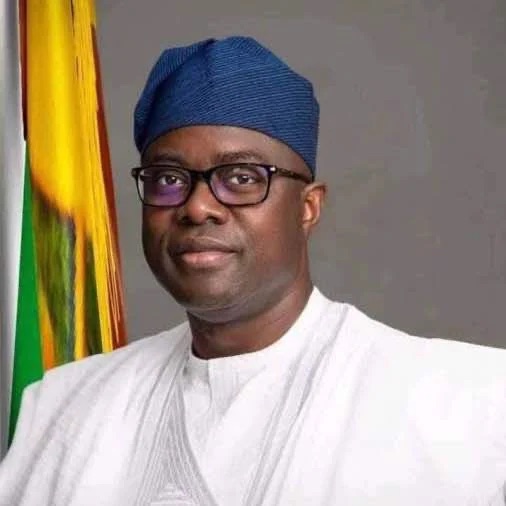
By Fred Itua, Abuja
There is an old and weathered maxim in the theatre of Nigerian politics, that the enemy of my enemy is, if not my friend, then at least my temporary ally. It was this very calculus, stripped of sentiment and dressed in the garb of strategic necessity, that drew opposition leaders to the ancient city of Ibadan last Saturday. Beneath the storied skies of Oyo State, in a city that has witnessed the rise and fall of empires both political and cultural, men who have spent the better part of a decade regarding one another with barely concealed suspicion gathered to contemplate the unthinkable: unity.
The summit, held at the Banquet Hall of the Oyo State Government House, was themed “That We May Work Together for a United Opposition to Sustain Our Democracy”, a declaration that was, in itself, an implicit indictment of every year these same forces had spent working at cross-purposes.
The question that now reverberates across the corridors of Abuja, echoes in Lagos penthouses, and hums through the marketplaces of Kano is deceptively simple yet politically volcanic: Can these strange bedfellows, freighted as they are with competing ambitions, wounded egos, and irreconcilable ideological postures, truly bury the hatchet deep enough to forge a coalition capable of unseating President Bola Ahmed Tinubu in 2027?
To fully appreciate the enormity of what was attempted in Ibadan, one must first excavate the archaeology of mutual distrust that lies beneath the surface of this gathering. The men who shook hands in that room did not arrive as strangers. They arrived as rivals, battle-hardened veterans of Nigerian politics who had, at various junctures, worked to undermine one another’s ambitions, poach one another’s political structures, and contest the same electoral real estate with a ferocity that left wounds not easily sutured.
The convergence in Ibadan drew a broad spectrum of opposition stakeholders from across Nigeria. Former Vice President Atiku Abubakar; former Rivers State Governor and Minister of Transportation Rotimi Amaechi; former Kano State Governor, Rabiu Musa Kwankwaso; former Osun State Governor Rauf Aregbesola; Labour Party’s Peter Obi; former Senate President David Mark; Professor Jerry Gana; political economist Pat Utomi; and PDP factional chairman, Saminu Turaki, their presence together underscoring the breadth of engagement across opposition blocs.
Even more symbolically charged was the presence of Amaechi, once Tinubu’s APC comrade-in-arms, now seated in deliberate solidarity with the men the ruling party regards as adversaries. For these men to subordinate their personal calculus to a collective vision is not merely a political act. It is, in the truest sense of the word, a revolution of the self.
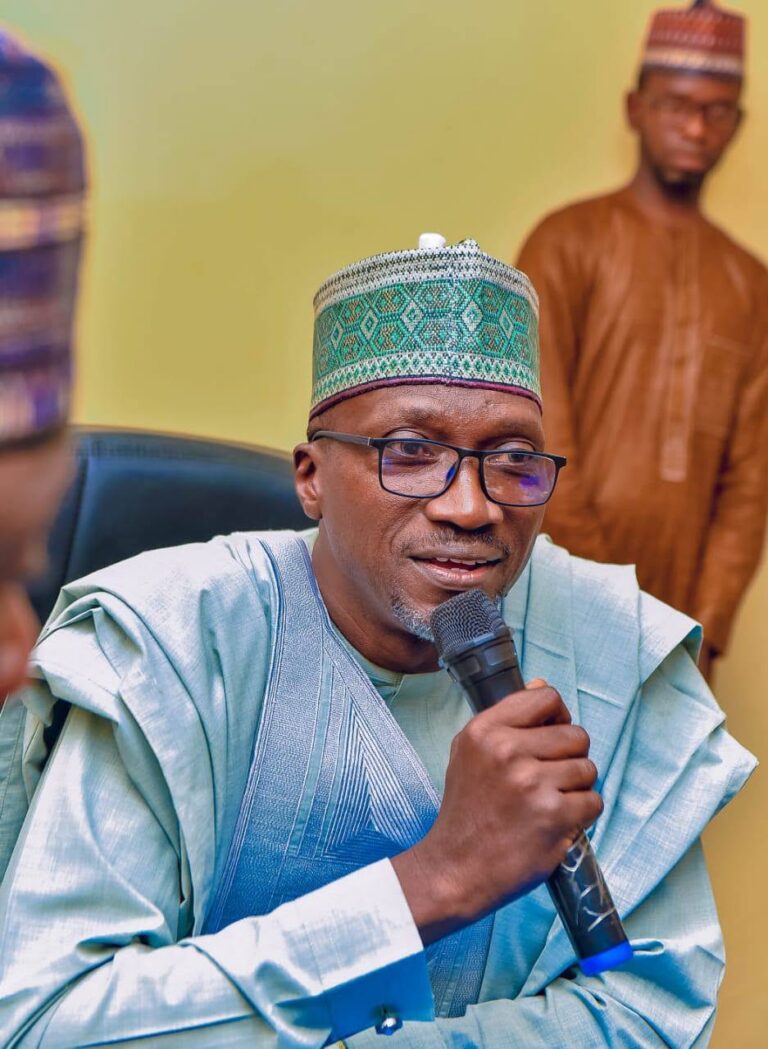
It is one thing to convene a summit. It is another thing entirely to speak with a conviction that transcends the occasion. On Saturday in Ibadan, several voices rose above the ceremonial and touched something rawer and more urgent. Governor Seyi Makinde, as host, set the intellectual and moral tone of the proceedings with remarks of disarming clarity. Warning of a growing imbalance in Nigeria’s political landscape, Makinde pointed to what he described as an increasing concentration of power in the hands of a single party, noting that “across Nigeria today, we are witnessing a level of political concentration that should concern all of us.”
He was unsparing in his diagnosis: that the alignment of several state governments under one party, alongside efforts to consolidate legislative control, together “point to a pattern where the space for real political competition is disappearing.”
Yet, Makinde was equally careful to frame the gathering not as a vendetta but as a democratic necessity. He stated plainly that the summit “is not a gang-up against one man; and it is not about individual ambitions to be president. It is about the collective ambition of the Nigerian people to have a democracy properly defined.”
His most resonant warning carried the cadence of a constitutional scholar: “If we allow opposition to weaken, whether by design or by neglect, then we all bear the consequences. So, this is not a movement for fragmentation, it is not a movement for violence, and it is certainly not a movement to disengage politically.”
With the solemnity of a man who understands what is at stake, he concluded: “Democracy without opposition is not democracy, it is a slow drift toward a one-party State. And Nigeria must not make that drift.”
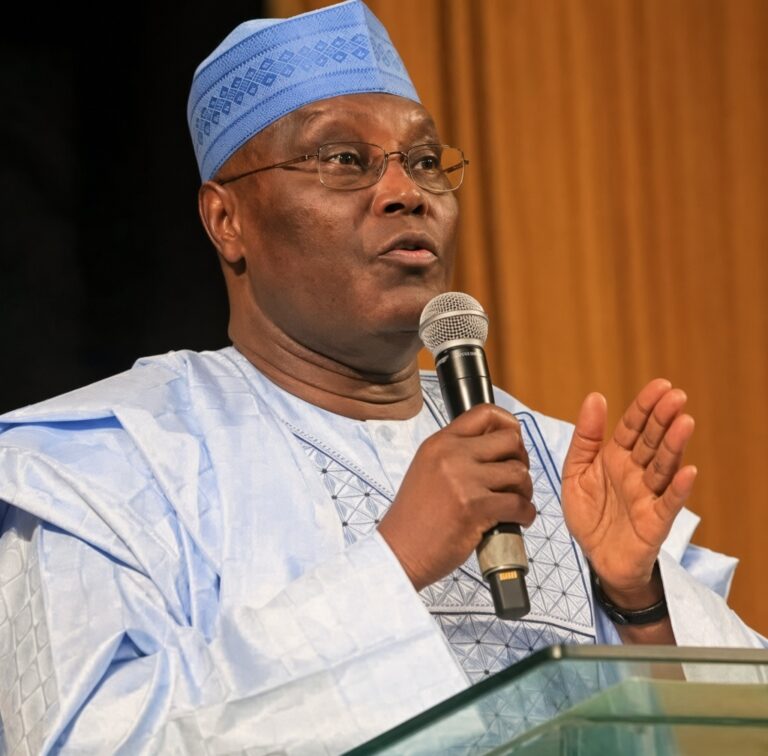
Atiku Abubakar, the indefatigable Turaki of Adamawa, confirmed his arrival on social media with characteristic economy of expression: “I have just arrived in Ibadan, Oyo State, for the National Summit of all opposition parties.” Those twelve words, spare as they were, carried the weight of a man who has decided that this is the season in which all chips must be committed to the table. He has since publicly declared that the 2027 presidential election will be his final outing, citing his age as the primary reason, a statement of personal finality that paradoxically strengthens his negotiating position within the coalition, transforming him from perpetual aspirant to reluctant statesman.
Rabiu Kwankwaso, whose Kwankwasiyya movement commands one of the most disciplined political structures in Nigeria’s North, arrived with declarative energy. He announced himself as “excited to arrive in Ibadan, ready for meaningful engagements with fellow national leaders.” His presence, alongside the senior members of his Kwankwasiyya movement, signalled that whatever private reservations he may harbour about individual actors in the room, the structural logic of opposition unity has penetrated even his famously self-sufficient political universe.
Professor Pat Utomi, economist and perennial conscience of Nigerian public discourse, brought to the gathering the unsparing language of moral reckoning. He argued that Nigeria’s challenges were not only economic but moral, declaring that “leadership without character cannot build a nation” and that “the crisis we face today is not only economic; it is moral.”
Utomi’s diagnosis of Nigeria’s structural failures was equally damning: that the country had “become overly dependent on oil, neglecting other sectors and weakening our economic foundation.”
Yet, he refused to surrender to despair, insisting that “the situation we face is serious, but it is not hopeless. With the right leadership, the right values, and a shared commitment to progress, we can rebuild this nation and create a future that works for all.”
The most philosophically charged intervention came from Mukhtar Shagaya Hayatu-Deen, former presidential aspirant. He warned that “Nigeria is at a defining moment,” and that “the deepening insecurity, the crushing cost of living and the steady erosion of democratic space demand a collective response. This is not about personal ambition, it is about national rescue.”
His caution that continued fragmentation within the opposition would only entrench the status quo and prolong the hardship faced by millions of Nigerians, was delivered not as political rhetoric but as a sober empirical judgement.
Not all voices, however, were unreservedly celebratory. Former Kaduna Central Senator, Shehu Sani, speaking from outside the hall, offered a cold shower of historical sobriety. He described the Ibadan gathering as a commendable initiative, while simultaneously urging participants to reflect on historical realities, implicitly asking whether the enthusiasm of the moment would survive contact with the structural pressures that have historically shredded Nigerian opposition coalitions. His characterisation of the summit as a “good talk shop” was not entirely unkind, but its sting was unmistakable.
When the deliberations were concluded, the participating parties issued what they styled the Ibadan Declaration, a communiqué that, in both its language and its resolutions, represents the most explicit statement of unified opposition intent since the formation of the APC itself.
The parties declared their determination to “work towards fielding one Presidential Candidate for the 2027 elections, which shall be agreed and supported by all participating opposition parties to rescue our nation and her long suffering masses.”
Other News
The collective also resolved to “resist all machinations by the APC to foist a one-party state on Nigeria and fight for the survival of multi-party democracy in our country.” In a pointed challenge to the electoral infrastructure, the parties demanded that the National Assembly immediately review the Electoral Act 2026 to remove provisions they described as threats to the sanctity of the polls, while calling on INEC to extend the deadline for primaries to the end of July 2026, a demand that speaks volumes about the time pressures already closing in on the coalition’s operational window.
Political pundits believe that for a coalition to emerge from the Ibadan meeting with genuine electoral potency, its architects must solve three foundational equations simultaneously.
The first is the question of a consensus candidate, the single most explosive variable in the opposition’s equation.
Who among these titans of ambition will consent to step aside, to subordinate his presidential dream to the collective’s arithmetic? This is not a question amenable to polite negotiation. It is a question that has historically torn Nigerian alliances apart at the very moment of their apparent triumph. The 2023 APC primaries, which produced Tinubu over the strenuous objections of powerful internal factions, demonstrated that even within a ruling party, the presidential question is a crucible that melts loyalties with terrifying speed.
The second equation is zoning, the perennial Nigerian political doctrine that is simultaneously a principle of equity and a weapon of exclusion. The North, having held the presidency during Muhammadu Buhari for eight years, presents a complex negotiating position. The South, emboldened by the argument that power must rotate, will resist any Northern candidacy with considerable vigour. Within this tension lies the opposition’s most fertile ground for self-destruction.
The third equation is the question of structure. A coalition without a functioning party architecture, a robust grassroots machinery, and a war chest commensurate with the scale of the challenge it faces is merely a press conference dressed in political clothing.
As Hayatu-Deen soberly noted, Nigerians are looking for a leadership that is “empathetic, unifying and capable of delivering real change” and delivering that quality of leadership requires organisational sinew, not merely oratorical muscle.
The opposition confronts perhaps its most ruthless adversary, not Tinubu, but time itself. The 2027 general elections are not a distant mirage. They loom with startling imminence on the political horizon. INEC’s timelines for party registration, candidate nomination, and campaign regulations impose a structural discipline on the opposition’s deliberations that simply cannot be wished away. The opposition’s own communiqué implicitly acknowledged this urgency in its call for INEC to extend primary deadlines, a recognition that the clock, as currently configured, runs against them.
By the most optimistic estimation, the opposition has perhaps six months of effective political space in which to accomplish what would, under any circumstances, be a Herculean task: agreeing on a candidate, harmonising party structures, building a campaign financing architecture, constructing a policy platform credible enough to attract the floating voter, and deploying a field operation spanning thirty-six states and the Federal Capital Territory.
Every week consumed by internal bickering, every month wasted in ego negotiations, every press conference that substitutes for actual coalition building, each of these represents an irreplaceable resource squandered on the altar of personal ambition. The clock does not pause for Nigerian politicians to settle their differences. It proceeds with the indifference of fate.
To speak of the opposition’s task without a full reckoning of what they face in President Tinubu would be an exercise in political naivety of the most dangerous variety. The Alausa Colossus is, by any fair measure, the most formidable political operator that Nigeria’s Fourth Republic has produced. His career is a masterclass in the patient accumulation of political capital, the construction of a pan-Nigerian network assembled across three decades, funded through Lagos State’s transformation into a revenue-generating behemoth, and expressed through a patronage architecture of breathtaking reach and complexity.
The ADC alleged that the APC had attempted to deny the opposition the use of venues in Abuja for the summit, and further uncovered what it described as plans to disrupt the gathering in Ibadan, prompting its national publicity secretary to declare: “They say they are not scared, but they are behaving like people who are terrified.”
Whether or not that specific allegation withstands scrutiny, it speaks to a broader truth: that the machinery of incumbency, once activated, is a formidable instrument of suppression.
More surgically, Tinubu has throughout his political career demonstrated an extraordinary capacity for disaggregation, the art of peeling individual actors away from opposing coalitions through the targeted application of patronage, appointment, and political accommodation.
The opposition’s communiqué itself alluded to this pattern in demanding that all leading politicians being detained or harassed on bailable offences be released and allowed to exercise their fundamental rights of participation and inclusivity as Nigerians, an implicit acknowledgment that the instruments of state have already been deployed against some of their members.
One need only observe how Nyesom Wike, who campaigned against Tinubu’s party, who delivered stinging public attacks against the APC’s candidate, found himself appointed Minister of the Federal Capital Territory, becoming one of Tinubu’s most visible and energetic cabinet voices. This is the Tinubu playbook rendered visible: find the fracture lines within opposing formations, widen them with precision, and harvest the resulting fragments.
Oyo State ADC gubernatorial aspirant Adegoke captured something of this dynamic in cautioning that the message of unity resonating from Ibadan must translate into “concrete political action capable of delivering good governance and restoring public confidence in leadership,” an implicit warning that rhetoric without institutional follow-through will be devoured by the very forces it seeks to resist.
Nigeria’s democracy is old enough now to have produced its own mythology, its own legends of political courage and its own cautionary tales of squandered opportunity. The 2027 election, whenever its full contours become clear, will be adjudicated not merely by vote counts but by the verdict of a citizenry that has grown, across four republic decades, simultaneously more politically sophisticated and more exhausted by the theatre of elite competition dressed in the language of mass liberation.
The opposition leaders who gathered in Ibadan carry on their shoulders not merely their own political futures, but a test of whether Nigerian democracy retains the institutional vitality to produce genuine alternation of power.
Makinde put it most starkly: “Democracy without opposition is not democracy.” The burden of proving that maxim true now rests with the very men who signed the Ibadan Declaration. Whether they rise to that responsibility, or whether they succumb, as so many have before them to the gravitational pull of personal ambition, will define not only the 2027 election, but the republic’s democratic character for a generation to come.
The ancient city of Ibadan has seen empires rise. It has watched them fall. It does not easily grant its blessing to those who arrive seeking unity while harbouring division. Time will tell whether those who gathered beneath its legendary skies last Saturday were genuinely writing the first chapter of a new political order or merely rehearsing, with fresh faces and familiar lines, the same drama that has played on Nigeria’s political stage for far too long.
The curtain has been raised. The audience is watching. Unlike previous performances, this one carries consequences that extend far beyond the political class.