Follow Us on Google

The federal government’s acknowledgement that no fewer than 94.5 million Nigerians are currently starving as a result of insufficient food consumption is an indication that the poverty challenge is escalating. With the economy outlook still bleak, effective policies are urgently needed to stimulate the economy and address the triggers of extreme poverty. Of the 94.5 million poverty-stricken Nigerians, the World Poverty Clock report shows that about 71 million Nigerian are languishing in extreme poverty, with Nigeria posting one of the highest poverty levels in the world.
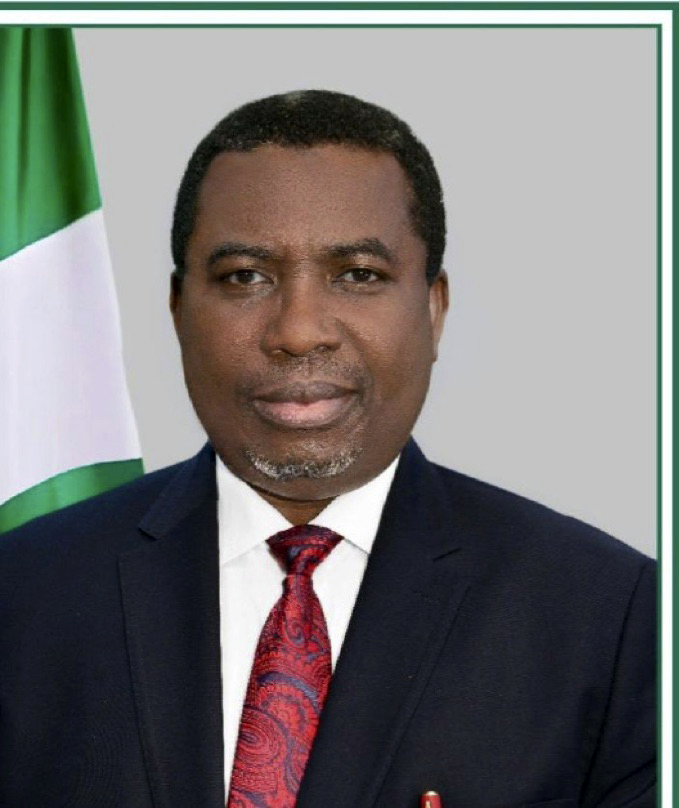
Senior Special Assistant to President Tinubu on Agribusinesses and Productivity Enhancement, Kingsley Uzoma, disclosed the alarming figure at a policy dialogue. He also raised the alarm over the 80 per cent surge in food importation between 2019 and 2023. Even though he expressed government’s commitment to reversing the trend, food prices have reached all-time high largely due to government’s bad policies.
The alarm raised by the presidential aide is not new. It reinforces earlier predictions of increasing poverty and widening inequality in Nigeria. In 2021, data released by the National Bureau of Statistics (NBS), showed that 133 million Nigerians were multi-dimensionally poor. This represents about 63 per cent of Nigeria’s population put at over 210 million. As at 2022, an estimated population of 88.4 million Nigerians reportedly lived in extreme poverty, depending on the poverty threshold of about $1.90 US dollar per daily. The number has since increased while the threshold per day has drastically reduced to less than $1 per day.
Recently, the World Poverty Clock reported that nearly 12 per cent of the world’s population in extreme poverty lived in Nigeria. The NBS report also corroborated this. Ten states, were listed as poverty stranglehold, with Sokoto state leading the pack, followed by Katsina, Adamawa, Jigawa, Ebonyi, Bauchi, Kebbi, Gombe, Plateau and Zamfara. These states contribute 81.2 per cent of the nation’s total poverty level.
It is heart-rending that Nigeria’s poverty index is worsening, without any contingent plans to reduce the scourge. Unfortunately, governance is characterized by utter opulence. Nigeria is facing acute revenue crisis, soaring national debt, inflation and high unemployment. Most reports about Nigeria in recent weeks point to the fact that poverty level is steadily rising. The administration of Muhammadu Buhari promised to lift 100 million Nigerians out of poverty in ten years, but little was done in that regard. Playing the ostrich with poverty is no longer an option. Poverty has become a ticking time-bomb that must be tackled frontally.
Doling out palliatives to the so-called vulnerable people as has been the case with federal and state governments, in recent months, will achieve little or nothing. It is an irony that Nigeria that prides itself as the largest economy in Africa, remains at the bottom rung as the poverty capital of the world. Therefore, let government invest much in human capital development. Instead of giving out palliatives, government should empower Nigerians with requisite skills and access to credit at low interest rate.
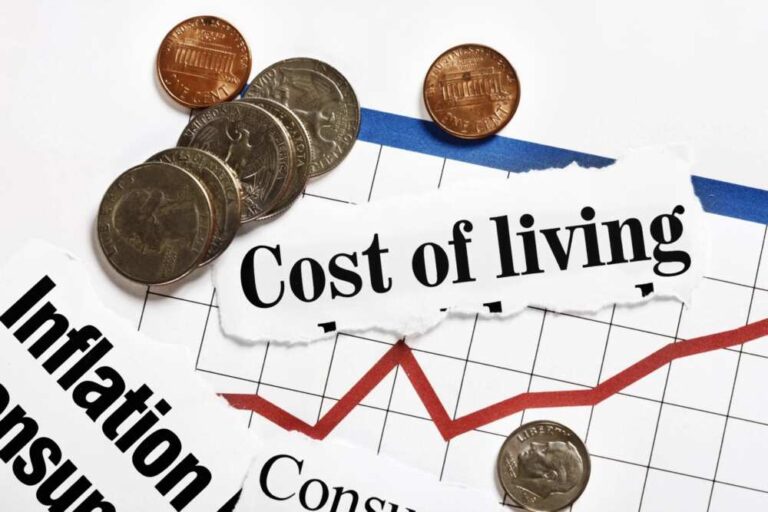
This is the time to set our priorities right. Government should diversify the economy, curb inflation and rising food prices. The consumer price index shows that headline inflation for the month of November reached a 27.33 per cent high. This has impacted food prices. Urban food inflation for the month under review is over 30 per cent. This is largely due to the removal of fuel subsidy. This is also worsening the hunger index. Beyond tackling insecurity, the government should promote large-scale mechanised agriculture.
It is sad that while food prices are increasing, the disposal income of Nigerians has sharply declined. This has impacted negatively on the health of the citizens, especially women and children. Available statistics show that Nigeria currently has the highest rate of stunted children globally. The dependence on external sources for food has not helped matters. Let government address rising food prices and poverty. The cost of governance must be drastically reduced. The dwindling federal revenue cannot sustain the profligacy of the political class.
The opulence exhibited by the federal government at the recently concluded global conference on climate change in Dubai, the United Arab Emirates, is unacceptable. With Nigeria’s external reserves down by $520 million in just five weeks, the profligacy in governance must be jettisoned. Sadly, Nigeria’s current revenue is not enough to support development projects. This calls for prudent management of scarce resources by political leaders.
With the number of Nigerians in the poverty hole estimated to hit almost 100 million mark by the first quarter of next year, let the government evolve new measures to address the challenge. Any rescue plan for the economy without tackling poverty will be a mirage.