Follow Us on Google
Lagos State Governor Babajide Sanwo-Olu has said the state’s network of mid-level agro-produce hubs will reduce food supply chain costs, cut post-harvest losses, and create thousands of jobs by bringing farmers, traders, distributors, and consumers closer together.
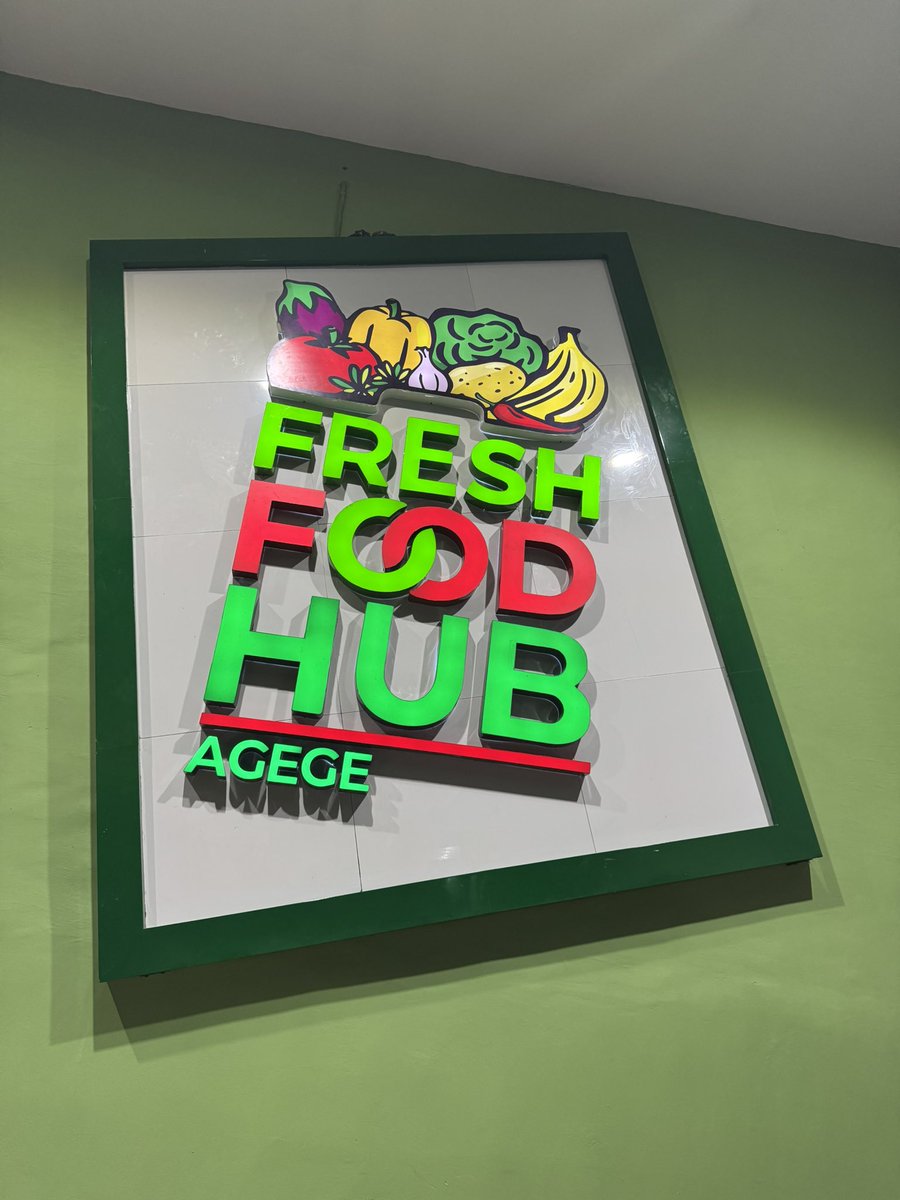
Sanwo-Olu spoke on Wednesday at the commissioning of the Lagos Fresh Food Hub at Pen Cinema, Agege, describing the facility as a major component of his administration’s efforts to build a more efficient, affordable and resilient food system for Lagos.
The governor said the hubs were designed to shorten food supply chains, eliminate unnecessary layers of intermediation and provide modern infrastructure for handling, storage and distribution of agricultural produce.
According to him, the initiative is already yielding results at the Fresh Food Hub in Mushin, commissioned in December 2023.
“Since its commissioning, the Fresh Food Hub, Mushin, has recorded transactions valued at over ₦4 billion across 228 market days, with more than 850 registered vendors and over 7,000 direct and indirect jobs created,” Sanwo-Olu said.
He added that the figures demonstrated the capacity of properly designed food infrastructure to go beyond providing trading spaces and become catalysts for economic growth and improved livelihoods.
“Well-designed market infrastructure does far more than provide a place to sell food: it improves farmers’ incomes, reduces post-harvest losses, creates jobs, and strengthens local economies,” he said.
Sanwo-Olu said the Agege facility was strategically located to serve residents of Agege and neighbouring communities while strengthening the wider food distribution network across Lagos.
He explained that the state began rethinking its food system in 2021 after recognising that feeding a rapidly growing megacity required more than increasing food production.
The governor said the strategy was built around an interconnected hub-and-spoke model, with the Central Food Security Systems and Logistics Hub serving as the major aggregation and logistics platform from which food would move to middle-level hubs located closer to communities.
He said the Agege, Abijo, Mushin and other hubs being developed should therefore be seen not as isolated markets but as interconnected components of a single food distribution network.
Sanwo-Olu said the network would help address challenges associated with traditional food trading, including poor handling and storage, post-harvest losses, traffic congestion caused by food logistics and inadequate trading conditions.
In her welcome address, the Commissioner for Agriculture and Food Systems, Abisola Olusanya, said the Agege hub represented another important node in the state’s emerging food distribution network.
Olusanya said the project was developed in partnership with Origin Tech Group to move food more efficiently into and across Lagos while reducing losses and improving understanding of the state’s largely informal food distribution system.
Other News
She said the Central Food Security Systems and Logistics Hub would serve as the mothership for the network, while middle-level hubs would bring aggregation, storage, wholesale and retail distribution closer to consumers.
According to her, the Mushin hub provided the first opportunity to test the model and later became an important platform for the state’s food subsidy intervention during the period of significant food inflation in 2024.
She said the experience contributed to the development of the Ounje Eko Food Discount Market, eventually implemented across 66 locations in Lagos.
Olusanya disclosed that the Agege facility occupies approximately 7,000 square metres, with a 4,000-square-metre trading floor capable of accommodating 350 to 400 vendors.
It also has about 1,200 square metres of dry storage with a capacity of approximately 800 metric tonnes and about 300 metric tonnes of cold storage for fresh produce.
Other facilities include a dedicated seafood section, parking for between 80 and 90 vehicles and 10 electric vehicle charging points.
Based on its capacity and projected food volume, Olusanya said the hub was expected to facilitate more than ₦5 billion in food transactions annually.
She, however, said full operations would commence in six weeks to allow for the completion of operator onboarding and implementation of logistics, governance and operating systems.
The Commissioner said the state had also developed a 351-page operating framework covering operator selection, produce receiving and quality control, storage, inventory management, sanitation, waste management and use of trading spaces.
She said the framework would provide greater visibility into food movement through the hub, including its source, volume, storage and points where losses might occur.
Olusanya stressed that traders would retain control of their commercial relationships, including pricing and payment arrangements, while the government and hub management would provide infrastructure, operating rules and oversight.
She said the facility would create value across the agricultural value chain by providing farmers and aggregators with organised markets, improving logistics and storage for bulk dealers and retailers, and creating consistent demand for logistics and cold-chain operators.
For consumers, she said, the hub would provide a wider range of fresh food in a cleaner, more organised and convenient environment.
Olusanya said the choice of Agege was deliberate, describing Pen Cinema as a longstanding centre of commerce and an appropriate location for a facility focused on food movement and trade.