Follow Us on Google
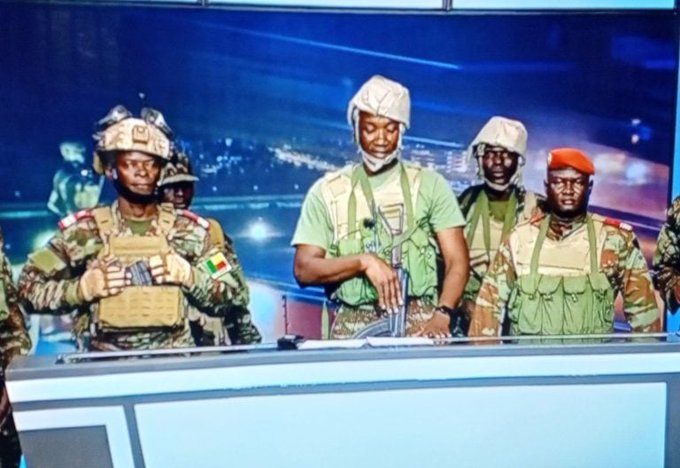
The resurgence of coups in Africa is a setback for democracy on the continent. In Guinea-Bissau, soldiers truncated an ongoing electoral process by taking over power on November 26, 2025. This is a threat to democracy in that country and by extension in Africa. Presidential and legislative elections were held on November 23, 2025. Former Prime Minister Domingos Pereira, who was to run for president for the main opposition party, PAIGC, was barred from contesting the presidential election for allegedly filing his papers late. He pledged his support for the opposition candidate Fernando Dias da Costa.
Ousted President Umaro Sissoco Embaló, and opposition candidate, Dias, claimed victory in the election. The coup took place a day before the results of the elections were expected to be officially announced. Former President of Nigeria, Dr. Goodluck Jonathan, described the election as free and fair, saying the military takeover was a palace coup. The Senegalese Prime Minister, Ousmane Sonko, made the same observation. He believes Embaló, 53, who ran for second term in the election, masterminded the takeover himself. Some civil society organizations believe Embaló invited soldiers to prevent the release of unfavourable election results.
The soldiers, led by Head of the Military Office of the Presidency, Brigadier-General Dinis Incanha, arrested Embaló and some others. The junta leaders said they acted to thwart a plot by some politicians, with the support of a well-known drug baron, to destabilize the country. They established the High Military Command for the Restoration of National Security and Public Order led by General Horta N’Tam, a close ally of Embaló, to oversee a one-year transition period. The deposed President first took refuge in Senegal. He later relocated to Congo-Brazzaville. He was reportedly upset that the Senegalese Prime Minister called the coup a sham.
Regrettably, the military not only suspended the electoral process and blocked the release of poll results; it attacked the headquarters of the electoral commission. The main computer server that stored results and paperwork were destroyed. This happens to be the ninth coup or attempted coup in the West African nation since it gained independence from Portugal in 1974. The last successful coup was in 2012. There were unsuccessful attempts to remove Embaló in 2022 and 2023.
The fear that this latest action in Guinea-Bissau and some others may engender other coups in sub-Saharan Africa manifested last Sunday in Benin Republic where soldiers attempted to take over power. Led by Lt Col Pascal Tigri, the soldiers criticized President Patrice Talon’s management of the country and his handling of the security situation in northern Benin. The President was also accused of suppressing dissenting voices. Luckily, loyalist soldiers, with some help from Nigeria, foiled that attempt. Fighter jets from Nigeria had helped to dislodge the coup plotters from the national TV and a military camp where they had regrouped. Talon, 67, reassured citizens that the situation was totally under control. He said the treachery would not go unpunished.
Other News
African Union (AU) and the Economic Community of West African States (ECOWAS) condemned the coup attempt. Nigeria described it as a direct assault on democracy. Last October, the military also struck in Madagascar, an Indian Ocean island off Africa’s east coast, and removed President Andry Rajoelina from power. Commander of an elite army unit, Col Michael Randrianirina, has since become the new President. He pledged to run the country for between 18 months and two years.
The resurgence of coups in Africa is condemnable. Within the past five years, there have been military takeovers in Mali, Guinea, Sudan, Burkina Faso, Niger Republic and Gabon. On the Guinea-Bissau coup, the United Nations Secretary-General, Antonio Guterres, appealed to all national stakeholders to exercise restraint and respect the rule of law. AU, ECOWAS missions and the Federal Government of Nigeria condemned the coup as well. In addition, AU and ECOWAS suspended Guinea-Bissau’s membership of the bloc.
We condemn the coup as well and call for a return to constitutional democracy. We also decry the truncation of the electoral process by the coup. We urge the AU and ECOWAS to work together to check the threat to democracy that coups represent in Africa. They must ensure that democracy returns to Guinea-Bissau. We frown on Embaló’s alleged role in the change of government in Guinea-Bissau. He and his supporters must respect the wishes of the people and restore democracy in the country. The electoral commission should conclude the elections and announce the results if it is still possible. The electoral process must not be truncated.
Democracy is still the best form of government. Therefore, coups are an aberration. Unconstitutional change of government should not be tolerated in Africa. The military should subordinate itself to civilian authorities. Ultimately, good governance remains a major antidote to coups on the continent. It will be difficult for soldiers to strike if they know that the government in power is delivering dividends of democracy.