Follow Us on Google
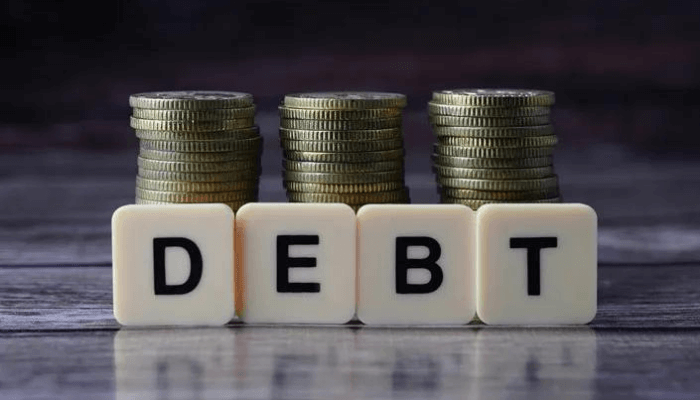
There is no doubt that spending so much on debt servicing will threaten Nigeria’s fiscal stability. With a 60 per cent debt-service-to-revenue ratio and over N15 trillion committed to debt servicing in 2026, representing 53.7 per cent of federal revenue this year, Nigeria is walking a tightrope as public gross debt consumes about 36 per cent of the country’s gross domestic product (GDP). These are signs that Nigeria is not making significant progress in fiscal transparency. The high debt service costs are narrowing and draining fiscal space for critical infrastructure such as healthcare, education and other development priorities.
Recently, the African Development Bank (AfDB), in its Regional Economic Outlook 2026, raised the alarm that Nigeria and Ghana were among countries in the West African sub-region where debt-interest payments rivaled or exceeded infrastructure spending. In 2025, seven African countries were reported to have spent more on servicing their debts than on health. Only Ghana and Zimbabwe managed to spend more on education than they did on debt servicing. The report said that the case of Nigeria was far worse than other economies in the region.
For most lower-income countries, debt service has become the single biggest obstacle to increasing their social spending and public service. This is a sad development that should be discontinued. Besides, the report examined the rising share of the federal government’s revenue being committed to external debt service across the continent. Debt serving has placed huge pressure on government’s resources. Yet, the impact of the borrowing has not been significantly felt in the country. Neither are the people better off, especially in the areas of healthcare and education, among other sectors.
According to the AfDB report, while ‘white elephants’ continue across some parts of Nigeria, visible progress shows no proof of fiscal health. The ugly trend has also been reinforced by ActionAid, an international development organisation, which, in a separate report, noted that Nigeria spends around 20.1 per cent of its national revenue on external debt payments compared to just 4.06 per cent on health, and roughly 4 per cent on education. This is five times the national income expenditure on servicing external debts than on healthcare and education.
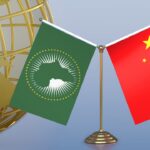
Among countries covered by the AfDB report, Nigeria owes the most bilateral debtm totaling $5.16 billion to China. However, in overall external borrowings, Nigeria’s largest creditors are multilateral institutions like the World Bank and the International Monetary Fund (IMF), which Nigeria owes $18 billion. In the last three years, Nigeria’s total public debt has increased by roughly N65 trillion to N80 trillion, according to official figures from the Debt Management Office (DMO). The total public debt rose from about N77trillion when Tinubu assumed office in May 2023, to over N159trillion in June 2026
Other News
There is urgent need for the federal government to put a moratorium on more borrowing to avoid mortgaging the future of the country. While we blame successive administrations for the huge debt service payments, financial lenders like the IMF also share in the precarious situation Nigeria finds itself as well as the hardship the citizens are currently facing. IMF has failed to connect debt servicing with its implications for health and education funding.
Over the years, debt repayment was treated like “an unalterable reality,” with countries expected to allocate resources to social services only after paying creditors. That has put the economies of many countries, including Nigeria, in a big financial hole. In fact, IMF policy advice to successive governments in Nigeria remains largely unchanged despite the lenders’ public commitments to social spending and gender equality. Besides, Nigeria’s public-sector wage bill still remains frozen at 1.9 per cent of the GDP for six consecutive years. This is the lowest among 11 countries, and significantly below the African average of 7.6 per cent and the global average of nine per cent. In spite of this, IMF and the World Bank have not made demonstrable effort to recommend increasing spending on the public workforce in Nigeria. It is wrong for the global financial institutions to compare Nigeria’s economic situation with that of the United Kingdom, which spends about 15.9 per cent of its GDP on public-sector workers, while encouraging the UK government to expand public investment further. This smacks of double standard.
Meanwhile, ordinary Nigerians who are already choked by government’s ill-advised policies are asked to absorb a doubling of Value Added Tax (VAT) and the lingering effects of a poorly cushioned subsidy removal. This is not a good advice from a financial institution that has interest in reforms. At the same time, IMF has, on several occasions, acknowledged that the federal government’s measures to cushion the impact of its reforms on poor Nigerians are inadequate. We are opposed to borrowing to pay salaries or to service the opulence of politicians.
Let our borrowing be tied to production rather than consumption. There is need for the federal government to review its borrowing pattern to prevent Nigeria from debt overhang. The country has already exceeded the borrowing threshold. The economy needs urgent diversification in areas of agriculture and mining that can create jobs and grow the GDP.