Follow Us on Google
• Builds 6 new ICT centres, targets AI, robotics, cybersecurity, software development, others
From Fred Ezeh, Abuja
Before now, the story of intervention in Nigeria’s tertiary institutions was largely associated with infrastructures such as lecture theatres, laboratories, libraries, hostels and other measures designed to address the infrastructure deficit confronting universities, polytechnics and colleges of education. But the demands of the 21st-century knowledge economy obviously driven by technology are changing that narrative.

Increasingly, access to digital technology, Artificial Intelligence (AI), cybersecurity, robotics, software development and other emerging technologies is becoming just as important as classrooms and laboratories.
It is, perhaps, against this backdrop that the Tertiary Education Trust Fund (TETFund) took some major steps towards repositioning Nigeria’s tertiary institutions for the digital age, beginning with the establishment of ICT Experience Centres across the six geopolitical zones.
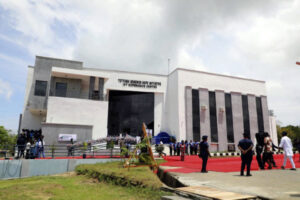
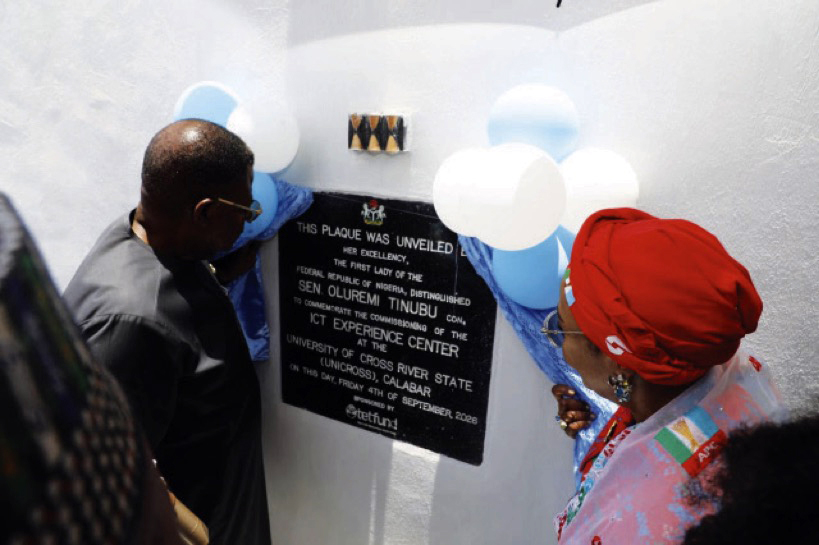
The initiative came into more focus a few days ago when the First Lady, Senator Oluremi Tinubu, commissioned a N1 billion state-of-the-art Information and Communication Technology (ICT) Digital Experience Centre at the University of Cross River State (UNICROSS), Calabar.
The facility, delivered under the Renewed Hope Initiative in partnership with TETFund, provided students with advanced access to technology equipments such as laptops, desktop computers and other sophisticated digital resources.
Its importance lies not merely in the technology housed within the facility, but in the opportunity it offer thousands of students who may otherwise struggle to acquire personal digital devices.
For instance, a students from economically disadvantaged backgrounds may face the challenge of lack of a laptop, reliable electricity or internet-enabled learning environment that could constitute a major barrier to participation in modern education. The new centre was, therefore, designed to help bridge that gap.
At the commissioning of the facility, Senator Tinubu also informed the gathering that the facility would provide students with opportunities to learn, create and develop digital skills without the barriers of device ownership and unstable electricity.
“This initiative is part of a nationwide pilot involving tertiary institutions across the country’s geopolitical zones. The six pioneer beneficiaries are Ekiti State University; Federal Polytechnic Oko, Anambra State; Kaduna State University; Kwara State University; UNICROSS and Taraba State University,” she said.
For TETFund, the project represents a deliberate attempt to prepare Nigerian students for an economy increasingly driven by technology and advanced digital skills.
Chairman of the TETFund Board of Trustees, Rt. Hon. Aminu Masari, said the Board approved an ICT Experience Centre in each of the six geopolitical zones under the Fund’s 2024 intervention activities, at a total cost of N1 billion per zone, and UNICROSS was fortunate to host the South-South centre.
Masari said the centres were carefully designed to equip students and lecturers with critical digital skills in artificial intelligence, cybersecurity, robotics and software development.
Other News
Beyond the classroom, he said the facilities would expose beneficiaries to emerging technologies with applications in critical sectors including agriculture, healthcare, security, media and mining.
“The ultimate objective is to improve graduate employability, encourage innovation and prepare Nigerian youths to compete effectively in the global technology-driven economy. The intervention also reflects the changing nature of the labour market.
“Base on several research outcomes, employers increasingly require to engage graduates who can work with digital tools, analyse information, develop technological solutions and adapt to rapidly changing technologies. Hence, the ICT Digital Experience Centre will enable students to achieve the objectives,” he said.
For TETFund Executive Secretary, Arc. Sonny Echono, the ICT centres are therefore not simply another set of infrastructure projects, and described the initiative as part of the Fund’s commitment to strengthening digital infrastructure in tertiary institutions and expanding access to technology-driven learning.
Echono urged UNICROSS management to properly maintain, secure and regularly upgrade the facility and equipment to ensure that the investment delivers sustainable value.
His warning also highlighted an important question confronting TETFund’s project expansion intervention programme: what happens after projects are commissioned? To this end, the agency is obviously stepping up monitoring of intervention projects, particularly those that have been delayed or abandoned.
TETFund warned that institutions with delayed projects could face the possibility of being excluded from TETFund’s 2027 intervention cycle, while monitoring teams comprising all relevant stakeholders including members of TETFund Board of Trustees are expected to inspect affected projects before the Board’s October review. This tougher position, perhaps, reflect the Fund’s growing emphasis on accountability and value for money.
For TETFund, providing funds is only one part of the intervention process. Institutions are expected to ensure that projects are completed, utilised and maintained for the benefit of students and staff.
This is particularly important as the Fund expands its interventions into areas that indicates that technology and innovation are central to national development. The digital push is also being complemented by increased investment in research.
Mmeanwhile, TETFund has announced a N10 billion allocation for the 2026 National Research Fund, representing a substantial increase from the N6.09 billion provided in 2025.
The fund is expected to support research across 30 priority areas covering science, engineering, technology, humanities and social sciences. Concept note submissions, however, opened on August 31 and will close on October 15, 2026.
The agency said it’s also expanding its National Research Fair, with increased attention on the commercialisation of academic research. “Taken together, these interventions suggest a broader shift in TETFund’s approach, from simply helping institutions build physical capacity to helping them develop the human and technological capacity required to compete in the global knowledge economy.”
At UNICROSS, the new ICT centre has provided a glimpse of what that future could look like. It means that a student studying agriculture could use digital tools to explore precision farming. A medical student could develop technology-based solutions to healthcare challenges. A media student could acquire advanced digital production skills, while others could explore artificial intelligence, coding, cybersecurity or robotics. But the success of the investment will ultimately depend on utilisation.
TTETFund warned that a modern ICT centre that is underused, poorly maintained or allowed to become obsolete would, unarguably, represent another missed opportunity, hence the simultaneous emphasis on project monitoring and institutional accountability is significant.
The Fund appears increasingly determined to ensure that its interventions do not end with commissioning ceremonies but translate into measurable improvements in teaching, research, innovation and student development.
The challenge, consequently, is no longer simply whether Nigerian tertiary institutions can secure intervention funds. It is whether they can convert those investments into knowledge, skills, research breakthroughs, innovation and employment opportunities. The UNICROSS ICT centre may therefore be more than a technology facility.
It represents a possible turning point in the evolution of tertiary education intervention in Nigeria, from building more structures to building institutions capable of producing graduates who can thrive in a digital and increasingly technology-driven world.
As TETFund commissions more ICT facilities in the coming days, the real test will be whether these centres can become active hubs of learning, innovation and problem-solving. For a country seeking to build a competitive knowledge economy, that may ultimately be the most important measure of success.