Follow Us on Google
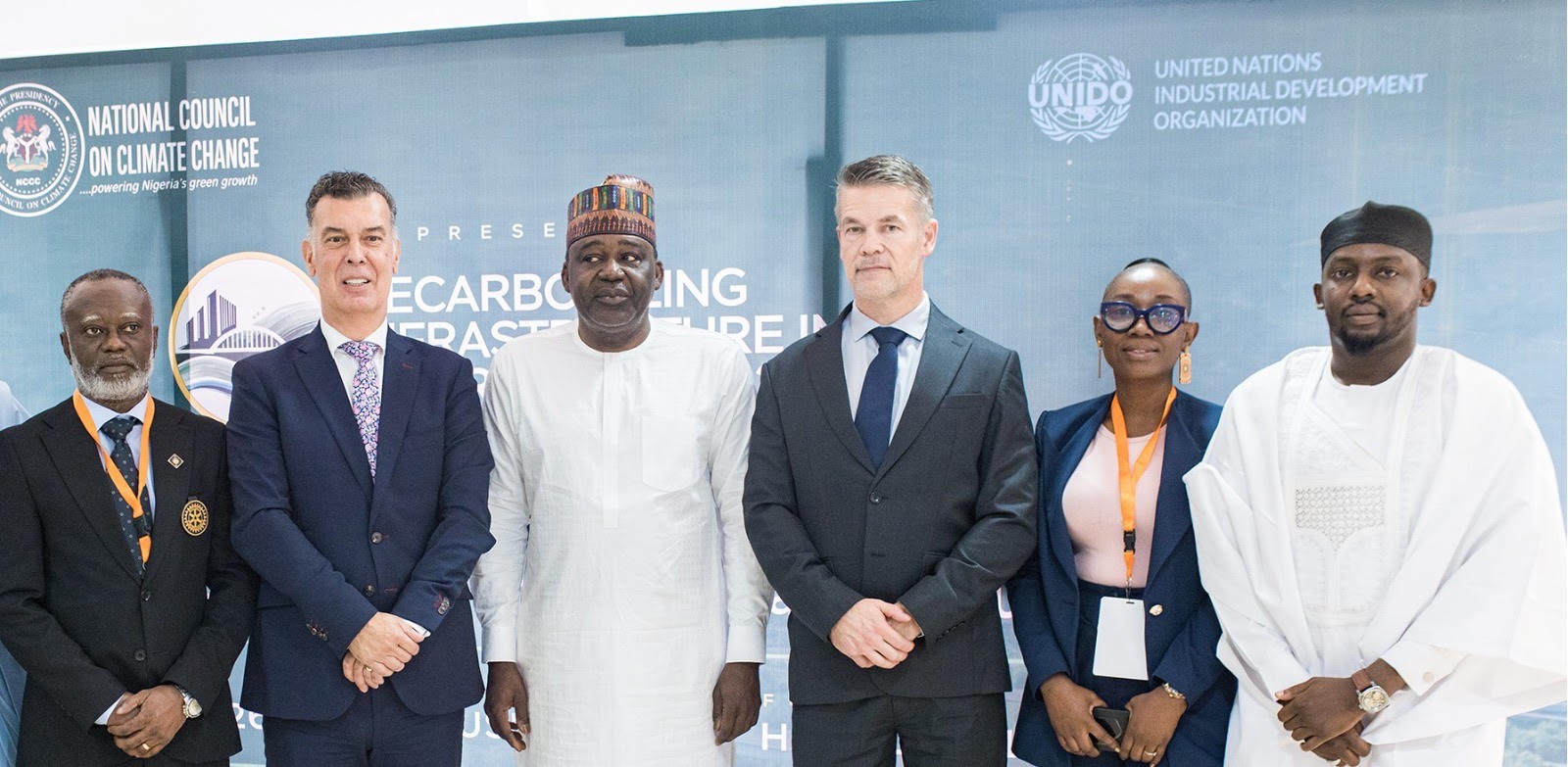
APM Terminals Nigeria has called for stronger collaboration among government, industry, investors, and development partners to accelerate the development of bankable green infrastructure projects that can transform Nigeria’s maritime sector and support the country’s transition to a low-carbon economy.
The call was made by APM Terminals Nigeria Chairman, Frederik Klinke, at the second Decarbonising Infrastructure in Nigeria (DIN) Summit in Abuja, themed “De-risking Green Infrastructure Investments: From Policy Architecture to Bankable Projects.”
Addressing policymakers, industry leaders and development partners, Klinke said Nigeria has made significant progress in advancing maritime reforms and climate action but stressed that the next phase must focus on implementation.
“Policy alone does not reduce emissions. Strategies do not decarbonise ports. Frameworks do not attract investment. Projects do,” he said.
Klinke emphasised the need to translate policy ambition into scalable, investment-ready projects that deliver both economic and environmental benefits.
According to him, maritime transport accounts for more than 80 per cent of global trade by volume; he said decarbonising the sector is critical to achieving climate goals and strengthening long-term economic competitiveness.
He highlighted the importance of regulatory clarity, project readiness, reliable emissions data, and stronger integration across ports, roads, rail and inland logistics networks.
Also speaking at the summit, CEO of APM Terminals Nigeria, Koen De Backker, highlighted the critical role of ports and terminals in the energy transition, noting that reducing emissions begins with improving the efficiency of logistics systems.
He said this can be achieved by reducing equipment usage and fuel consumption, minimising truck waiting times and congestion, improving cargo flow and operational efficiency, supporting cleaner energy solutions, and preparing for the adoption of lower-emission technologies.
“Maritime decarbonisation is not only a fuels challenge. It is also an operational challenge,” De Backker said.
Other News
Representing Vice President Kashim Shettima, Deputy Chief of Staff Senator Ibrahim Hadejia called for urgent policy reforms, stronger public-private partnerships and innovative risk-sharing mechanisms to attract domestic and foreign investment into Nigeria’s green infrastructure sector.
He said achieving Nigeria’s climate and infrastructure objectives would require greater participation from the private sector, development finance institutions and institutional investors, supported by well-prepared projects capable of attracting long-term capital.
Personal Assistant to the President on Subnational Infrastructure and representative of the DIN Summit Steering Committee, Musaddiq Adamu, said the summit was established to address a critical challenge: moving green infrastructure projects from concept to investment.
He noted that engagements from previous editions had already produced tangible outcomes, including progress on port electrification initiatives.
According to Adamu, discussions following APM Terminals’ presentation at the inaugural summit contributed to a partnership with the Nigerian Ports Authority (NPA) aimed at advancing the electrification of port operations and positioning Onne Port as a leading example of green port development in Nigeria.
Klinke had earlier highlighted APM Terminals Nigeria’s contribution to the country’s decarbonisation agenda, including the launch of a white paper outlining practical pathways for reducing emissions across Nigeria’s container logistics value chain.
The report demonstrates how electrification of logistics operations can stimulate investment, improve energy reliability, create skilled jobs, enhance public health outcomes and reduce supply chain emissions.
As part of its long-term commitment to sustainable logistics, APM Terminals, in partnership with the NPA, plans to invest in green power infrastructure and electric equipment across its Apapa and Onne operations. The initiative is expected to strengthen Nigeria’s trade competitiveness while advancing the country’s climate ambitions.
“The question before us is no longer whether decarbonisation will happen. The question is whether we will create the partnerships, frameworks and investment environment needed to make it happen at the pace required,” Klinke said.
He urged stakeholders to move beyond dialogue and focus on execution, noting that the infrastructure investments and partnerships established today will help shape Nigeria’s future economy, trade competitiveness and environmental sustainability.