Follow Us on Google

By Gabriel Dike
Governor Godwin Obaseki of Edo State has acknowledged the contributions of teachers in the education sector and pledged to empower them through frequent training.
Obaseki made the remarks recently at the launch of the Nigerian Learning Passport, in conjunction with the United Nations International Children’s Fund (UNICEF).
The launch of Nigerian Learning Passport was coming after the achievements recorded in Edo Basic Education Sector Transformation, EdoBEST 1.0, that changed the face of basic education in the state; the success made the state government to step up with the launch of EdoBEST 2.0, which focuses on senior secondary school and technical education.
The governor acknowledged that key to any education reform is the teacher and that it is the reason the state continues to train and retrain its teachers.
He said: “The teachers are the ones governing the schools and, once you get the governance of the school correct and right with a competent head teacher, he will get the other teachers to work and our students will be okay.
“We have moved from the situation of our children going to school, what we now focus on is quality and the relevance of what they are being taught. For us, education has not been an elitist product and we must continue that so that our children would have access to school and quality education.
“We have changed the designation of the heads of our secondary schools to executive principals. This is to give them full responsibility of what happens in their schools. They must not also bow to political pressure.
“We now live in a world of knowledge and without acquiring the required knowledge to navigate today’s world, one would not be able to get to anywhere significant. Human capacity is what tomorrow world needs is and if we don’t give our children what they need, our country won’t be able to compete then.”
The Edo State helmsman acknowledged that the giant strides recorded through EdoBEST 1.0, which was launched in 2018, shot the state into national and international recognition.
According to him, the focus on technical and vocational education is to move the state from a situation where people with certificates but no jobs to do and those who have jobs even if they do not posses big certificates.
His words: “After junior secondary school, our children must have a vocation they are good at. In the light of this, we are going to ensure that the state has at least 20 technical colleges before we leave office in 2024. We are also working on 20 mini stadia across the state as we want to produce total and complete students from our schools.’’
Obaseki listed areas of focus of the programme to include quality/relevance of what students are taught, access/equity, school governance, financing, secondary and TVET education. He revealed that, next year, his administration would accord priority to special education, adult education and tertiary education.
The governor allayed the fear that any succeeding government could discard the reforms being introduced, stressing adequate legal frameworks have been made to back up SUBEB, PPEB and BTVET laws.
He added: “Anybody who comes after us and wants to change anything would have to go to the lawmakers, who are the representatives of the people, to change such laws. We are also going to implement Child Rights Law. Parents must do their part.
“Every parent that can afford it must provide food for their children to take to school. Parents must support their child’s academic and co-curricular pursuits. Using children under the age of 18 for manual labour and for house-help is not acceptable. Offenders will be prosecuted.
“Perpetrators of violence against children, sexual defilement, physical abuse would be prosecuted; beginning September 12 when schools resume, any school-age child found loitering, hawking during school hours will be arrested and their parents or guardians prosecuted. Constabularies, PUWOVs and other measures will be put in place to comb the marketplaces and streets during school hours.
“School resumes (September 12) and teaching starts same day. I will send out a special squad to go out and monitor schools on that day. The Ministry of Education, SUBEB, PPEB and BTVET will be held accountable if teaching does not begin on day one.”
Obaseki announced the disarticulation of schools from 6-3-3-4 to 1-9-3-4, which will see the separation of JSS from SSS and the conversion of primary schools to basic schools. It will start in the state this September.
Earlier, the Commissioner for Education, Dr. Joan Osa Oviawe, said, aside from training over 1,500 teachers and 305 executive principals, the 1,000 Edo Supporting Teachers to Achieve Results (EdoSTAR) fellows recruited recently would be trained soon.
She noted: “In line with the vision of EdoSTAR, Teacher Appreciation Day has been introduced, on this day everyone is urged to celebrate our teachers and show them appreciation. EdoSTAR Teaching Fellowship Programme is not a casual work scheme. It’s a full time earn-and-learn employment scheme to recruit and groom the next generation of teachers.’’
Oviawe observed that teaching is no longer the profession for quacks, stating that what separates other government teachers from EdoSTAR fellows is that they are pensionable and earn Teachers Special Allowance.
‘’The EdoSTAR fellows will start earning this upon their automatic absorption into the public service after satisfactory performance on the job. They are on time and regular at school, they can teach and their pupils and students are learning. Fellows will receive continuous training. Those without the requisite educational qualifications will be supported to get them.
“All Fellows will be trained to meet and exceed the new Edo State Teaching Standards.
“NPOWER coming into our school system will be given the opportunity to apply to join the EdoSTAR fellows track, this means, upon completion of their one year NPOWER scheme, and based on satisfactory performance, they will be migrated to the EdoSTAR teaching fellowship which is a pathway for direct absorption into the Edo State Public Service. The state college of education which will kick-off this September will provide continuous professional development and capacity building for teachers,” she said.
At the event, two UNICEF Education Specialists, Yetunde Oluwatosin and Babagana Aminu, lauded Governor Obaseki for the introduction of EdoBEST 1.0 and the higher version, EdoBEST 2.0, saying the former was an amazing experience in the state.
Both expressed optimism that the EdoBEST 2.0 would also make significant impact in the senior secondary school level.
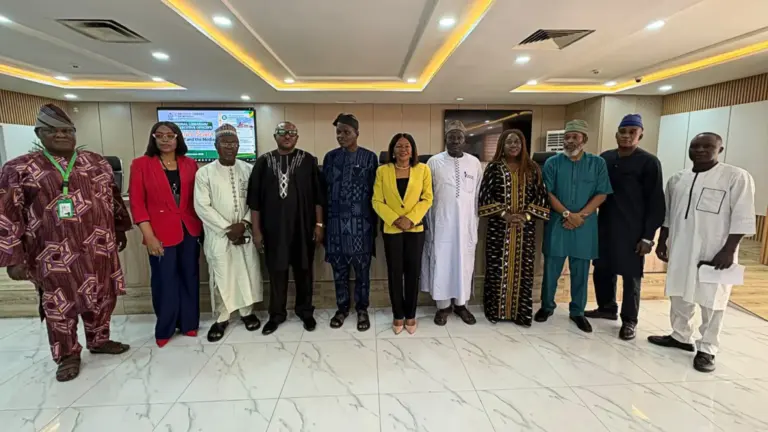
The governor used the occasion to inaugurate different management boards for secondary schools. The event was witnessed by key stakeholders, who acknowledged Obaseki’s committed to improving the state education sector.