Follow Us on Google
By Beifoh Osewele
For years, English Studies students in Nigerian universities have heard the same question over and over: What can you really do with an English degree?
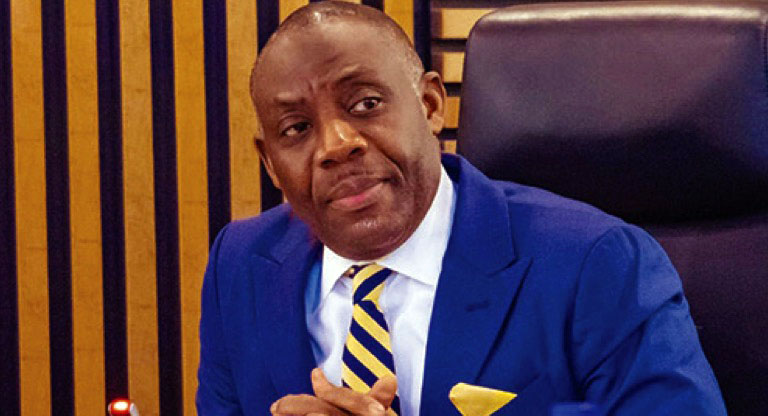
A lot of the time, that question comes from the idea that the course only leads to teaching, journalism, or academia. But at the maiden reunion of the University of Lagos Department of English Alumni (UDEA), one of its standout graduates, Dr. Jekwu Ozoemene (1996 set), gave a strong answer.
Speaking on the theme, “Unlocking Global Opportunities with English Studies: The Akoka Legacy,” the Group Executive of The Alternative Bank shared his own journey—from English graduate to banking executive, fintech board chairman, international development expert, and business strategist—to show that the real strength of an English graduate is not just the certificate, but the ability to keep reinventing yourself.
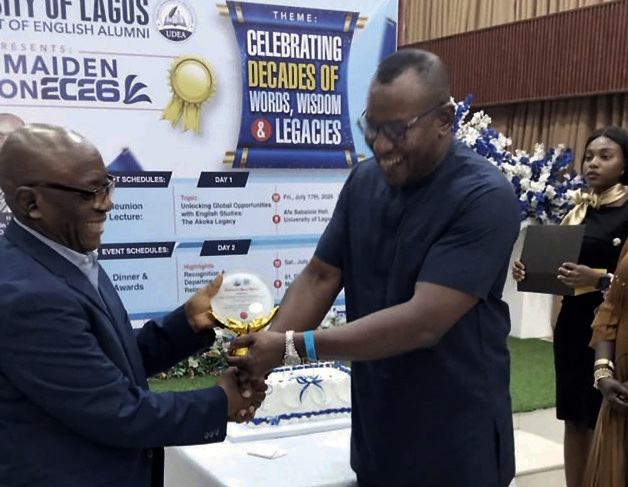
His story resonated with hundreds of alumni, lecturers and students who came together for the reunion, which was themed “Celebrating Decades of Words, Wisdom and Legacy.”
Instead of just talking about his successes, Ozoemene also spoke honestly about the setbacks that shaped his career. He reminded the audience that he came from a generation whose university education was interrupted by long ASUU strikes and political unrest after the annulment of the June 12 election. Those delays pushed graduation back and left many graduates older than the preferred recruitment age for big employers.
And that wasn’t the end of the problem.
At the time, the Department of English had not produced a First Class graduate, and Second Class Upper degrees were very rare. Since many top companies wanted at least a 2:1 for entry-level jobs, a lot of graduates already felt behind before they even entered the job market.
Still, Ozoemene didn’t let any of that define him.
“The starting point does not determine your destination,” he said. “What determines your destination is your willingness to learn, to adapt and to invest in yourself continuously.”
That mindset became the base of a career that has lasted nearly 30 years. After earning degrees and professional qualifications in finance, banking, and business administration from top international institutions, he moved up in the financial services world while still staying close to literature as a poet, playwright, and author.
One of the most interesting parts of his lecture was how he explained that literary criticism helped prepare him for banking.
He talked about studying D. H. Lawrence’s Snake under Professor Karen King-Aribisala and analysing J. P. Clark’s The Year’s First Rain in Professor Akachi Adimora-Ezeigbo’s class. According to him, those exercises taught students how to look beyond the surface, spot patterns and make sense of complex ideas.
Other News
“Practical Criticism is a superpower,” he said.
He explained that the same kind of thinking needed to break down poetry also came in handy when analysing financial statements, assessing credit risk, and understanding economic systems. In other words, he just switched words for numbers while using the same critical thinking skills.
In today’s world, where artificial intelligence is changing industries fast, Ozoemene said those human skills matter even more. Communication, interpretation, creativity, and critical thinking are exactly the things machines still struggle to do well.
His lecture also pushed back against old ideas about humanities education in Nigeria. Instead of seeing English Studies as training for only a few careers, he encouraged graduates to see themselves as problem-solvers who can do well in banking, consulting, technology, public policy, international development, and entrepreneurship.
But his message wasn’t just for students.
He also challenged universities to update their curricula so graduates leave school with not just strong academic knowledge, but also the practical skills needed in today’s job market.
“The gown must understand what it takes to survive in town,” he said, neatly capturing the gap between academia and industry.
The reunion itself showed just how much the department has influenced generations. It ended with a gala dinner in Lagos, where eleven retired professors – Ebun Clark, Theo Vincent, Funso Akere, ABK Dadzie, FBO Akporobaro, Segun Awonusi, Karen Aribisala, Adeyemi Daramola, Akachi Ezeigbo, AE Eruvbetine and Oko Okoro – were honoured for years of scholarship and mentorship that have shaped thousands of graduates across Nigeria and beyond.
Their recognition pointed to a bigger truth that came out of the reunion: the Department of English’s legacy is not just about how many teachers, journalists, or writers it has produced. Its real impact is in the graduates it has helped shape—people whose command of language, ideas, and human experience has prepared them to thrive in almost every part of society.
For young Nigerians still unsure about their course of study, Ozoemene’s story offers a clear lesson. Degrees can open doors, but curiosity, resilience, lifelong learning, and the courage to reinvent yourself decide how far those doors can take you.
As he put it, excellence—not just academic labels—ends up attracting opportunity.
So, the University of Lagos Department of English alumni reunion was more than just a nostalgic get-together for old classmates. It became a celebration of the lasting value of the humanities and a reminder that, in a world shaped by technology and constant change, the ability to think critically, communicate clearly, and understand people is still one of the most valuable skills anyone can have.