Follow Us on Google
From Noah Ebije, Kaduna
For days, the story out of Kurmin Wali community in Kajuru Local Government Area of Kaduna State was initially one of denial.
As anxious relatives raised the alarm that dozens of women and children had been whisked away by gunmen on a Sunday morning, official ‘assurances’ filtered out of security circles that “no one was kidnapped in Kajuru.”
The reports, residents were told, were exaggerated. Nothing out of the ordinary had happened.
But in Kurmin Wali, fear sat heavily in empty homes, on abandoned farmlands and in the uneasy silence left behind by 183 missing persons.
What began on January 18, 2026, as confusion and official denial would, weeks later, culminate in tears of joy on February 5, 2026, when the last batch of abducted villagers was formally received by Kaduna State governor, Uba Sani, in the state capital.
In between those dates lay nearly three weeks of suffering in the forest. When the victims finally found their voices, their stories stripped away any doubt about what had happened.
Rescued victims from Kurmin Wali recounted how bandits stormed their community and forced them to trek deep into the forest, far from help, far from phone networks and far from the early reassurances that nothing had happened.
One of the victims, Tanko, told Daily Sun that the abductees, mostly women and children, were marched through thick bush for six days.
“We trekked from Kurmin Wali into the forest for six days. They kept us by a river bank and fed us with pap made of maize,” the victim said quietly.
Food was scarce, water unsafe and dignity stripped away.
“We slept by the river bank. Some of us did not take a bath for about two weeks,” the victim added.
But perhaps the most disturbing detail was how the captors dealt with crying children.
“They flogged us, including our children, especially when the children cried,” the victim said. “We are thanking the governor for rescuing us from the kidnappers.”
As families insisted that their loved ones were missing, pressure mounted on authorities. Gradually, the narrative shifted from denial to quiet engagement and, finally, to coordinated rescue operations involving multiple security agencies.
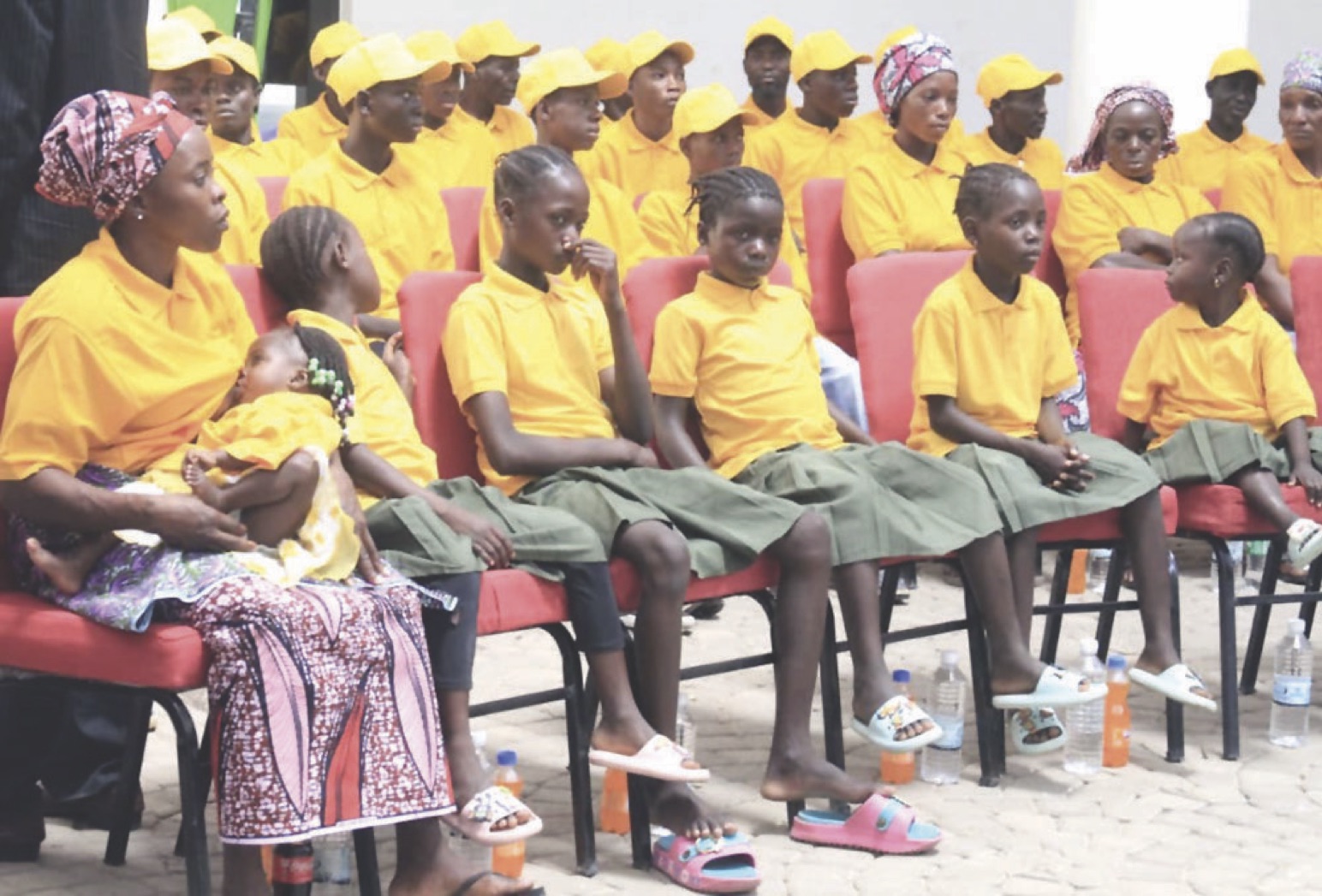
Governor Sani later disclosed that a total of 183 persons were abducted during the Kurmin Wali attack. Receiving 172 victims in Kaduna, the governor described the moment as one of joy, reflection and gratitude.
“Distinguished ladies and gentlemen, today is truly a day of joy for us,” Sani said.
He acknowledged the shock that followed the incident, especially against the backdrop of ongoing security efforts in the state.
“When this unfortunate incident happened, many of us were shocked. However, we immediately mobilised all security agencies and relevant stakeholders to ensure the safe return of our people,” he said.
According to the governor, the rescue process happened in phases. Eleven victims were released early and rushed to hospital. Eighty-three others regained freedom days later. The final 89 were rescued later.
Other News
“Today, I can say without contradiction that all those abducted from Kurmin Wali have returned. We would not be sitting here if even one person was still missing,” Sani declared.
Governor Sani expressed appreciation to President Bola Ahmed Tinubu, revealing that the President followed the situation closely from the outset.
“I want to sincerely thank President Bola Ahmed Tinubu, who stood with us from day one. He called me repeatedly, showing deep concern and leadership,” he said.
He also commended the National Security Adviser, Mallam Nuhu Ribadu, alongside the DSS, Nigerian Army, Police and other security agencies.
Addressing public criticism and speculation that followed the initial denial, Sani maintained that the government deliberately avoided media battles.
“For us, even one person abducted is unacceptable. That is why we refused to politicise this incident. Our focus was clear, to ensure that every single person returned safely,” he said.
Beyond the rescue, the Kajuru abduction has forced renewed focus on long-standing security gaps along the Kajuru-Kachia axis, a corridor notorious for bandit activity.
Sani revealed that the state had requested the establishment of a military base in the area.
“I am happy to inform you that Mr. President has given his assurance that this request will be granted,” he said.
Rejecting calls for relocation, the governor insisted that Kurmin Wali residents deserved protection in their ancestral homes.
“They are predominantly farmers. Rather than relocate them, we believe it is better to protect them so they can continue their farming activities,” he said.
He announced the construction of an access road, a hospital and a skills acquisition centre for the community.
Sani disclosed that the rescued victims would undergo medical and psychosocial care in Kaduna before returning to Kurmin Wali.
“Our medical team will ensure they are physically and mentally fit. We will also support their livelihoods, as many of them have lost income during this period,” he said.
Also speaking, chairman of the Kaduna State chapter of the Christian Association of Nigeria (CAN), Rev. Caleb Maaji, described the ordeal as a test of faith and leadership.
“What happened to us in Kaduna was a test, and we have passed the test,” Maaji said.
He thanked the state government and security agencies, noting that the outcome silenced doubters.
“Not some of them have returned, all of them have returned. We are grateful to the governor, the security agencies and everyone who stood with us,” he said.
As the victims begin the slow process of healing, Kurmin Wali stands as a reminder of how quickly denial can give way to reality and how, in the forests of southern Kaduna, survival often depends on persistence, pressure and quiet coordination.