Follow Us on Google
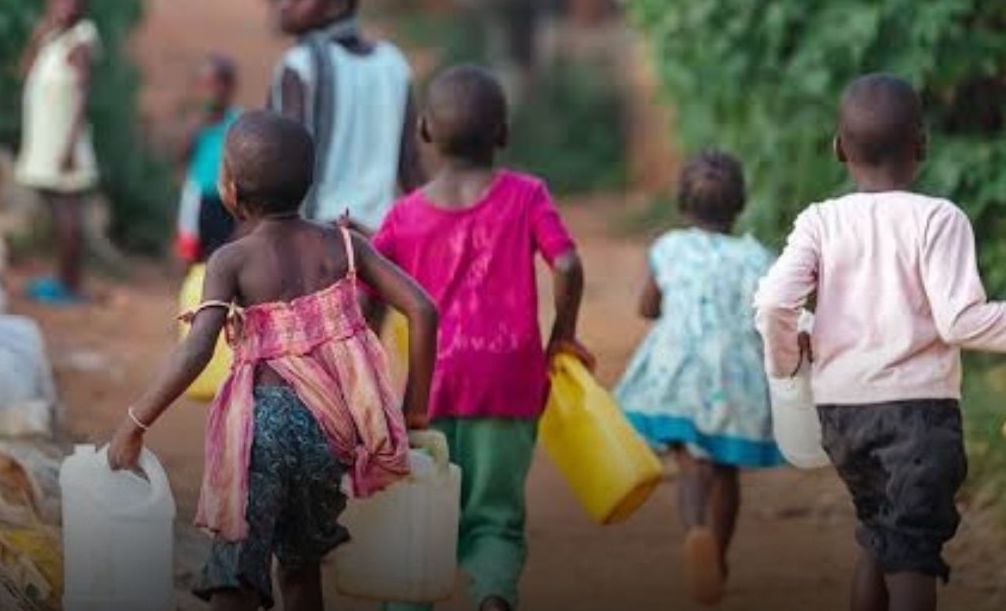
The federal government has reiterated its commitment to tackling Nigeria’s worsening out-of-school children crisis. Currently, the government has affirmed that it has about 15 million out-of-school children. In other words, these are children outside the school system across the country. Government’s figure notwithstanding, Nigeria’s out-of-school children may be above the official figure. While the United Nations Children’s Fund (UNICEF) Nigeria Education Centre says that around 18.3 million out-of-school children exist in the country, other estimates put the figure at about 20 million. Whatever is the case, the fact remains that Nigeria’s out-of-school challenge is enormous.
Therefore, the new effort to drastically reduce the number of Nigeria’s out-of-school children through data-driven reforms, stronger collaboration and investments in education is welcome. With targeted investments, the government will expand access to education as well as improve enrolment.
Nigeria’s new initiative to bring millions of out-of-school children into the classroom aligns with the new collective commitment of countries to reducing the number of out-of-school children and youth by 165 million by 2030. According to the United Nations Educational, Scientific and Cultural Organisation (UNESCO), about 272 million children around the world are still not enrolled in school. UNESCO further says that to date, countries have committed to reducing out-of-school rates by two per cent at the primary level, five per cent at lower secondary, and 16 per cent at upper secondary by 2030. This, it says, would reduce the number of out-of-school children to 107 million—a decrease of 165 million—by 2030.
The Director of UNESCO’s Global Education Monitoring Report, Manos Antoninis, observed that “through their national SDG 4 benchmarks, countries have collectively committed to injecting new energy into the global agenda and make it relevant to their needs. We now need continued investment in national data systems, institutional capacity, and political leadership to turn these commitments into tangible results.”
While UNESCO advocates the right to education for all, it also calls on countries to allocate at least four to six per cent of GDP and at least 15 to 20 per cent of total public expenditure to education. Good enough, it also ensures global coordination to keep education at the top of the government priorities and intervenes in situations of conflict, emergencies, and protracted crises to ensure access to education. Nigeria is among the top countries with higher number of out-of-school children in the world alongside India, Pakistan. Globally, approximately one in every five out-of-school children is in Nigeria. Nigeria’s out-of-school crisis is driven by poverty, regional insecurity, and cultural or religious factors. The crisis has been exacerbated by the high number of Almajiri children in the Northern region.
Other News
Of the about 272 million out-of-school children worldwide, about 78 million children belong to primary school level, while 64 million are of lower secondary age. About 130 million are dropouts from upper secondary age. The global statistics show that students in conflict zones are the most affected. An estimated 13 million of these out-of-school youths live in conflict-affected nations like Mali, Sudan, and Somalia.
It is unacceptable that Nigeria accounts for about 4.5 per cent of the global out-of-school index. Nigeria’s North-West and North-East regions are responsible for most of the out-of-school children in the country. Extreme poverty, insecurity, socio-cultural reasons, and limited educational infrastructure have been cited as the main causes. About 66 per cent of the out-of-school children are located in the North-West and North-East geopolitical zones. Over 50 per cent of the out-of-school children in Nigeria are girls, and 86 per cent of them live in rural areas.
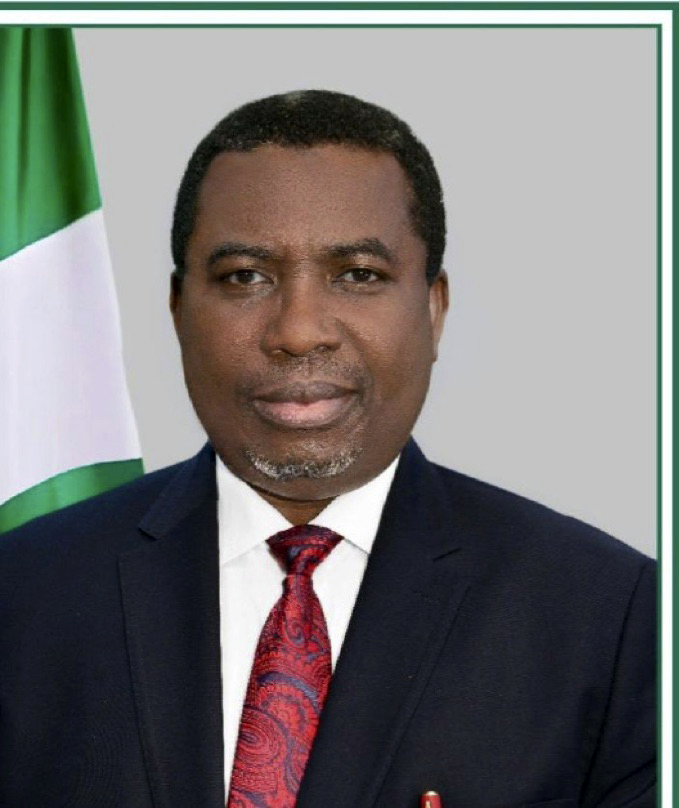
However, it is commendable that the federal government, through the Federal Ministry of Education and the Universal Basic Education Commission (UBEC), has commenced community-level mapping and implementing school-reintegration programmes to address Nigeria’s out-of-school children challenge. Recently, the Minister of Education, Dr Maruf Tunji Alausa, observed that credible education data and accurate learner tracking are critical to solving Nigeria’s long-standing education challenges. According to him, “without knowing where the children are and why they are out of school, meaningful solutions cannot be implemented.” Instructively, nearly one million out-of-school children had been mapped for reintegration into formal schools and alternative learning pathways.
We believe that the federal government assistance to states to access over N106 billion UBEC’s matching grants will strengthen basic education delivery nationwide and reduce the number of out-of-school children. There is urgent need for every Nigerian child to be in school. The federal government should make primary and basic education free and compulsory for all Nigerian children. No Nigerian child should be left out.
We urge the governors to ensure that all children of school age in their domains are enrolled. Parents and guardians must be sanctioned for keeping their children and wards outside the school system. Let the government increase our annual budget for education to 15 to 20 per cent as suggested by UNESCO.