Follow Us on Google

• INEC, Accord served judgment affirming Hashim as Accord’s presidential candidate
From Godwin Tsa, Abuja
The Supreme Court’s restoration of key provisions of the Electoral Act 2026 has raised fresh questions over the nominations of several prominent candidates for the 2027 general elections, particularly politicians who changed parties close to their nomination exercises.
Among those whose nominations have drawn scrutiny are Kingsley Chinda, Ovie Omo-Agege, Victor Ochei, Isa Pantami and Donald Duke, as the Independent National Electoral Commission (INEC) reviews the certified true copy of the judgment before determining its next steps.
Meanwhile, INEC and Accord have been served with the certified true copy of a Federal High Court judgment affirming Gbenga Olawepo-Hashim as Accord’s presidential candidate for the 2027 election. The party’s chairman, Maxwell Mgbudem, has appealed the ruling.
In its September 24, 2026 judgment, the Supreme Court restored Sections 77(5), 77(6), 77(7) and 84(2) of the Electoral Act, which the Court of Appeal had earlier declared unconstitutional.
The restored provisions govern party membership registers and the procedures for nominating candidates. They require parties to submit their membership registers to INEC at least 21 days before a primary, congress or convention and to use those registers for their internal elections. Participation is restricted to members whose names appear in the submitted registers.
Section 84(2) provides for direct primaries or consensus in the nomination of candidates.
The Supreme Court did not name or disqualify any candidate. Questions surrounding individual nominations will depend on the facts of each case and whether the parties complied with the restored provisions.
Chinda emerged as the All Progressives Congress (APC) governorship candidate in Rivers State on May 21 after leaving the Peoples Democratic Party (PDP) around the nomination period. Questions centre on when his APC membership took effect and whether his name appeared in the register submitted to INEC before the primary.
In Delta State, Omo-Agege and Ochei moved from the APC to the Nigeria Democratic Congress (NDC) after the APC nomination exercises. The NDC granted them waivers before they secured its senatorial tickets for Delta Central and Delta North, respectively. Ochei is a former speaker of the Delta State House of Assembly.
Pantami, a former minister of communications and digital economy, moved from the APC to the PDP before emerging as its governorship candidate in Gombe State. A challenge to his initial nomination resulted in a court order for a fresh primary, which he subsequently won.
Duke, a former Cross River State governor, joined the Peoples Redemption Party (PRP) shortly before its presidential primary. A rival challenged his nomination, alleging that his name was absent from the membership register submitted to INEC.
Other News
The Federal High Court dismissed the suit on September 30 on grounds including that it was statute-barred and that the allegations were unproven.
Other nominations that have drawn questions include those of Muhammad Nami, the PDP governorship candidate in Niger State, and former inspector-general of police Mohammed Abubakar Adamu, the Social Democratic Party (SDP) governorship candidate in Nasarawa State.
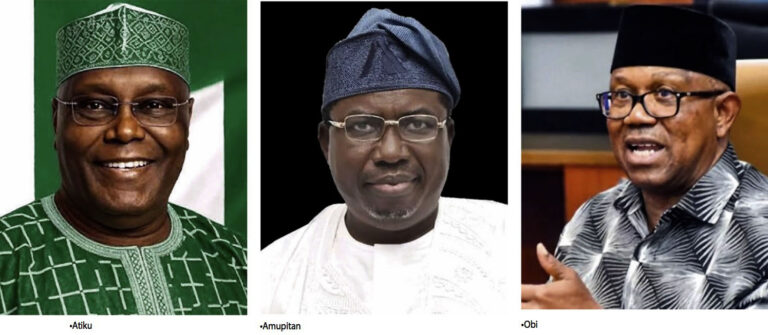
INEC Chairman, Prof. Joash Amupitan, said the commission had received complaints from political parties, aggrieved aspirants and members of the National Assembly. He said it had obtained the certified true copy of the Supreme Court judgment and was reviewing it before deciding on the appropriate action.
In the dispute over Accord’s presidential ticket, Justice Mohammed Garba Umar of the Federal High Court, Abuja, ruled on October 5 that Olawepo-Hashim emerged as the party’s candidate from its May 30 primary.
The court ordered Accord to submit his name to INEC and directed the commission to accept and recognise him as the party’s presidential candidate.
The judgment followed Olawepo-Hashim’s suit against Accord and INEC over the party’s failure to submit his name after the disputed exercise.
Accord’s counsel, T. W. Olusesi, argued that the primary had been validly cancelled. Olawepo-Hashim’s counsel, Henry Akunebu, challenged the purported cancellation and the documents relied upon by the defendants.
Akunebu argued that the cancellation letter lacked the party’s official stamp and questioned how it had been received by INEC.
Justice Umar rejected the objections and held that the evidence established Olawepo-Hashim’s emergence from the May 30 exercise. The judge also relied on evidence that Accord had accepted N50 million from him for expression of interest and nomination forms.
The certified true copy of the judgment has now been served on Accord and INEC, bringing compliance with the orders into focus.
Mgbudem, however, has taken the dispute to the Court of Appeal, despite Olawepo-Hashim’s call for reconciliation.