Follow Us on Google
By Fred Itua, Abuja
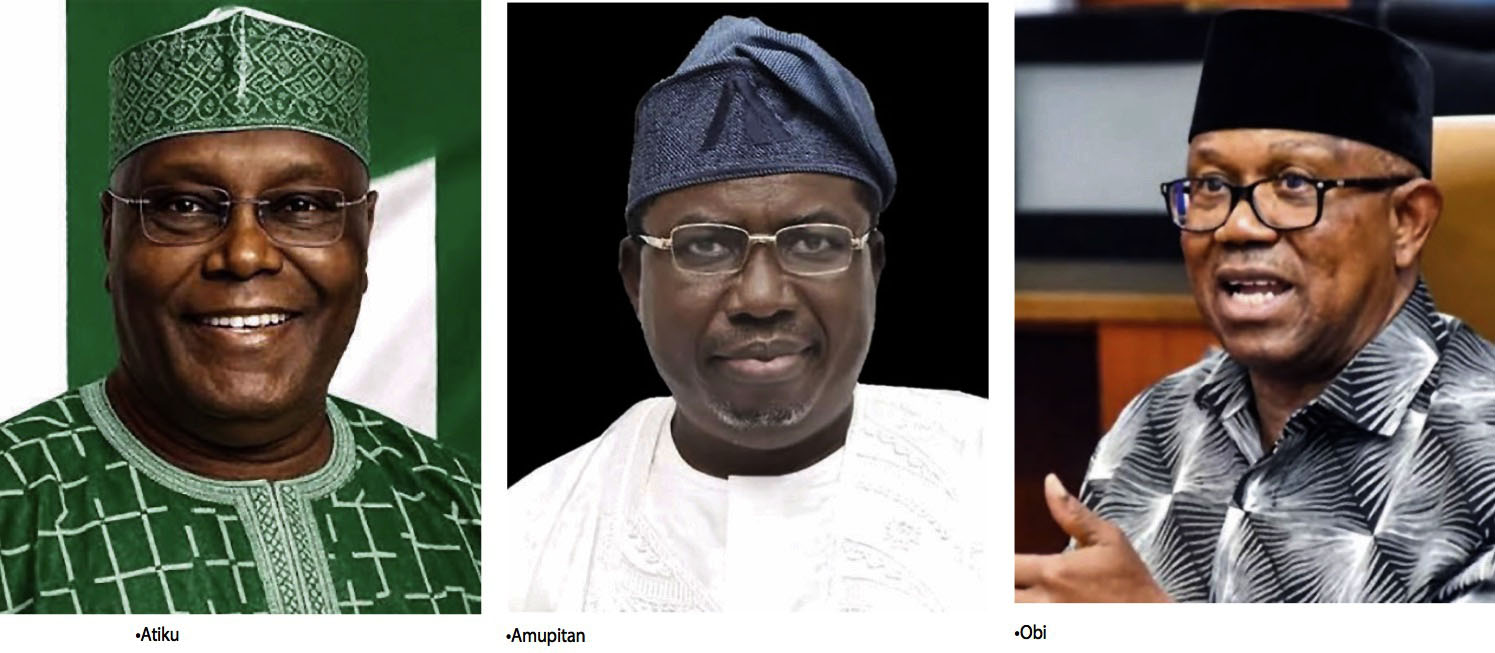
Chairman of the Independent National Electoral Commission (INEC), Professor Joash Amupitan, has urged media organisations to resist declaring privately collated results in the 2027 general election. He made the call at a national stakeholders’ meeting in Abuja marking 100 days to the polls and told media houses to verify election information with the commission before publishing it. He argued that, under the Electoral Act, the authority to declare results rests exclusively with INEC, and that being right matters more than being first. The reported remarks were directed at the declaration of winners by media houses and political actors, a distinction that bears on the separate question of whether citizens may publish results posted at polling units.
The Constitution does not expressly address that question. Section 39(1) entitles every person to freedom of expression, including the freedom to receive and impart ideas and information without interference, while Section 22 declares the mass media free to hold government accountable to the people. Rights groups have observed that Section 39 confers a general right on citizens rather than a specific right on the press.
Section 22 sits in Chapter Two, which Section 6(6)(c) renders non-justiciable. Section 39(3) also preserves laws that are reasonably justifiable in a democratic society. The power to organise and supervise elections is vested in INEC by Section 153 and the Third Schedule.
Declaration of winners is governed by Sections 64 and 65 of the Electoral Act, which assign it to a returning officer appointed by the commission. Broadcasters face additional regulation. The Nigeria Broadcasting Code directs stations to relay results only as announced by the authorised electoral officer. After the 2023 presidential election, the National Broadcasting Commission said it had sanctioned 25 stations, one of them for airing results before INEC, under Section 5.33 of the Code.
The Electoral Act 2026 altered the transparency framework. Section 60(3) requires presiding officers to transmit polling unit results electronically to the IReV portal after Form EC8A is signed and stamped, while keeping the form as the primary source for collation and declaration. Section 62 creates a national electronic register from which certified copies of results may be obtained. President Bola Ahmed Tinubu said on signing that electronic transmission supports manual transmission rather than replacing it.
Nigerian practice has been shaped by successive disputes. Before the 2023 collation, then Chairman Mahmood Yakubu appealed to parties and media to draw figures only from the commission, which he called the body constitutionally responsible for official figures. In 2015, Attahiru Jega likewise cautioned that INEC alone was authorised to announce results. That year, PDP agent Godsday Orubebe accused him at the national collation centre of colluding with the APC to falsify results, an allegation Jega rejected.
In 2019, Atiku Abubakar told the tribunal that INEC server data showed him polling 18,356,732 votes against 16,741,430 for Muhammadu Buhari, while INEC declared 15,191,847 for Buhari and 11,262,978 for Atiku. The PDP alleged that results were replaced with a doctored version, and thirteen ad hoc officials testified that they had transmitted results. The tribunal held that the petitioners had not proved the existence of a server or any authorised electronic transmission.
The 2023 presidential election produced the most cited grievance. INEC’s post election report attributed the failure to upload presidential results to IReV to a configuration bug that prevented the sheets from being mapped to polling units, together with devices that were switched off. The commission maintained that the glitch did not affect the credibility of the election. The Supreme Court ruled that the absence of results on the portal was no ground for nullification, describing the portal as a viewing platform rather than a collation centre. It also said such a failure could affect the trust of the electorate. Atiku Abubakar and Peter Obi had argued that non transmission created room for manipulation.
The sharpest challenge to declared figures came from Rivers State. The BBC noted that this was the first Nigerian election in which the commission published photographs of polling station sheets online, which made it possible to add them up and compare them with declared state figures. In May 2023, the broadcaster reported that it had examined result sheets from more than 6,000 polling stations and concluded that Obi, not Tinubu, received the most votes by a wide margin.
Other News
INEC declared Tinubu the winner in the state with 231,591 votes, against 175,071 for Obi and 88,468 for Atiku. The BBC said Tinubu’s declared vote was just over 106,000 higher than its polling station tally, while Obi’s was more than 50,000 lower. It added that the anomalies were not sufficient to change the national outcome. Another media platform separately reported that Obio/Akpor results uploaded to IReV differed sharply from the figures declared for Tinubu and Obi. Nyesom Wike as the then governor of the state, rejected the claims that Obi won Rivers. The Presidential Election Petition Court dismissed the challenges brought by Obi and Atiku, and the Supreme Court affirmed Tinubu’s victory.
There are also cases in which public alarm preceded corrective action. In the April 2023 Adamawa governorship supplementary election, the Resident Electoral Commissioner declared Aishatu Binani winner mid collation, and INEC said the declaration was null and void, suspended collation and told him to stay away from the office. The Appeal Court later held that only a returning officer may declare a result. Days after the presidential poll, INEC said the technical issues had been rectified, and 122,275 governorship and state assembly results were later uploaded.
Yiaga Africa raised concerns that three versions of results existed, the physical form, the scanned image and the electronic record, with no defined hierarchy where they differ.
Comparative practice shows that most democracies reserve official declaration to the electoral authority while differing on public access. The United States has no national body that releases results, so the Associated Press compiles votes and declares winners before certification, which typically takes weeks.
In the United Kingdom, publishing exit poll information before polls close is a criminal offence punishable by a fine of up to £5,000 or six months in prison. Counts are attended by candidates, agents and accredited observers, with media access at the discretion of the returning officer, who then declares the result. France bars communication of partial or final results before the last polling station closes. Media houses face a fine of €75,000.
Within the Global South, practice varies. Before the 2020 poll, Ghana’s Electoral Commission cautioned parties and media to desist from declaring results, describing itself as the only body with that authority. Parties, however, received the signed polling station sheets immediately, while the Commission had 72 hours to declare the presidential result, and for 2024 it publish scanned sheets on a dedicated portal.
In Senegal, the broadcasting regulator told the media to carry only results from authorised bodies. European Union observers noted that civil society, parties and media compiled provisional tallies in 2024 pending the Constitutional Council’s announcement.
In Kenya in 2022, the commission published polling station forms from over 46,000 stations in real time. Media houses, including Reuters and the BBC, reported running totals drawn from those forms, and the Media Council of Kenya noted that stations showed different tallies because they sequenced uploads differently.
INEC’s position is that competing versions of outcomes can erode confidence. Amupitan has warned that unverified, privately collated figures could create conflicting narratives that undermine officially declared results. The commission says it has acquired 57,000 new BVAS devices and that a device failure will not halt collation. Civil society groups and opposition parties argue that public access to unit results has served as a safeguard.
The comparison suggests that the contested question is less who may formally declare a winner than whether unit results are published in real time and whether independent tallies are tolerated.