Follow Us on Google

From Jude Chinedu, Enugu
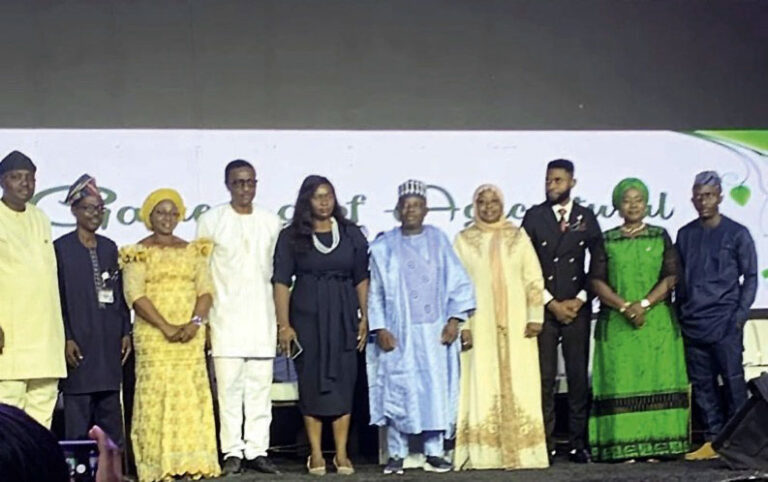
The Sun newspaper shone like the Northern Star at the just held award night of the Department of Mass Communication, Enugu State University of Technology (ESUT), as its head of South East Bureau, Magnus Eze, was honoured for his remarkable contributions to journalism in Nigeria.
Also, general manager of Urban Radio, Richard Asiegbu Jnr., received a corporate award bestowed on the Enugu-based privately-owned FM station.
The event was part of activities marking the 2022 Communication Day celebrations of the Mass Communication Department of ESUT, in Enugu.
It was no doubt a night of fun with the array of dazzling performances by the students such as comedy, dance, music, drama and beauty pageant.
Speaking, head, Department of Mass Communication, ESUT, Prof. Ifeanyi Didiugwu, and his Imo State University (IMSU) counterpart, Prof. Kelechi Nworgu, called for closer collaboration between the media and security agencies in addressing the spate of insecurity in Nigeria.
Didiugwu said the media was highly challenged at the moment, listing economic downturn, repressive government policies and the advent of new media as well as rising insecurity in the country as what journalists and media practitioners have had to contend with.
He stated that the media being the fourth estate of the realm, needed every support, including special interventions from the government, to discharge its constitutional roles without hindrance.
Delivering the keynote lecture on the roles of the mass media in the de-escalation of insecurity in Nigeria, Nworgu decried the unrestricted use of social media by terrorist organizations and separatist agitators in the country.
He tasked the media to be more circumspect in reporting terrorist organizations so as not to inadvertently aid them in their activities.
According to him, there is the need for synergy between the media, the citizens and the security agencies, stressing that the de-escalation of insecurity in the country should be the major aim of every institution in Nigeria, including the media.
“Today, a great number of terrorists’ activities are aided by the use of social networking platforms. These platforms help safeguard the identity of those who take part in terror and other insecurity activities. Also, they offer a chance to make direct contact with terrorist representatives to ask questions and even contribute financially there, by helping to carry out cybercrimes and aiding insecurity.
“To this effect, the reportage about insecurity on social media and even the traditional media shows different perceptions of the situation. Such report have created impressions about our security challenges and portrayed them as mere national burdens such as youth restiveness, youth agitations for economic balance and not as terrorist activities, including insurgents fighting for Islamization of the entire nation or youths fighting for actualization of sovereign state.
“Terrorists have used both the traditional and the social media for the purpose of both recruitment of potential Jihadists, as a propaganda machine, incitement platforms, data mining; and fundraising avenues. It is noted that the terrorists have turned to the new media not only because counter terrorism agencies have disrupted their off line presence but also because the social media offers huge audiences and easy access to platform users,” Nworgu stated.
Emphasising that the social media in Nigeria have scarified accuracy, fairness and balanced reportage on the altar of speedy news delivery, he noted that people now seem to be in a hurry to hear or watch the latest news and the mass media practitioners are also in a hurry to serve them the news steaming “hot”.
Nworgu asserted that the media in its craze for “hot news” has left out sensitive issues, including insecurity stories, stressing that investigative, interpretative and in-depth reporting were no more the hallmark make of good reporting.
He further lamented that the traditional media were currently busy glamorizing crime and insecurity news as they gravitated between being print and electronic media, (trying to meet the electronic age madness) via the internet or social media versions.
The erudite scholar warned: “The more we get closer to using the social media to solving our daily problems such as insecurity, the more we make our news items more of entertainment stuffs than problem-solving facts.”
Remarking, Eze said the award of recognition was an ‘ambush’ because he merely attended the event as every other guest and did not have the slightest inkling of what was in stock for him.
He commended the staff and students of the department for the honour pledging to remain a good ambassador of his employers and the profession of journalism.
The senior journalist noted the challenges posed by the disruptive media otherwise known as new media, urging the adoption of media convergence approach by every media organization. He also called for proper exposure of student-journalists to the rudiments of the theory and practice of journalism.