Follow Us on Google
•Nigeria’s new battle for lives
From Fred Ezeh, Abuja
For decades, Nigeria’s response to attempted suicide has carried a punitive tag, with people who survive attempts potentially facing criminal prosecution instead of the care and intervention they desperately need. But that approach may soon change.
The Federal Government said it has opened a new front in the battle against suicide, with the Federal Executive Council (FEC) approving the Federal Ministry of Health and Social Welfare’s position to decriminalise attempted suicide.
The decision, which stakeholders described as a major milestone, will now move to the National Assembly for the legislative process. At the heart of the new approach is a fundamental shift: from treating people in suicidal crisis as offenders to treating them as people in need of urgent healthcare, psychological support and protection.
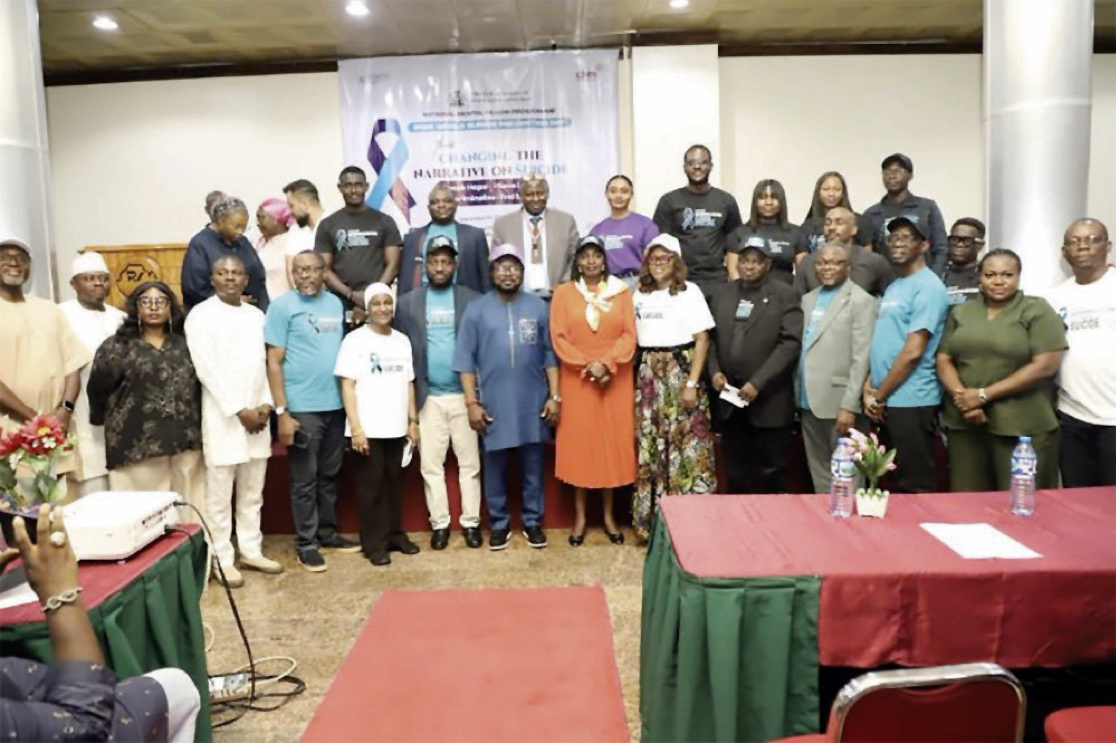
At the 2026 World Suicide Prevention Day event organised by the Federal Ministry of Health and Social Welfare in Abuja on the theme, “Changing the Narrative on Suicide,” with the call to action, “Start the Conversation,” stakeholders challenged the silence, stigma and misconceptions surrounding suicide.
But as government moves to change the law, experts and stakeholders insist that Nigeria’s battle will not be won through legislation alone.
FEC breaks with punishment
Minister of State for Health and Social Welfare, Dr. Iziaq Salako, said at the event that FEC approval followed the work of the National Task Force on Decriminalisation of Attempted Suicide.
The Minister, represented by the Permanent Secretary, Daju Kachollom, said the taskforce brought together government institutions, academia, professional associations, civil society organisations, development partners and people with lived experience.
“It conducted stakeholder consultations, policy engagements and advocacy with policymakers across the three arms of government before developing a government-wide position on the issue, he said.
The ministry described decriminalisation as more than a legal reform, calling it a public health and human rights imperative. “Removing the fear of criminal sanctions could reduce stigma and encourage people experiencing suicidal thoughts or mental health crises to seek help before it was too late,” the ministry said
The ministry said its position was, however, anchored on the National Mental Health Act 2021, National Mental Health Policy 2023 and National Suicide Prevention Strategic Framework 2023–2030, expressing optimism that the National Assembly would complete the legislative process without delay.
Stakeholders, however, urged lawmakers to move quickly, with one advocate warning that the current legislative cycle must not expire before the amendment is passed.
The human cost
While government battles the legal framework, the scale of the crisis remains a major concern.
A representative of the Nigeria Suicide Prevention Advocacy Working Group, Prof. Taiwo Sheik, put annual suicide deaths in Nigeria at about 16,000, describing the situation as a public health emergency.
He disclosed that the working group which was established following the passage of the National Mental Health Act comprises more than 40 mental health professional associations, NGOs, business groups, students and other partners.
Sheik said Nigeria’s target of reducing suicide deaths and attempts by 50 per cent by 2030 would not be achieved by decriminalisation alone.
He thus called for a national system capable of generating reliable data on suicide and suicidal behaviour, establishing crisis intervention services, providing dedicated funding and training healthcare workers and first responders. He also urged full implementation of the National Mental Health Act.
He, however, highlighted that the demand for better data is critical because the absence of reliable, comprehensive information makes it difficult to identify high-risk populations, locations and triggers, or measure whether prevention programmes are working.
Experts insist law alone cannot save lives
President, Association of Psychiatrists in Nigeria (APN), Dr. Veronice Oluyemisi Nyamali welcomed the Federal Government decision, saying decriminalisation would remove a major barrier preventing people in distress from seeking help.
But she raised another troubling issue which was the rising shortage and attrition of mental health professionals. “Nigeria has too few psychiatrists. While the workforce continues to shrink, many professionals are leaving the country for professional practice abroad. Some psychiatric residents have also abandon training programmes for opportunities abroad.
She called for effective implementation of the Mental Health Act and stronger arrangements for delivering mental health services, insisting that decriminalisation must be matched with services.
“Without psychiatrists, psychologists, counsellors, social workers, trained primary healthcare workers and emergency response systems, vulnerable Nigerians may still have nowhere to turn after the law changes,” she said.
From HIV clinics to conflict zones
Isah Takuma, speaking on behalf of people living with HIV in Nigeria, brought the crisis into focus from the perspective of people dealing with chronic health challenges.
He said people living with HIV were not a homogeneous group and that different categories faced different mental health pressures.
Takuma criticised the treatment of mental health interventions within HIV programmes as a secondary issue, insisting they should be regarded as a core component of healthcare.
“As Nigeria integrate HIV services into the broader health system, we urged the government to ensure that facilities provide quality mental health interventions for people living with HIV, including key populations,” he said.
For Zion Abah, who spoke on behalf of civil society organisations, prevention must also address the factors that push people towards suicide.
He said government and its partners must look beyond treatment to the social, economic and other circumstances that predispose Nigerians to suicidal behaviour.
Similarly, an official of the International Committee of the Red Cross (ICRC), Juan Carlos, added another dimension to the development, drawing attention to people living in conflict and violence-affected communities.
He said distance, insecurity and cost often prevent vulnerable people from accessing mental healthcare.
The ICRC, therefore, called for mental health services to be integrated into community and primary healthcare systems, while urging states to domesticate and implement mental health policies.
Changing the narrative, saving lives
For the ministry, the fight against suicide is ultimately a fight to create a society where asking for help is not a source of shame.
Director, Public Health, Dr. Charles Nzelu, represented by the National Coordinator of the National HIV/AIDS, Viral Hepatitis and STI Control Programme (NASCP), Dr. Adebobola Bashorun, said Nigeria must move away from fear, misinformation, stigma and silence towards compassion, understanding, hope and collective action.
The ministry disclosed that it is developing Standard Operating Procedures (SOPs) for integrating mental health into HIV care, in addition to a memorandum for consideration by the National Council on Health (NCH) on integrating mental health into primary healthcare, a move designed to take services closer to communities.
Meanwhile, the ministry said the government has also expanded Federal Neuropsychiatric Hospitals beyond the traditional concentration in a few locations, in an effort to reduce the burden of long-distance travel for people seeking specialised care.
Similarly, the CHAI representative described the FEC decision as a landmark achievement, but stressed that the battle must continue at the National Assembly.
Globally, more than 700,000 people die by suicide annually, with the overwhelming majority occurring in low- and middle-income countries, according to figures cited at the event. “For Nigeria, the challenge is now to ensure that changing the law translates into changing lives.”
Unanimously, the stakeholders agreed that the new battle is therefore not simply about removing a criminal penalty, but about building crisis response centres, funding mental health services, producing reliable data, training professionals, integrating mental healthcare into routine services and dismantling the stigma that keeps vulnerable people silent.
As the country marks another World Suicide Prevention Day, the message from the stakeholders is unmistakable: Nigeria cannot afford to wait until someone attempts suicide before offering help. The battle for lives must begin long before the crisis reaches its final moment.