Follow Us on Google
By Sunday Ani
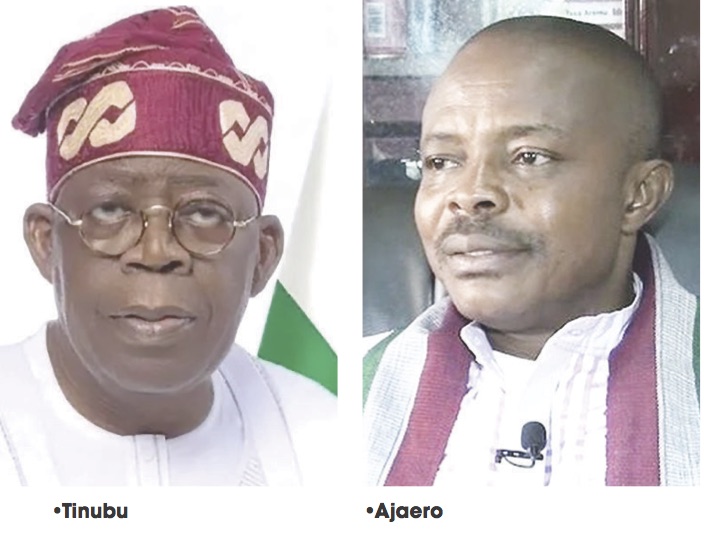
Since May 29, when President Bola Tinubu announced the removal of fuel subsidy during his inaugural speech, most Nigerians have been living from hand to mouth, with many finding it extremely difficult to even feed once per day. The cyclical effect of the policy has been so devastating that prices of virtually everything have gone beyond the reach of ordinary masses. The negative effect ranges from sharp increase in the cost of transportation to price of essential goods and services, including foodstuff, school fees, as well as rents in major cities across the country. A lot of businesses and companies are closing down, with the corresponding negative effect of job losses, throwing many back into the labour market.
The situation has heightened the tension already generated by the February general elections, which outcomes are still subject of legal contention across the country.
Just on Tuesday, August 1, the Joint Action Front (JAF), alongside the Alliance for Surviving COVID-19 and Beyond (ASCAB) and the Coalition for Revolution (CORE) marched on the street of Kano in what they termed a “warm up” protest over the hike of petrol price from N195 to N617, naira devaluation, school fees increment and other anti-poor policies of President Tinubu-led government.
A joint statement declaring their total support for the Nigeria Labour Congress (NLC) nationwide protest August 2, signed by Femi Falana (ASCAB), Baba Ayelabola (CORE), and Achike Chude (JAF) said they would join the protest until victory was achieved.
Titled: ‘August 2, 2023, as the beginning of nationwide resistance against fuel price hike and anti-poor policies is sacrosanct,’ the organisations maintained that the minimum aim of the forthcoming struggle was the reversal of the ‘criminal hike of petrol from N617 to N195, and the reversal of other criminal policies like fee hike in public tertiary institutions, and the devaluation of the naira,’ which had made life unbearable for the Nigerian masses.
They said: “We support the decision of the Nigeria Labour Congress (NLC) to call Nigerian workers and poor masses out on protest starting from Wednesday, August 2, 2023, against the wicked and neoliberal policies of President Tinubu’s government, including the severe hike in the price of petrol and the devaluation of naira.”
In a related development, a coalition of the organised labour and civil society organisations on Monday, July 31, marched through the street of Osogbo, the Osun State capital, over the economic hardship in Nigeria, following the removal of fuel subsidy by the government.
Tagged, “Let the poor breathe” the protesters insisted that the government must find solutions urgently to the economic hardship, commercialisation of education, non-provision of palliatives, fuel subsidy removal, hike in electricity tariff and growing insecurity.
There were also protests in Ibadan, the Oyo State capital, by workers on Monday and Tuesday, and equally in Edo State recently by civil society groups, all protesting against the hardship in the country as a result of the fuel subsidy removal by the government.
Analysts are afraid that these pockets of protests in a few states, if not well managed, could snowball into a bigger problem where other groups in other states would join the chorus. And such a situation, they feared, could lead to what the government is not prepared to contain.
There are those who argue that the only solution to the current crisis which has also seen the Nigeria Labour Congress (NLC) and the Trade Union Congress (TUC) hit the streets across the 36 states of the federation and the FCT, Abuja, is the reversal of the subsidy removal pronouncement. The NLC and TUC among other demands are also insisting that the government should reverse the subsidy removal pending when the country’s refineries are fixed or new ones built.
However, in a bid to calm frayed nerves and tension and reassure Nigerians that solution was in sight, the President on Monday addressed Nigerians in a nationwide broadcast, where he reeled out packages that would address the current sufferings of the masses.
But, the president’s speech, rather than douse tension, has heightened the uncertainty in the land as some people described his speech as empty. Those who hold this argument are of the view that what Nigerians expected from the president was the reversal of the fuel subsidy removal as they insisted that that is the only thing that could restore hope of survival to Nigerians.
One of those who were disappointed with the President’s address to the nation is Dr. Austin Maho, who said he expected the speech to have given Nigerians some measures of renewed hope, but lamented that it was full of sound bites with no substance. He noted that Nigerians have travelled the route that the President was planning to take them along, insisting that apart from reversing the subsidy, Nigerians expected to hear how he was going to tackle the issue of corruption which is the country’s major setback to development. “We have been here before. The President ignored the major issue which is the issue of corruption. He started by saying I want to talk to you about the economy, instead of talking about corruption and how he intends to deal with it.
“The N500 billion intervention is a drop in the ocean and would not solve anything. In March, the former Central Bank Nigeria (CBN) Governor, Godwin Emefiele, said that the entire amount paid under the Anchor Borrowers Programme since 2015 was N1.9trillion. Between January and February this year, the CBN had disbursed N12.65 billion to three agricultural projects under the same Anchor Borrowers, bringing the cumulative disbursement under the programme to N1.09 trillion, and this didn’t have any impact on the economy. This is just one aspect of all the intervention programmes carried out by the CBN. We are not talking about the N500 billion that was spent on a monthly basis by the Minister of Humanitarian Affairs to feed children that were at home. In all of these interventions, subsidy was still intact, Naira was not being floated, yet the economy twice went into recession under former President Muhammadu Buhari, and you want to tell me that with the subsidy removal and floating of the Naira, that the N500 billion will bring about any change in a country of 200 million people. If all these interventions in the past didn’t have any impact as a result of endemic corruption in the system, which he alluded to in his speech, how can anybody think that the N500 billion will not end in the pocket of the same people who are still in the system? The starting point would have been to tackle corruption.”
Also contributing to the discourse, a newspaper columnist and public affairs analyst, Majeed Dahiru, said that the government before this current government under Tinubu has done much more than what the president is planning to give to Nigerians as palliative while subsidy was in place, yet Nigerians didn’t fare well, meaning that the government needed to do more. He questioned the rationale behind the subsidy removal, warning that unless the policy was reversed, no amount of palliative would change the current hardship for better. “How do you remove subsidies from petrol? You have floated the Naira without any productive economy to attract foreign exchange to stabilize your national currency, which on its own, is supposed to have effect on petrol because you are importing the product, so, how do you expect N500 billion, even if it is well spent to have any positive effect on the problem that Nigerians are facing today?” he queried.
He also lamented that the issue of corruption was not on the agenda of the Tinubu government. “Clearly, there is no commitment to tackling corruption by this government. The president was honest enough not to actually say things in that regard because if somebody has not really made corruption an agenda and how to tackle it, it means he is very honest about his own dishonesty,” he added.
Insisting that the subsidy removal was responsible for the tension and uncertainty in the country, he said: “If 60 days after the subsidy removal we are still having conversation around it and its concomitant effects, it tells you that that policy was not even a policy in the first place; it was idiocy to have removed subsidy on petrol. The least I expected from the President was to reverse that policy. Subsidy must be restored back to petrol products.
“Forget the argument that the last administration didn’t budget for subsidies in the year’s budget because that same government didn’t budget for the palliative they want to give to Nigerians now. He has the powers to budget for subsidies from where the last administration stopped. It is not a constitutional matter; it is an Appropriation Act matter. All he needed to do was to review the policy and restore the subsidy.
“He said he has saved over N1 trillion in the last two months from the subsidy. How do you take life from somebody and claim you are saving? I don’t understand. What are you saving? Saving for what; to do what with it? The most important investment in the economy is subsidy on petroleum. That is the most important investment and because they took it away, Nigeria is dying slowly; Nigeria is on the way to Zimbabwe and Venezuela at the same time. Nigeria is suffering from an energy crisis and the president didn’t talk about the rehabilitation or maintenance of the country’s refineries or building new ones.
“This is a man that was praised for having a vision for Nigeria; that he had a master plan for Lagos development and all that, and that he had the capacity to assemble the best team. In his entire team, nobody knew that energy security is fundamental to development anywhere in the world. We have a problem of energy crisis on our hands because petrol and diesel are what actually run the Nigerian economy. That is why we are having the problem that we have today; they are available but unaffordable.
“We have said it severally that for you to have energy security, you must have energy products available at an affordable price. That is why subsidy is a permanent feature of energy security anywhere in the world, including in the United States of America. America subsidizes petrol among several other subsidies, and in countries where subsidy is in place for energy – the European Union territory, Southeast Asia, and Saudi Arabia, or any developed part of the hemisphere, subsidy on energy is part of their national security. Yet, these countries still have elaborate expenditures on social security and palliative for the citizens.”
Stressing that nothing could substitute subsidy on petrol for Nigerians, he said: “Energy security is not magic. So, they don’t know that you cannot develop any economy without energy security. The president of an oil producing country like Nigeria doesn’t understand the need to fix the existing refineries and put in place processes to build new ones even if he is going to take out a loan to do it. He is supposed to understand that simple logic. He doesn’t understand that the problem we are having today is the exorbitant price of petrol, which runs our economy. It has created inflation, loss of jobs and a lot of problems that we can never recover from. I thought that his last broadcast was to reverse the policy; nothing short of that will solve the problem Nigerians are facing today.”
Also in his submission, Igho Akeregha equally took a swipe at the government for creating so much pains and hardship for Nigerians. He is also of the opinion that no amount of palliative would lessen the hardship inflicted on Nigeria by the fuel subsidy removal, stressing that only reversal of the policy would alleviate the people’s suffering.
“Telling Nigerians to bear with us will not help matters because what is the government giving back to Nigerians? What do Nigerians really need? Nigerians need electricity, fuel, and road infrastructure. The president should be very serious. This is a man who was presented to Nigerians as an expert that knows everything and is coming with professionals that will turn around everything. But, he has just shown that what he is doing can be done by anybody. Just come and take out subsidies, increase taxes and all that; anybody can do that. What are the solutions? I have not seen solutions coming from this government. Reeling out that you are going to give money to XYZ SMSEs is not what Nigerians are talking about. What is the direct intervention to put food on the table of Nigerians?”
As tension builds, he maintained that the government should have done everything possible including reversing the fuel subsidy removal to prevent the NCL from protesting. This is because if care is not taken, he is afraid that the protest by the NLC might just get out of hand; a development that could predispose the country to what is happening around other African countries.
He, however, advised the NLC, and the CSO to remain firm, saying, “We do not want what is happening in the neighbouring countries to happen in Nigeria but if the managers of our democracy do not sit up, what other alternative do we have? The point I am making is that what we have in Nigeria now is an Almajiri democracy; a Babiala democracy that is not beneficial to Nigerians but beneficial only to a few elites,” he submitted.