Follow Us on Google

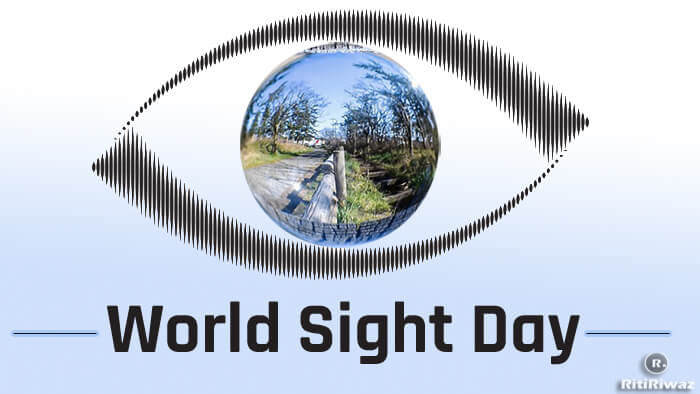
As part of activities to commemorate World Sight Day, the Federal Government recently restated its commitment to strengthening eye health services across the country by the end of 2027. The intervention will curb avoidable blindness and enhance access to optimal eye care. The Minister of State for Health and Social Welfare, Dr. Iziaq Salako, stated this during the marking of the 2026 World Sight Day, with the theme, “Love Your Eyes.” The national sub-theme, “Protect Your Vision, See Clearly, Live Fully” harps on the need to prioritise overall eye health for all citizens.
To improve eye health services, the government, according to the minister, has trained over 3,000 healthcare workers in 16 states, and activated over 1,400 primary healthcare centres to provide eye care services. This is in addition to distribution of 1.5 million pairs of reading spectacles to Nigerians in 16 states. The government plans to extend the initiative to additional 10 states across the country. It has also screened about 1.5 million school-age children for visual problems through the School Eye Health Programme.
The government will establish four additional vision centres within secondary healthcare facilities in Enugu, Edo, Sokoto and Nasarawa states. The minister is optimistic that the planned 25,000 free cataract surgeries under the Renewed Hope Healthcare Connect Initiative will restore sight, independence and productivity to thousands of Nigerians. Unfortunately, cataract remains a major source of avoidable blindness in the country.
We agree with the minister that “eye health is not an isolated intervention; it is an integral part of a resilient health system and a critical component of our journey towards Universal Health Coverage. No child should be prevented from learning because of an undiagnosed vision problem, and no Nigerian should live with avoidable blindness simply because treatment is beyond reach.”
The World Health Organisation (WHO) says that at least 2.2 billion people globally have a near or distance vision impairment, and roughly one billion of these cases could have been prevented or remained unaddressed. This massive treatment gap creates an estimated $411 billion in annual global productivity losses.
Globally, two out of three people in low-income countries to basic eyeglasses, leaving uncorrected refractive errors as a leading cause of sight loss. Roughly one in two people worldwide facing cataract blindness does not have access to sight-restoration surgery.
The global health agency says further that alongside uncorrected refractive errors and cataracts, the primary drivers of vision loss include age-related macular degeneration, glaucoma, and diabetic retinopathy. Low-and middle-income regions carry a disproportionate burden, with the WHO South-East Asia Region alone accounting for roughly 30 per cent of all global vision impairment cases.
Nigeria has a high burden of preventable impairment. Available statistics show that there are about 24 million Nigerians who live with some form of vision impairment. Roughly 4.24 million adults aged 40 and above are blind or visually impaired. About 84 per cent of all blindness and moderate-to-severe vision impairment is considered preventable or treatable. While cataracts are responsible for roughly 50 per cent of blindness, glaucoma accounts for 16.7 per cent of blindness. Uncorrected refractive errors and digital eye strain are other major factors of blindness in the country.
The WHO 2030 Global Targets Initiatives to close these gaps include the refractive error coverage and the cataract surgery coverage. Under the WHO SPECS 2030 Initiative, countries aim for a 40 percentage-point increase in effective coverage of refractive errors. This initiative is necessary because uncorrected refractive error is the leading cause of vision impairment among children and adults. It is estimated that two out of three people in low-income countries who need spectacles don’t have access to them.
Apart from what the Federal Government is doing to improve the provision of quality eye healthcare services, we call on the state and local government to invest in eye healthcare. They should contribute eye screening and provision of eyeglasses to those who need them. They can also subsidise treatment for cataract surgery. Eye healthcare should be fully integrated in our primary care centres.
There is need for eye health education for Nigerians, especially those living in rural areas. Eye screening services should be made available to all Nigerians at the primary healthcare centres across the country. All tiers of government should henceforth prioritise the provision of effective eye health services for the citizens. Government should offer free eye health services to elderly people and underprivileged citizens.