Follow Us on Google

Rigging of elections has gone beyond snatching of ballot boxes at polling units. These days, Artificial Intelligence (AI) can either make or mar the electoral process, depending on how it is deployed. It could help detect duplicate voter registrations, electoral irregularities, automate biometric identification and improve voter education, among others.
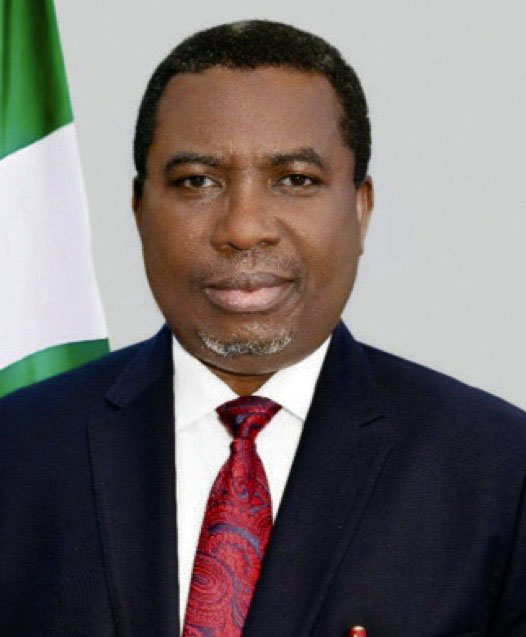
Chairman of the Independent National Electoral Commission (INEC), Prof. Joash Amupitan, says election management bodies globally are already using machine learning and other technological applications to improve voter registration, logistics planning, data analysis, and administrative efficiency. According to him, AI is not hostile to democracy.
Nevertheless, AI, Foreign Information Manipulation and Interference (FIMI), automated misinformation, and other digital manipulations present higher threats to the electoral process. This is why the alarm raised by the former Chairman of INEC, Attahiru Jega, current INEC Chairman, Joash Amupitan, and the European Union (EU), over AI threats to 2027 election credibility deserves to be taken seriously.
At a recent national summit on AI, FIMI and electoral information integrity, Jega urged INEC to consider deploying AI-generated chatbots to provide voters with verified electoral information and counter misinformation ahead of the 2027 general election. According to the former INEC boss, the negative applications of technology poses serious risks to democratic governance, notwithstanding that it could improve the efficiency and effectiveness of electoral administration.
Obviously, AI could enable manipulation of public opinion, circulate fabricated information and undermine the credibility of an election. As Amupitan said, it “could be exploited to create highly convincing false information, including cloned voices, fabricated videos of election officials making false announcements and automated online campaigns designed to simulate public outrage.” These could trigger confusion and public unrest either before or after the polls and undermine the credibility of an election.
During the Ekiti State governorship election held on June 20, 2026, an image of voters queuing to sell their votes reportedly circulated on social media. There was another image which circulated as evidence of massive voter turnout in Ado-Ekiti. But fact-checkers discovered that these images were AI-generated. INEC recently complained that its biometric system flagged 268,000 records over suspected AI-generated photographs and some other irregularities.
“What is most important, of course, is how we prepare, anticipate these challenges, and take appropriate measures, particularly in terms of setting up a framework of rapid response to address this,” Jega advised.
We agree with the Ambassador of the EU to Nigeria and ECOWAS, Gautier Mignot, who suggested building an electoral information environment in which reliable information is available, institutions communicate credibly, independent journalism can flourish and manipulation has a prepared response.
Threats to the credibility of the 2027 general election are genuine and should be checkmated. Good enough, INEC has identified officers behind the reported irregularities in the voter register. They should be investigated and prosecuted. Anyone found guilty must be sanctioned in line with the laws of the land.
The election register should be cleaned up and displayed for all to see. Any complaint by any voter, party or any other stakeholder must be addressed. Nigerians have not forgotten the shoddiness of the 2023 election. Then, it was technical glitches from INEC backend that marred the conduct of the poll. We do not want to go through that in 2027.
INEC must restore public confidence in the electoral system and assure Nigerians of its impartiality in the conduct of the poll. It should redouble efforts to strengthen its digital infrastructure and establish mechanisms to debunk fake information swiftly. It should sensitise voters to be able to identify deepfakes from genuine information.
Gladly, INEC is reportedly partnering with such global media platforms as TikTok, Facebook, Whatsapp, YouTube, X, Instagram, among others. It is hoped that the partnership will go a long way to curb misinformation during and after the general election.
Amupitan had assured that INEC under his watch would conduct a free, fair and credible election in 2027.
He even boasted that he would conduct an election in which the loser would be willing to congratulate the winner. We want to see that happen next year.
Nigerians want to see the umpire effectively implement its official Policy on Election Technology Acquisition and Deployment (PETAD). The policy provides the framework upon which election technology should be acquired, deployed and governed.
Nigerians expect their votes to count. They want the 2027 poll to reflect the wishes of the electorate. This can be achieved if the electoral umpire, in collaboration with security agencies, media organisations and independent fact-checkers respond swiftly to verify and debunk any digitally-driven manipulation. Deepfake detection tools could be used to identify and remove false information.
The opposition has alleged plans to intimidate it and manipulate the poll. Let the election be free from AI manipulation and other electoral infractions. Nigerians should beware of forwarding unverified messages. They should rely more on verified official information released from INEC and credible media platforms.
INEC should learn some lessons from the United States Midterm polls and the Brazilian presidential poll and use them to improve on the 2027 general election. AI must not be allowed to compromise and ruin Nigeria’s 2027 poll.