Follow Us on Google

• Says project will end over-reliance on Lagos ports, unlock trade with landlocked African countries
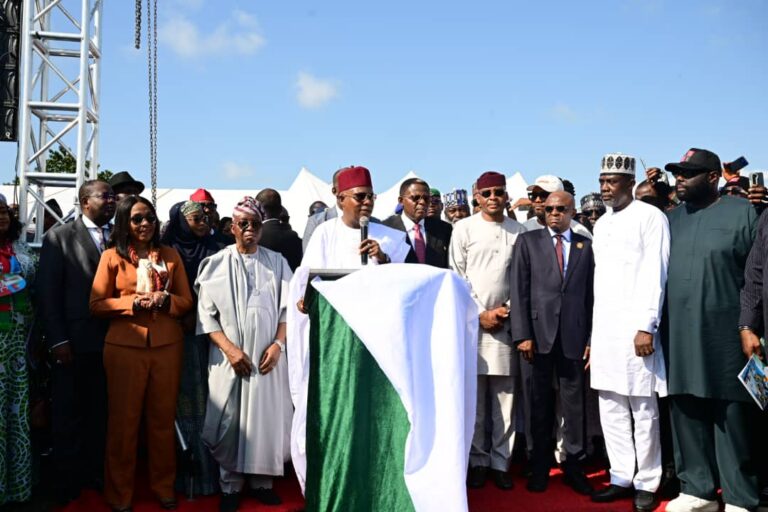
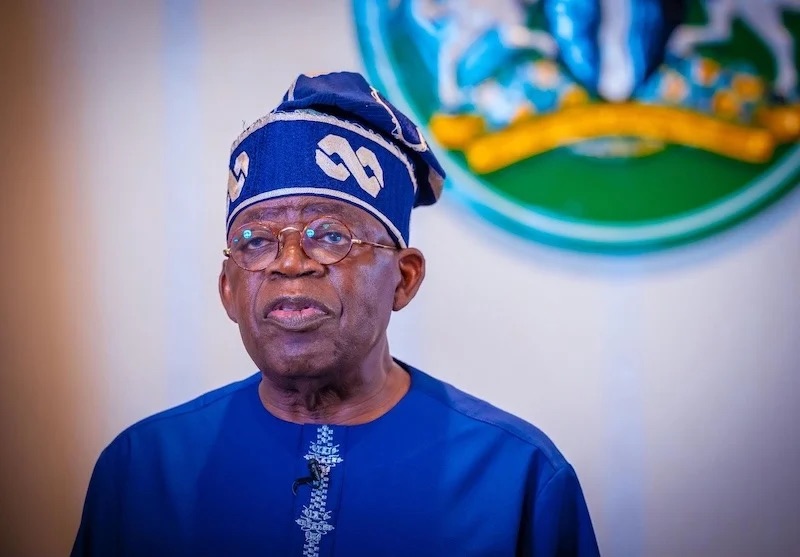
President Bola Tinubu has flagged off the construction of the $3.5 billion Bakassi Deep Seaport in Cross River State, projecting that Nigeria could generate $44 billion annually from the blue economy by capturing cargo traffic currently diverted to neighbouring countries.
The President, who wasrepresented by Vice President Kashim Shettima at the groundbreaking ceremony in Bakassi on Friday, said the project would end Nigeria’s over-reliance on Lagos ports, ease congestion in the maritime sector and position the country as a major regional trade hub.
Tinubu described the project as a turning point in Nigeria’s maritime development, saying it would also break a decades-long impasse over the establishment of a deep seaport in Cross River State.
He dismissed allegations that political interests in Lagos, the South-West or Abuja had deliberately frustrated the development of seaports outside Lagos, insisting that the Bakassi project demonstrated his administration’s commitment to a decentralised maritime economy.
“There is a rumour I hear in some corners. That the West, Lagos, or Abuja never wanted a port to work anywhere outside Lagos. If that were true, would I be standing here today with a shovel in my hand?” he asked.
According to him, Lagos should be seen as a partner in Nigeria’s maritime development rather than a competitor, arguing that concentrating more than 80 per cent of the country’s foreign trade through one location exposes the economy to congestion, delays and higher costs.
“Lagos is our elder brother in trade. No country eats with one hand. No country carries all its load on one shoulder. That shoulder will break,” he said.
The President added: “This project is not against Lagos. It is for Nigeria. When Lagos is free, Nigeria breathes. When Calabar works, Nigeria walks on two legs.”
He said the proposed 20-metre-draft port would accommodate large-capacity vessels that currently bypass Nigerian ports, while a 260-kilometre superhighway would provide an evacuation corridor for goods moving to different parts of the country.
Tinubu traced the project to its conception during the colonial era and subsequent re-engineering in 2014, noting that its Environmental and Social Impact Assessment was completed in March 2015.
However, he said the project suffered years of delays until Governor Bassey Otu revived the initiative and secured $3.5 billion in financing from the African Export-Import Bank (Afreximbank).
He said the Cross River State Government formalised a public-private partnership arrangement in February 2025, adding that the Federal Government was now fully committed to its implementation.
“Today, the Federal Government is standing fully behind it. This is beyond a Cross River dream. It is a Nigerian project. It is a poverty breaker. It is history rewritten with love and commitment,” he said.
The President said the project would also strengthen Nigeria’s position in regional commerce, particularly by facilitating trade with landlocked countries whose cargoes could be channelled through the country’s maritime infrastructure.
He recalled Cross River State’s loss of the Bakassi Peninsula following the International Court of Justice judgment, saying the state could now harness its maritime resources for economic recovery.
“The same water that took something from you will now bring something back. The Atlantic that people feared will now feed your children,” he said.
Tinubu urged the people of the state to support the project and protect it from political interference and misinformation.
Earlier, Governor Bassey Otu described the groundbreaking as a major milestone after years of political, administrative, legal and environmental challenges that had stalled the project.
He expressed appreciation to Tinubu for supporting the state through the processes leading to the Federal Government’s Certificate of Compliance and final approval.
Otu also called on local and international investors, particularly those interested in maritime-related services, to take advantage of the investment opportunities expected to emerge from the port.
The Minister of Marine and Blue Economy, Adegboyega Oyetola, said the project represented a new chapter in Nigeria’s maritime development, economic diversification and regional competitiveness.
He said the Tinubu administration was prioritising productive investments, modern infrastructure and private-sector participation to harness the country’s economic potential.
Similarly, the Managing Director of the Nigerian Ports Authority, Abubakar Dantsoho, said the port would strengthen Nigeria’s commercial links with landlocked countries, including Chad, Niger, Mali and Burkina Faso.
He noted that Africa accounts for 16 of the world’s 44 landlocked countries, four of which are in West Africa, underscoring the potential market for the proposed facility.
The President and Chairman of the Board of Directors of Afreximbank, George Elombi, represented by the bank’s Executive Vice-President, Intra-African Trade and Export Development, Kanayo Awani, said the $3.5 billion investment would expand port capacity, strengthen Nigeria’s maritime corridor and facilitate trade across West and Central Africa.
Meanwhile, Shettima has urged state and other subnational governments to identify and develop their economic strengths to attract investments and accelerate development.
Speaking at the sixth African Sub-Sovereign Governments Network (AfSNET) Investment Conference 2026 in Calabar, Shettima said national economic policies and continental frameworks could only deliver results when translated into tangible development at the subnational level.
He said states must move beyond their administrative roles to become investment destinations, production centres and gateways to regional and continental markets.
“National policies and continental frameworks provide direction, but their success depends significantly on what happens at the sub-national level,” he said.
Shettima urged state governments to strengthen their capacity to identify competitive advantages, develop investment-ready projects, attract private capital and build partnerships capable of delivering sustainable economic outcomes.