Follow Us on Google
By Steve Agbota
Stakeholders in the maritime sector have warned that unresolved structural and inter-agency issues over the implementation of the National Single Window (NSW) could translate into heavy losses for importers and the wider economy.
The stakeholders expressed fear that the National Single Window, scheduled to take off in March 2026 to streamline port operations, could be marred with multiple problems if the current multiplicity of regulatory interfaces is not eliminated.
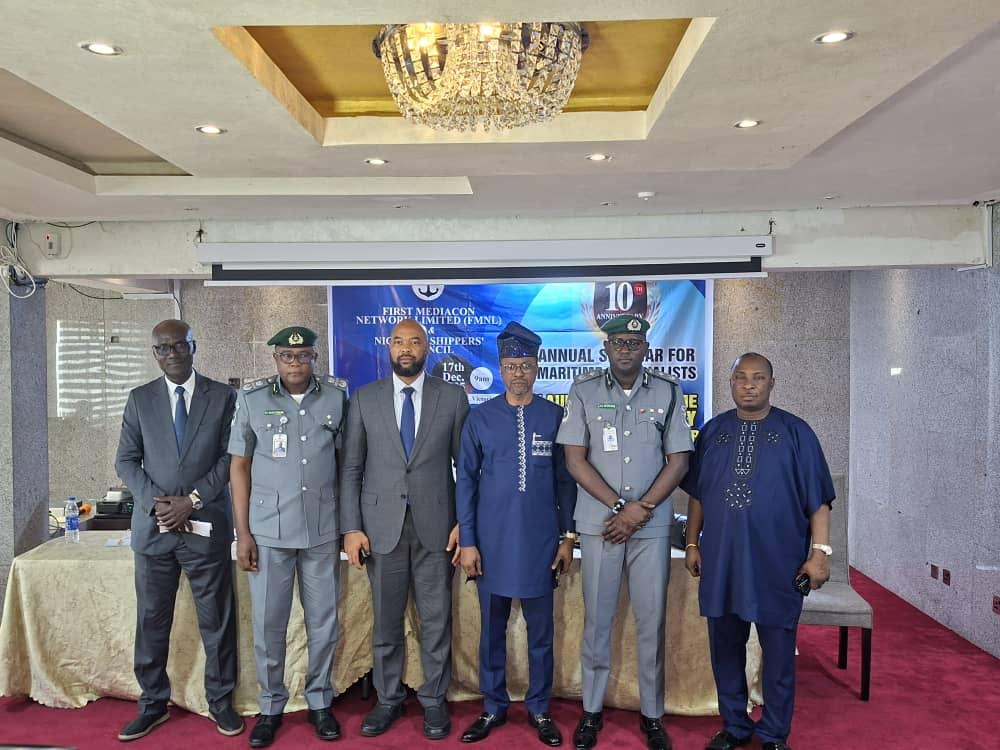
This was stated yesterday at the 10th Yearly Seminar for Maritime Journalists and Launch of the Centre for Maritime Media and Capacity Development in Lagos.
The event, organised by First Mediacon Network Limited (FMNL), is themed: “A Decade of Collaboration for Impact: Strengthening Maritime Journalism for the Future.”
The National Vice President of the Association of Nigerian Licensed Customs Agents (ANLCA), Segun Oduntan, who was represented by the Chief Executive Officer of SULA Logistics Limited, Suleiman Ayokunle, pointed out that despite the concept of a single window, operators still contend with several government regulatory agency platforms, alongside multiple internal windows covering enforcement, scanning, gate operations, and cargo clearing processes.
Oduntan recalled the launch of various digital platforms by agencies for clearing processes, noting that the immediate aftermath was severe, as cargo evacuation from the ports was completely stalled for about three weeks.
He noted that such teething problems are often inevitable with technology-driven reforms but warned that their economic consequences can be far-reaching if not properly managed.
Highlighting the cost implications of these overlaps, Oduntan drew attention to recurring disputes between the Nigerian Shippers’ Council and the Maritime Police.
He explained that on a vessel carrying about 1,000 cargoes, fewer than 200 typically pass without complications, as complaints are often exchanged between the two agencies, while resolving the disputes takes a minimum of four days.
Oduntan said during this period, importers are forced to bear demurrage costs of not less than N2 million per incident, a burden that is ultimately transferred to manufacturers and consumers through higher prices.
Oduntan warned that unless the NSW effectively harmonises agency roles and processes, such financial losses could persist, undermining the very efficiencies the reform seeks to achieve.
He expressed hope that the planned rollout of the NSW would adhere strictly to global best practices, delivering a truly unified platform capable of reducing delays, cutting costs, and resolving long-standing inter-agency conflicts at the nation’s ports.
The Chief Executive Officer of Wealthy Honey Investment, Dr Kayode Farinto, warned that Nigeria’s past digital transitions had come at a high cost, noting that during previous systems implementation, persistent connectivity failures delayed declaration processes and even submitted documents were not recognised by the platform.
Other News
He said as a result the industry lost more than N7 billion in revenue, without any form of redress.
Farinto also highlighted cost burdens imposed by regulatory agencies, citing examination fees charged by the Standards Organisation of Nigeria (SON) despite offshore certification.
He said importers are charged between N3,000 and N7,000 per container for examinations, even when conformity certificates have already been issued, a practice he described as discouraging trade and encouraging circumvention.
Farinto also decried port police interventions in cleared goods, warning that higher or arbitrary intervention rates risk encouraging extortion and undermining trade facilitation.
Executive Secretary/Chief Executive Officer of the Nigerian Shippers Council (NSC), Dr Pius Akutah, said as the maritime sector grows more complex, driven by digitalisation, new trade realities, regulatory reforms, and global logistical shifts, journalism within this space must evolve accordingly.
Akutah, who was represented by the Director, Special Duties, NSC, Moses Abere, said the agency, as the Port Economic Regulator, remains committed to promoting efficiency, transparency, and competitiveness within the maritime sector.
He said the theme of the event reflects the essential role of partnership in building a stronger maritime industry, noting that over the years, maritime journalists have worked closely with regulators, operators, policymakers, and stakeholders to illuminate the challenges and opportunities of the sector.
He said the council considers the media as essential partners in informing stakeholders, shaping public understanding, and strengthening accountability.
In his welcome address earlier, the Chief Executive Officer, FMNL, Sesan Onileimo, said maritime journalists are confronted with the need to upscale their knowledge, especially in this era of artificial intelligence, digitalisation, and social media in general.
He said all of these have combined to put journalists under intense pressure to push out factual details at all times, and also compete and be relevant, which is why the centre berthed.
Onileimo said the Centre is a bold move to bridge this gap and also ensure that maritime journalists, irrespective of how young or old they are on the beat, will remain relevant.
He added that the Centre is open for partnership with interested corporate stakeholders as the goal is collaboration for impact, which the Nigerian maritime industry will benefit from.