Follow Us on Google
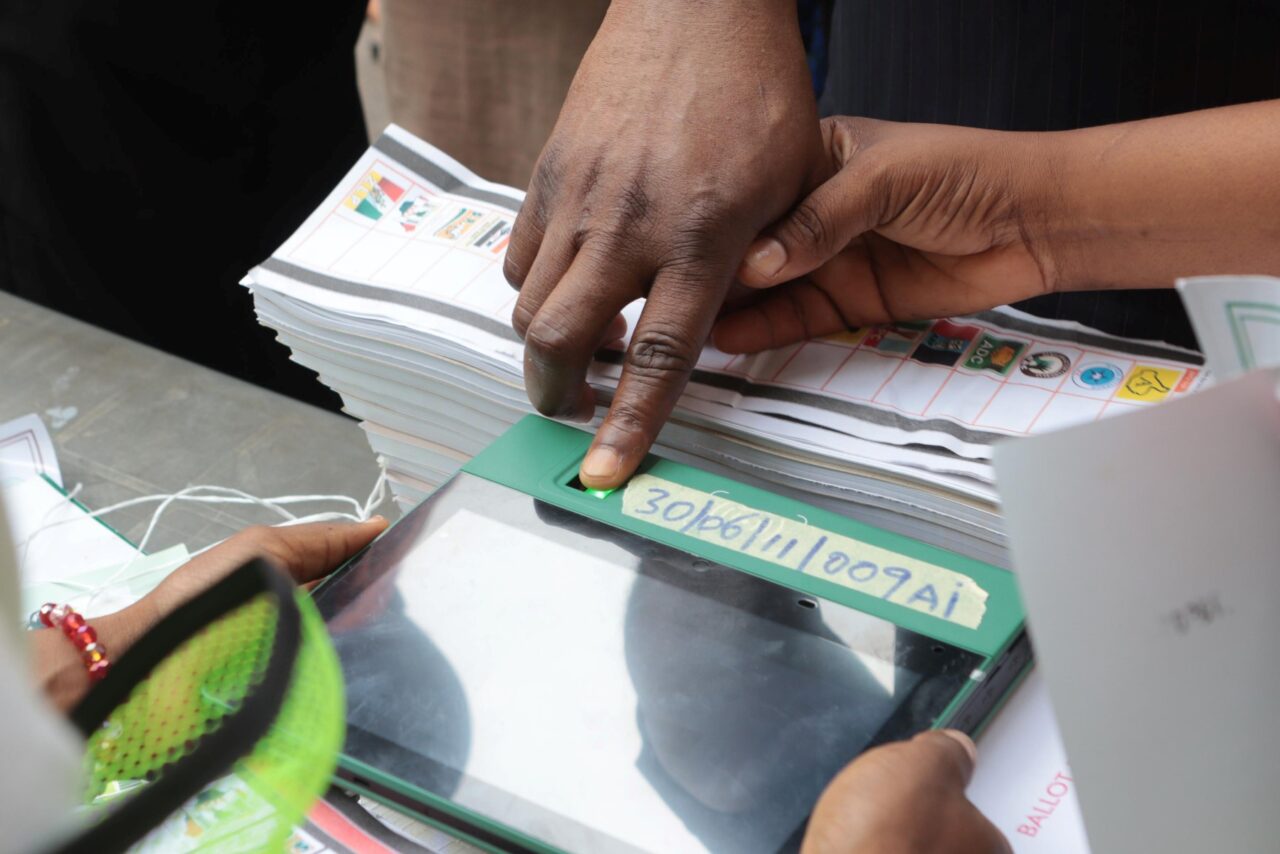
• Urge INEC to clarify results protocol, protect ballot secrecy
From Aidoghie Paulinus, Abuja
Stakeholders in Nigeria’s electoral system have called on the Independent National Electoral Commission (INEC) to make election results transparent and traceable from polling units to declaration, while strengthening safeguards against vote-buying ahead of the 2027 general elections.
They urged the commission to publish its results protocol, clarify which result version prevails and protect ballot secrecy through improved polling-unit layouts, mandatory use of voting cubicles and measures to stop voters from displaying marked ballots.
The recommendations emerged yesterday in Abuja at the dissemination of the European Union Support to Democratic Governance in Nigeria (EU-SDGN) post-election reports on the Ekiti and Osun governorship elections.
Participating organisations included The Kukah Centre (TKC), TAF Africa, Nigerian Women Trust Fund (NWTF), Yiaga Africa, International Press Centre (IPC) and Centre for Media and Society (CEMESO).
Drawing on their assessment of the two elections, the stakeholders called for a fully transparent results chain, including publication of the EC8 series of forms and Form EC40G on the INEC Result Viewing portal (IReV).
They specifically urged INEC to explain e-EC8A and its backend validation process, state which result version takes precedence and publish Forms EC8B and EC8C on IReV.
To strengthen confidence in collation, they also called on the commission to investigate withholding and tampering, record polling agents’ refusal to sign Form EC8A and guarantee journalists access to collation centres.
On vote-buying, the stakeholders urged INEC to redesign polling-unit layouts to protect voters’ choices, insist on the use of voting cubicles and direct officials to monitor and stop the display of marked ballots.
They said ballot secrecy and freedom of choice must be protected against vote-buying and creeping plutocracy.
Speaking with Daily Sun, Executive Director of Yiaga Africa, Samson Itodo, said concerns about the 2027 elections were apparent, citing political impunity and doubts about the ability of state institutions to restrain political actors. “Political actors are busy making all sorts of incendiary statements, especially those who are members of the ruling party. And if the security agencies cannot prevail on those people, they don’t inspire confidence on the part of Nigerians that they are up to the task of regulating deviant political behaviour.”
Itodo warned that allowing such impunity to persist into the general elections could lead to violence, a development the country could ill afford given its fragility.
Beyond results transparency and ballot secrecy, the stakeholders called for adequate funding and timely release of funds to allow early planning, procurement, logistics arrangements and the recruitment, training and deployment of election personnel.
Other News
They sought timely procurement and distribution of sufficient sensitive and non-sensitive materials, alongside a review and strict enforcement of agreements with transport unions to ensure safe and secure delivery.
They also called for security arrangements for elections in internally displaced persons’ camps and other vulnerable areas, as well as professional, neutral and non-partisan conduct by election officials, security personnel and relevant stakeholders.
Election-related cases, they said, should be adjudicated expeditiously, without fear or favour and in accordance with the rule of law and the electoral legal framework.
The organisations urged INEC to use the current voter register in calculating turnout and publish polling-unit data disaggregated by sex and disability.
They also sought binding, uniform guidelines on downloadable Permanent Voter Cards, publication of a BVAS audit and clear fallback procedures for elderly and veiled voters.
To improve inclusion, they recommended braille guides, magnifiers, Form EC40H and sign-language interpreters, alongside audits and training for all ad hoc personnel.
Other recommendations included sustained civic and voter education through diverse channels, protection of election technology against cyberattacks and measures to counter generative artificial intelligence-driven information disorder, foreign information manipulation and interference.
Executive Director of CEMESO, Akin Akingbulu, described the Ekiti and Osun elections as more than contests for two government houses, saying they were the final rehearsals before a general election in which tens of millions of Nigerians would look to institutions with heightened expectations.
“Nigerians will expect an election that is not only well managed, but well protected. They will expect results that are not only accurate, but understood. They will expect a secret ballot that is secret in fact, and not only in law.
“They will expect the law to be a shield for the honest voter, and not a shelter for those who would trade in conscience. They will expect the press to report without fear, and the observer to observe without hindrance.
“And they will expect every one of us – Commission, security services, parties, media and civil society to arrive in 2027, having done our homework.”
Akingbulu said the media and civil society community also accepted responsibility for meeting those expectations through rigorous observation, fair reporting and cooperation with institutions.
“Our hope is a simple one: that when the observation reports of 2027 are written, the chapter on unfinished business will be the shortest one,” he said.