Follow Us on Google
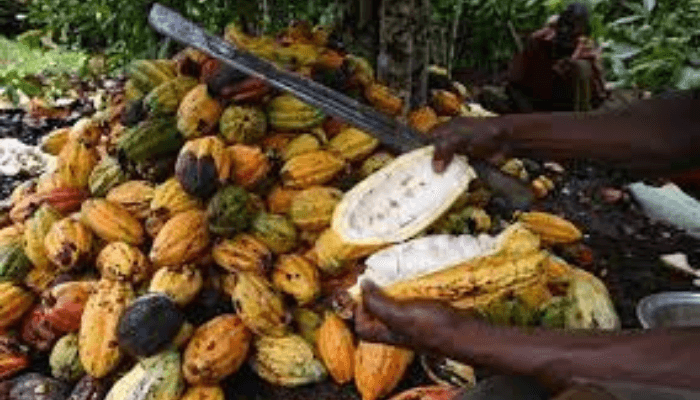
…Want infrastructure fixed before restricting raw bean exports
By Merit Ibe
Nigeria’s drive to maximise value from its agricultural commodities has renewed discussions on the country’s preparedness to process cocoa locally before export. While the Federal Government’s ambition to deepen local value addition has been widely welcomed, industry stakeholders say the policy can only succeed if supported by adequate infrastructure, processing capacity and an enabling business environment.
The conversation gained momentum after President Bola Tinubu, represented at the Cocoa Value Addition Summit 2026, stated that Nigeria should stop exporting raw cocoa beans only to import finished chocolate products. The federal government later clarified that it had not imposed an outright ban on raw cocoa exports, explaining that its objective is to encourage domestic value addition rather than restrict exports.
Industry operators say the clarification highlights a broader challenge: Nigeria still lacks sufficient processing plants, reliable electricity, efficient logistics, affordable financing and strong market institutions to support large-scale local processing. They warn that any attempt to restrict raw cocoa exports without addressing these structural constraints could negatively affect farmers, exporters and investors while weakening one of the country’s leading non-oil export sectors.
Africa produces about 70 per cent of the world’s cocoa but earns less than 10 per cent of the estimated $130 billion-$165 billion global chocolate market because most value addition takes place outside the continent. Nigeria, one of the world’s leading cocoa producers, continues to export largely unprocessed beans while importing finished cocoa products.
In 2024, Nigeria recorded a historic $2.52 billion in cocoa exports, making cocoa the country’s second-largest export after crude oil. Of this amount, about $1.63 billion came from raw cocoa beans exported mainly to Europe and Asia, while processed cocoa products contributed roughly $890 million, underscoring the untapped potential for local processing.
Stakeholders, however, insist that value addition requires more than policy pronouncements. They argue that sustained investment in processing facilities, stable power supply, transportation infrastructure, research, technology, skilled manpower and access to affordable finance is essential to transform the sector.
A trade expert and former director general of the Nigerian Association of Chambers of Commerce, Industry, Mines and Agriculture (NACCIMA), John Isemede, described the goal of encouraging local processing as commendable but cautioned that implementation must reflect the realities of Nigeria’s industrial capacity.
According to him, the country has yet to build the ecosystem required to process the large volumes of cocoa and other agricultural commodities produced annually.
“The idea is not a bad one, but critical issues must first be addressed,” Isemede said.
He questioned the state of cocoa plantations, the influence of foreign middlemen on pricing and quality standards, and the absence of strong commodity institutions to coordinate the value chain.
He also lamented the collapse of local jute bag manufacturing, noting that factories in Jos and Ibadan had disappeared, forcing Nigeria to rely on imports because of weak industrial policies and an import-dependent economy.
Isemede urged the government to adopt a scientific and evidence-based approach to any policy on raw agricultural exports, warning that poorly planned restrictions could disrupt farmers’ livelihoods and create uncertainty across the value chain.
“There is a pressing need for a comprehensive strategy to create an enabling environment for local processing and value addition,” he said. “Effective measures must support the industry, address stakeholders’ concerns and promote the consumption of locally produced goods.”
He recommended a comprehensive assessment of market readiness, covering both domestic and international demand, before introducing any export restrictions.
He also advocated extensive consultations involving farmers, processors, exporters, researchers, financial institutions and government agencies to ensure broad support for any policy changes.
According to Isemede, improving access to finance, modern technology, innovation, training and processing equipment would significantly strengthen Nigeria’s processing capacity.
He identified unreliable electricity, poor road networks and weak logistics systems as major obstacles to competitive agro-processing and urged government to create investment-friendly policies that would encourage private sector participation while guaranteeing fair prices and market access for farmers.
Drawing lessons from history, he called for a review of the defunct commodity boards and the multi-commodity development and marketing companies introduced during the Obasanjo administration to determine what lessons could inform current reforms.
He also questioned whether domestic demand for products such as chocolate, processed cashew and sesame is sufficiently developed to sustain restrictions on raw exports without reducing farmers’ incomes.
Isemede maintained that Nigeria should pursue a balanced policy that protects producers while strengthening processing capacity and export competitiveness.
The trade expert lamented the collapse of cocoa processing plants, textile mills and garment factories, attributing their decline to weak industrial policies, trade liberalisation and inadequate investment in manufacturing.
He further expressed concern over Nigeria’s dependence on imported agricultural inputs despite the existence of universities, research institutes and government agencies expected to drive innovation.
Beyond cocoa, he noted that commodities such as cassava, cashew, shea nuts and sesame face similar challenges, with producing countries capturing only a fraction of the global value chain.
He cited Nigeria’s decline from a leading global palm oil producer to a net importer as evidence of the consequences of neglecting industrial development and also highlighted the country’s inability to build a coordinated export system despite being the world’s largest producer of yam.
NACCIMA President, Jani Ibrahim, also welcomed the government’s policy direction, describing it as an important step towards transforming Nigeria’s agricultural value chain.
Ibrahim said expanding domestic cocoa processing would increase foreign exchange earnings, attract investment, create jobs, encourage technology transfer and improve the global competitiveness of Nigerian cocoa products.
“The decision to prioritise local cocoa processing represents a significant step towards transforming Nigeria’s agricultural value chain. Beyond increasing foreign exchange earnings, it will stimulate investments in processing facilities, create thousands of direct and indirect jobs, encourage technology transfer and enhance the global competitiveness of Nigerian cocoa products,” Ibrahim said.
He added that the policy could strengthen linkages among cocoa farmers, processors, exporters and manufacturers but stressed that its success would depend on reliable electricity, improved transport infrastructure, affordable financing, policy consistency and incentives for private investment.
Chief Executive Officer of Rimax Group, Livinus Okwara, shared similar views, saying value addition remains the appropriate long-term strategy but should be preceded by investments in infrastructure, industrial capacity, finance and stronger market institutions.
He warned that export restrictions introduced without adequate preparation could lower farm-gate prices if local processors are unable to absorb available produce, while exporters and investors could also suffer from policy uncertainty.
Okwara recommended substantial investment in processing facilities, affordable financing, technology transfer, research, capacity building and stronger collaboration between government and the private sector.
He also called for broad consultations with farmers, processors, exporters and financial institutions before major policy changes are implemented.
According to him, the challenge extends beyond cocoa, as Nigeria faces similar value-addition constraints in commodities such as cashew, sesame, shea nuts, cassava and yam.
Stakeholders agreed that Nigeria’s ambition to process more of its agricultural commodities locally is a step in the right direction. However, they maintained that achieving sustainable results will depend less on restricting raw exports and more on creating an environment that enables industries to thrive through improved infrastructure, increased investment, competitive manufacturing and consistent government policies.