Follow Us on Google
…Public sensitized on care and management
By Simeon Mpamugoh
In 2016, Afolabi Fajemilo, co-founder and executive director of Festus Fajemilo Foundation (FFF), collaborated with Spina Bifida Hydrocephalus Information Networking Equality (Shine), UK, following a Commonwealth professional fellowship programme in the UK in 2015 by three staff of the foundation.
The collaboration stemmed from the unavailability of any public health facility in Nigeria offering a stand-alone continence care and management clinic for people with spina bifida who may experience bladder and bowel incontinence throughout their lifetime.
“The combo is aimed at enhancing the skills, knowledge and capacity of health workers in the delivery of quality continence care and management to increase the life chances and future of babies, children and young adults with spina bifida in Nigeria,” Fajemilo explained.
In a media parley held by the organisation in Lagos recently, Afolabi noted that since then the project, which was codenamed “Saving lives! Improving Futures” (SLIF), has been funded through a number of donors, even as he said that the project is being funded by the UK Department of Health & Social Care, under the Global Health Workforce Programme (GHWP). He said: “The GHWP, using health partnerships model, aims to strengthen the health workforce and systems, advancing progress towards universal health coverage (UHC).
“As at today, 250 babies, children and young adults are accessing and receiving improved continence care through established clinics and outreach while 89 nurses have been equipped with improved knowledge in disability-inclusive continence care and management, with eight public health institutions and FFF offering regular and comprehensive continence care and management clinics.”
He noted that, in line with the primary project goals, eight public health facilities in five of the six regions of Nigeria were presently involved in this project. They are the Lagos University Teaching Hospital (LUTH), Obafemi Awolowo University Teaching Hospital Complex (OAUTHC), University College Hospital (UCH), University of Abuja Teaching Hospital (UATH), University of Benin Teaching Hospital (UBTH), Rivers State University Teaching Hospital (RSUTH), Usman Danfodio University Teaching Hospital (UDUTH), and Federal Medical Centre (FMC), Umuahia.
“The reason the project is not domiciled in the North East region of the country was the obvious insecurity situation. We are not saying that the public facilities are not mainstreamed to attend and provide care but that dedicated service and care, which addresses the needs of these persons who are going through the challenges, was not there before, so we have come to bridge the gap.
“We have also trained 89 health facility staffs and community health workers in continence care management.”
On key achievements so far recorded, he said: “We have regular supplies of free continence equipment and kits to all partner health facilities. We have Nigerian government’s approval to import supplies of Oxybutynin to aid in improving bladder health. A total of 240 children with spina bifida have been reached and are now experiencing access to continence healthcare and improved wellbeing.
“We also have established network of nurses from eight public health facilities and 6 target communities who access regular specialist advice and peer support regarding continence care and management. This is in addition to data collection processes introduced across all clinics to measure successes and outcomes.
“Recently, there was lack of Oxybutynin which allowed sufferers’ bladder muscle to be overactive again which if not could posed a significant risk to their bladder and kidney from back pressure, causing them to be highly likely to be incontinent of urine. Oxybutynin has now been restocked, all thanks to the Federal Ministry of Health and Social Welfare.”
He regretted the poor awareness of the disorder, linking it to profound cultural and spiritual attachment to medical issues of this nature. He said: “Out of 10 families whose children have this condition, who visit the hospital for the first time, hardly would one see about three of them that will come back. So where are the other children,” he queried.
He cited a case of nine year old child in Idumagbo market area of Lagos State with a protrusion at the back been carried in a wheelbarrow under a scorchy sun for alms begging: “I had to engage the person using the child to make money. This is how far people are ignorant of the condition,” he lamented.
He noted that the ignorance of the condition was not limited to those who were educated as there were some other members of the public who were patronizing herbalists and spiritualists despite the fact that “we have taken them through different capacity building and enlightenment programmes.”
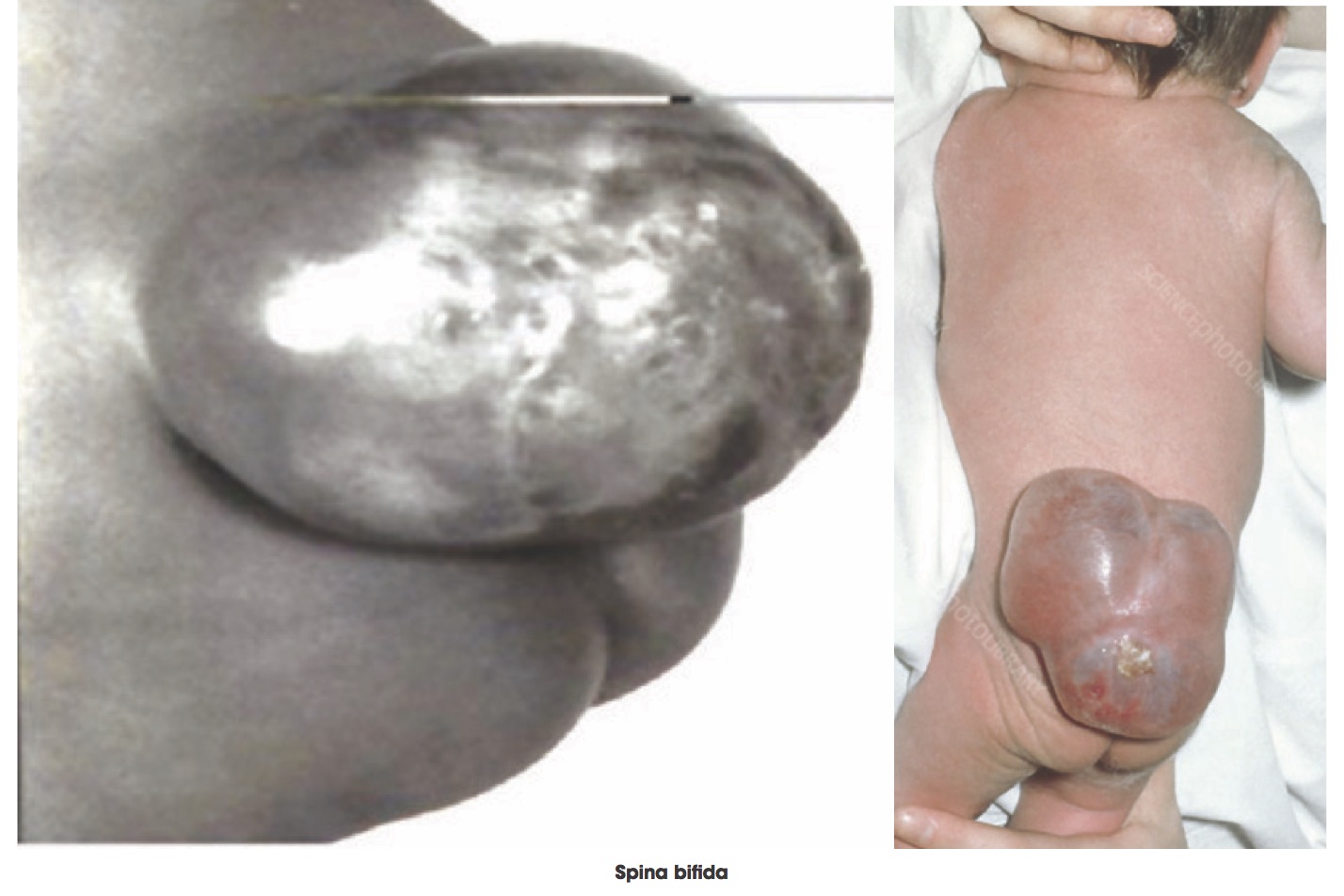
Social worker and project volunteer, Omolara Fernandez, in her presentation, titled, ‘Spina bifida, causes and effects,” defined the disorder as literally a “Split spine,” adding that it was a congenital defect by which a baby was born with a ‘swelling’ or “wound’ on the back.
“It is also when the bones of the spine (vertebrae) do not form properly around part of the baby’s spinal cord, thereby causing developmental anomaly. Spina bifida happens when a baby is in the womb and occurs when the bones, which form the spinal cord, fail to develop properly.
“It is a type of birth defect called Neural Tube Defect and the most common type of neural tube defects (NTDs). It occurs between 24 and 28 days of gestation and before the mother is aware of pregnancy.”
She said that spina bifida can be mild or severe – embryology – early development, adding that Spina bifida occulta as the name implies is a hidden type which does not cause problems or need treatment: “One cannot see the defect but people with this kind of spina bifida may have a dimple, birthmark or hairy patch on that spot. Most people with this form do not know they have it until they get a back x-ray.”
She highlighted various types of spina bifida listing them as spina bifida cystica, and meningocele, which comes
in severe form. “There is protrusion of the meninges through the defect and usually covered by the skin. In this form, fluid leaks out of the spine and pushes against the skin. There may be a visible bulge in the skin. In many cases, there are no other symptoms.
“Myelomeningocele is the most severe and most common type of spina bifida in Africa. It is what most people mean when they say “spina bifida’s” constituting 94% of the cases. Both the meninges and the spinal cord are pushed out of the spinal canal leading to nerves damage with more problems.”
On the causes of spina bifida, she said that the exact causes were not known, pointing out that genetic and environmental causes had been identified. “A women who
have had one child with spina bifida, a man or woman who themselves have spina bifida, and a man or woman who has any family history of the medical condition have high possibility of having a child with spina bifida. Women who are also obese or have diabetes are also more likely to have a child with spina bifida.”
She also spoke on the symptoms of spina bifida, especially spina bifida occulta. “This is not obvious in the newborn. It’s often asymptomatic with dimple or tuft of hair on the lower back. Bed wetting is also one of the symptoms of spina bifida. However, spina bifida cystica is usually obvious in newborn with a sac -sometimes transparent – sticking out of the mid to lower back as well as loss of bladder or bowel control – incontinence.
“There is also partial or complete paralysis of the legs; leg and sacral ulcers, erectile dysfunction, abnormal feet or legs such as clubfoot, dislocation of the hips, build up of fluid inside the skull (hydrocephalus) and
tethered cord syndrome.”
Asked how spina bifida is diagnosed: she replied: “It is diagnosed during pregnancy through abdominal ultrasound of the fetus –which can show signs of spina bifida such as the open spine. Others are serum alpha-fetoprotein screening test – it is a blood test conducted in the 16th – 18th weeks of pregnancy -elevated in neural tube defect, amniotic fluid alpha-fetoprotein also elevated in neural tube defects.
“Afterward we conduct X-rays of spine, Ultrasound (spine), CT (Computer Tomography or MRI (Magnetic Resonance) and imaging of the spinal area. Treatment can be multidisciplinary: Paediatrician (discovery, general assessment and referrals), Surgeons – neurosurgeon, orthopaedic surgeon, urologist, and surgery which should be done within 48 hours for those with Myelomeningocele including ventriculo-peritoneal- shunt; correction of bony abnormalities, bladder reconstruction and fetal surgery, child psychologist (cognition), genetist (genetic counselling), physiotherapist (addresses poor sensation of limbs etc) as well as occupational therapist (improve poor motor skills e.g eye to hand coordination).
“We equally have orthotics and prosthetics diagnosis – mobility aids such as braces, callipers, splint etc, social worker ( helping parents to come to term with the situation and navigates resources to help the child/family.
“In terms of treatment of people with the condition, there is need for continence specialist nurse; bowel training programme, which includes encouraging high fibre diet, good water intake, fruits, vegetables to prevent constipation and bladder care, gentle downward pressure over the bladder to drain the bladder, intermittent and catheterization, which can also be done, drugs – antibiotics for treatment of meningitis, prophylactic antibiotics to prevent urinary infection, cholinergic drugs to aid bladder emptying, e.g., Oxybutynin.
“In the area of management, sufferers should attend all scheduled doctor visits, and encourage the child to drink plenty of fluids. The child should also consume foods high in fiber, such as whole grains and fruits. This helps prevent constipation, while parents and caregivers should check the child’s skin daily for cuts, bruises and pressure sores. Children who have little or no feeling in their legs or feet may get hurt and not know it. That could lead to an infection.
“They should equally help the child to be active and encourage them to be as independent as possible, watch for learning difficulties and address them. When the child is ready to start school, parents and caregivers should talk with the staff and owners of the school about the child’s condition and enlighten them on how to manage the child’s academic challenges. For children with incontinence, practice the clean intermittent catheterization with them. This helps to keep them socially clean and dry.”
Asked how reproductive parents prevent spina bifida at pre-conception stage, Fernandez replied: “Get plenty of folic acid each day (either by taking supplement or consuming foods rich in or fortified with folic acid before and during pregnancy: Spinach, oranges and green vegetables are rich in folic acid. Also avoid indiscriminate use of drugs/self-medication – always consult doctor before taking any kind of drug and avoid too much exposure to heat during pregnancy.”
She recalled a campaign embarked upon by the organization in the past which focused on folic acid, recollecting the theme of the campaign: “Before you frolic go folic,” adding, “funny enough folic acid is just 5mm, so women of child bearing age should take it before getting pregnant.”
Director, Nursing Services, Lagos University Teaching Hospital (LUTH) and Lead Specialist Continence Nurse, Nigeria for SLIF project, Mrs Sarat Ojie in her paper entitled: Bladder and Bowel Incontinence: Care and Management noted that Spina Bifida can come with a protrusion at the back which would require a surgery to be done to correct the anomaly “because it’s not healthy for a child to be carrying the bulging membrane.
Ojie said that the membrane could rupture before a child was delivered, adding that It could burst and appear like a wound at the back of the child. She said; “Some of the children are delivered intact or ruptured, so surgery has to take place for it to be corrected. After that, there is the treatment modalities because these children have complication, their spinal cord carries nerve impulses from outside to the brain and to every part of the body. But because of this interruption, depending on the level, the children may have difficulties in controlling the bladder and bowel.”
She noted that there could be multiple challenges where one could see the children’s leg come together and bent inwards and they were not able to walk. “Some of them have paralysis depending on the severity, some can walk like normal human beings while others could be on wheelchair.”
She disclosed that the condition required multidisciplinary approach to treatment pointing out that they’d need a neurosurgeon who would handle the initial corrective surgery as well as other medical professionals.
She noted that the bladder was where the urine was stored after being produced from the kidney, adding that every individual ideally has two Kidneys. “Though we have people with one kidney but normal individual has left and right kidney. So those urine are produced from the kidney and carried by pipe – just like we connect pipes to our homes from the overhead tank into our apartment, that is the way Kidneys are, and they also have tiny tubes and urethras that carry the urine after production by the kidney into the bladder.”
She noted that it was against this background that researchers developed the idea of Clean Intermittent Catheterization which postulates that: “We are not going to sterilize the equipment that would be used to carry out the procedure, adding that the exercise “is done periodically, about 3-5 times a day hence it is called intermittent.
“Special catheters are made for this purpose. They can be done more than 5 time when there is infection because it helps to treat infection. They are not the type one can put and leave there.They are flexible, passed and removed at the end of catheterization. There are special equipment for them: we have catheters and water based lubricant used so that the catheter can enter easily.
“When one wants to pass a dry catheter through a hole, there will be friction because the procedure is going to be done intermittent. So if there is a continuous friction putting the catheter without lubricating it, it will cause the child trauma, injury like bleeding as the catheter is passed, and overtime, stricture formation and that becomes another problem, and we don’t want it hence we use water based lubricant called acquagel or K-Y gel. And every family should have it in addition to water and hand sanitizer.”
She says that care and management of spina bifida is a team work for mother and father and other members of the family who must support a child with the condition because It is quite demanding. “If it’s left for one person, It will be frustrating. That is why most parents who are not able to cope leave the child either with the grandmother or abandon the child outrightly because of the work involved. But when it’s a teamwork, everybody shows interest in the care of the child.
“We have many of the children with spina bifida in the primary schools, universities and polytechnics who are coping well. So, those requirements must be readily available. Every home can use used empty bottle water or transparent cup to receive urine that is catheterized. But before that, the person who will carry out the procedure must wash his/her hands with soap and running water. In the absence of a running water, the person can use portable hand sanitizer which can fit into any pocket or bag. And as the child is growing up, it’s good to carry him/her along.
“Children of four years old can handle the catheterization by themselves. For the boys it’s easier. If the children are outside the school and they don’t have the facilities to wash their private part, the parents should have baby wipes in their school bags to clean up so that dirt from outside will not be introduced into the children.”
She listed two types of catheters: short and long saying that the short ones are for girls while the long ones are for boys. “Girls’ are long because of the nature of their anatomical structures. Girls urethras are shorter but those of the boys are longer. We also teach them how to check the urine. A normal urine should be color amber. light and pale yellow colour. But when it’s concentrated, the urine is darker meaning that the child is not having enough water.
“Some parents intentionally don’t give their children water. They think it will reduce the degree of leakage, without knowing that they are causing more harm to the child’s system. Because waste from what we eat and drink must go out through the urine or poop that we have, so it’s not ideal for parents to restrict water from their Children but check whether it is pale, concentrated or have particles. Some urine can come out cloudy as if there is pus cells in it, which is a sign of infection. Normal urine has aromatic smell not offensive odour. But if they bring out the urine, they are taught how to perceive the odour or smell of the urine to know whether it’s normal or not. If it has particles, cloudy or fishy offensive odour, the child needs to visit healthcare professionals for urine test to ascertain whether there is any micro organism or germ inside it.
“If there is, a specific test will be done to know the type of drugs that can be used to treat the infection. There is no more try your luck business kind of treatment. Before any infection is treated with antibiotics, there must be a test conducted in the laboratory which will uncover the sensitivity of the micro organism causing the infection. Even if the child had infection previously, and it was treated, it’s advisable that the caregiver don’t go back to use any left over antibiotics for that particular infection, which must be investigated and tested to know the exact micro organism causing the infection.”
Ojie also spoke on the benefits of catheterization: “it helps to reduce infection. Once you maintain cleanliness of the procedure, it will note the amount of urine; if the child is producing little quantity of urine at a time on moderate or large. So when the child or caregiver is satisfied that the urine is normal, he/she will now discard, wash off and run the catheter under running tap water or baller that can pass through the hole of the catheter to wash out any urine that may be left in the catheter.
“The children can also have bowel issue because what they eat from the mouth enters into the small intestine and absorbed into the large intestine and form poop. But because their bowel is not moving the way it’s supposed to move, they are retaining some poop inside them. Sometimes, nature has it that some poop can leak out. It can be in watery form and passed out little by little but the main bulk of stool should be retained in the larger intestine. Over time the intestine will start expanding and the child will start having low abdominal pain and there will be no appetite to eat because what has been eaten before didn’t come out completely.”
She expressed the need for bowel wash out (BWO). “It’s normally done early in the morning before the child goes to school so that the bowel is washed in order to keep the child clean. The stench of poop leaking in the stool and into the pampers which scares their classmates and make them feel isolated and demoralized is one of the things that make children pull out of school. When they are smelling of still urine and poop in the class, and children being what they are don’t pretend about it. They will run from the child that has the offensive odour. So it’s advisable that the child has bowel wash out in the morning and evening at the commencement of the treatment. But when the parents are satisfied that what is retained after the bowel wash out is clear enough and the child is neat during the school hours, they can now do it daily.
“At the initial stage, it can be done in the morning and evening to clear the backlog of stool. Sometimes when it’s done, you still add the impacted stools that come out like stones. It can even be taken in stones, bits and pieces because the water has been absorbed. And when stool stays unduly prolonged in the bowel, it can cause cancer overtime because it is a toxin the body does not need anymore that is being absorbed into the system. But a time comes when it will not be done daily but every other day, depending on the workload and nature of work of the parents.
“The children can be taught to help themselves with warm water and a particular type of bar called bowel wash out set. ln Nigeria we have limited quantities hence we teach them how to improvise with bottle water via a nail on the wall. If it is their private toilet, they can nail it there, otherwise, they look for a part of the room where they can nail it and a reserved area where they can have the wash out and later empty into a general toilet so that it does not cause problems with neighbors.”
She noted that these children could equally develop a problem of raised bladder pressure which could easily damage their bladder if not controlled. “When they come to the clinic on first visit, we teach them what clean intermittent catheterization and bowel wash out is, at this point we don’t conduct bladder pressure measurement because for one to do that, the caregiver or parent must know how to handle clean intermittent catheterization because after catheterization, and the bladder pressure is high, the drug that can control the pressure will be instilled.”
She noted that one catheterization can last for one month if properly taken care of, adding, “when the children come for the second visit, we ask for a feedback on what they have been doing at home and how they have been handling the catheterization and bowel wash out. If we are satisfied that they are getting it right, a form will be given to them tagged ‘three days intake and output chart’ so that any food the child eats will be recorded on the chart: water, milk, beverage or pap will be entered in the chart so that when they visit the clinic again, the form will be collected from them and examined to know the highest volume the child’s bladder can retain. It’s the quantity of urine the bladder can retain that will be used in conducting the bladder pressure measurement.
“The normal bladder pressure is 0-3 and if it’s above 30, the child’s bladder pressure is on the high side and this is where we commence the child on oxybutynin capsule, which will be instilled in the child’s bladder. It has a local effect of relaxing the child’s muscles because it contrast very fast, the more reason it doesn’t retain urine most of the time. With it, the child will be drier over time and use less pampers. It is economic to the family and the children will come out happier and healthier.”
Asked the effect of the condition to the reproductive life of the children, Ojie said that there were multiple anomalies faced by the children adding that in some there genital were not well developed while some were okay. “We treat them the way they are and if they need support from urologists or gynaecologists, they will come in. For the ladies they can do IVF and when it’s time to deliver, they can have their babies.
She noted the lack of awareness of Spina bifida hydrocephalus condition among the health care workers regretting it is low. “It is not that we are not taught in the course of training or study but the special care of these children was not there. This is why the awareness is coming up from United Kingdom Development of Health And Social Care (DHSC) and it’s spreading like a wildfire.
One of the beneficiaries of the project, Lawal Mustapha, 19, is a graphic artist who was discovered seven years ago. He was 12 years then and a bladder operation measurement was conducted and his bladder capacity was half the expected volume, which according to physician was dangerous to his health. Today Mustapha can walk and play his favourite sport snooker.
He spoke to Daily Sun on how he felt noticing that he couldn’t walk naturally: “I felt that my case was different. We are created differently. The way God created me is different from the way He created others yet all of us were created by Him and in this world together.
“What others can do, I can equally do it except if I don’t want to do it. This is a mentality I cultivated when I was 10. I don’t want any one to look down on me. I don’t talk too much but that doesn’t mean I don’t know what to say. I love being left alone and talk when necessary and to the point. In fact, my condition has even made me popular in my street.
“I believe that disability is not the end of life for the victim. Everything is a matter of time. The time an able bodied person reaches his goal is not the same time a person with disability will reach his own goal.
“So there is no need to be haste because the way we walk is different and all of us will not get to our destination at the same time.”
Mustapha, who says he wants to pursue a degree in mass communication, shared his feelings on government neglect of people with spina bifida and hydrocephalus and other disabled conditions: “He who wears the shoe knows where it pinches. There is government neglect of people living with disability. So pursuing a course in mass communication will enable me to stand in the gap to advance the course of the disabled in our society so that this special people will no longer be looked down upon by government and members of the public.”