Follow Us on Google
By Philip Nwosu
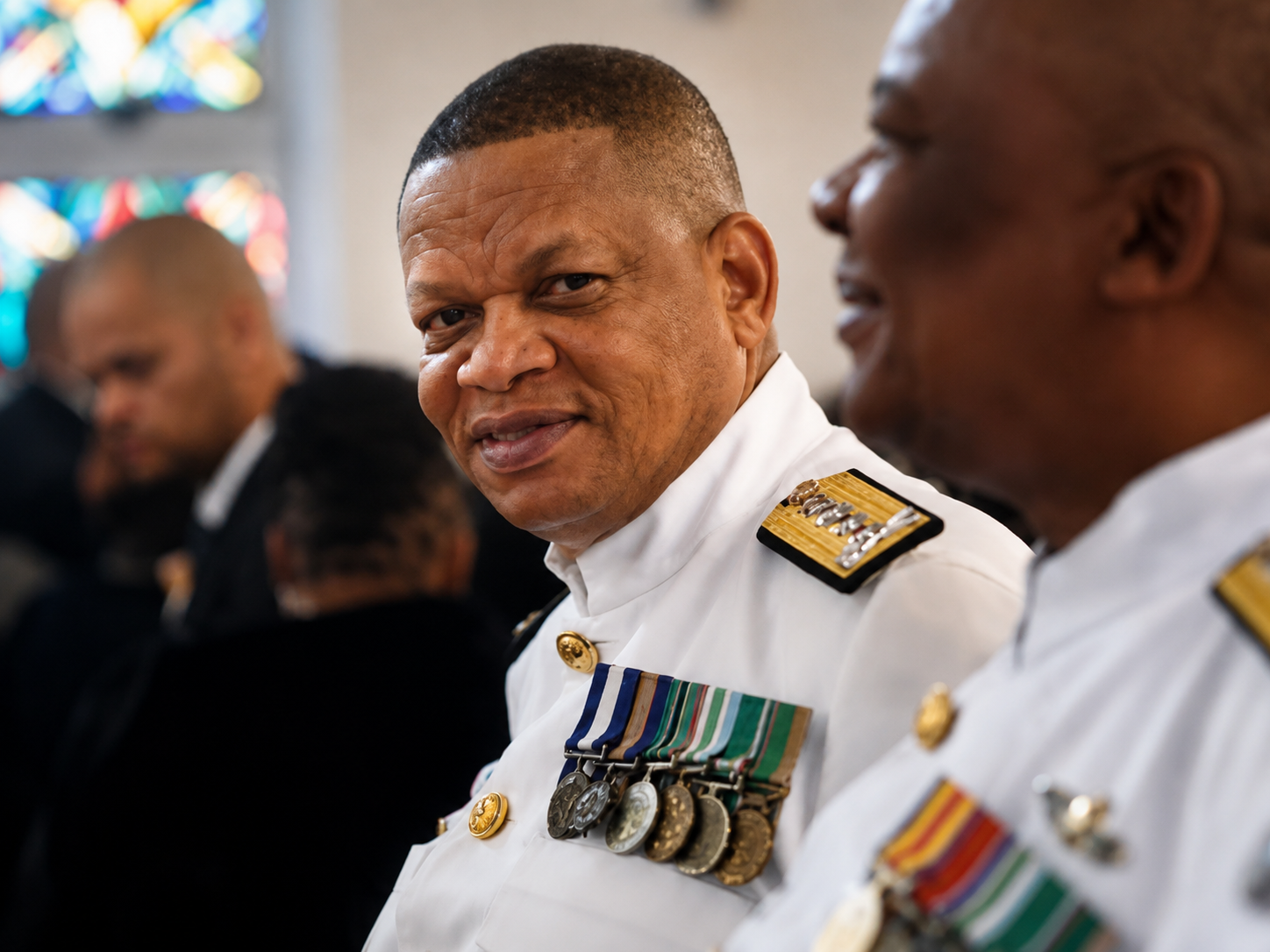
The Chief of the South African Navy, Vice Admiral Monde Lobese, called on African nations to develop indigenous solutions to maritime security challenges, stressing that the continent possesses the human and material resources needed to secure its waters and drive economic growth.
Speaking on the sidelines of the Sea Power for Africa Symposium held as part of activities marking the 70th anniversary of the Nigerian Navy, Vice Admiral Lobese commended the Nigerian Navy for its achievements in combating maritime insecurity, particularly piracy in the Gulf of Guinea.
He noted that improved maritime security in Nigerian waters would have far-reaching benefits for trade, investment and economic development across the continent.
“As you know, Africa’s growth and development depend on maritime trade. Nigeria’s success in overcoming maritime security risks presents a great opportunity for prosperity and economic growth within the country and the wider region,” he said.
The South African navy chief emphasised that Africa should no longer rely excessively on external actors to solve its security challenges, arguing that the continent had sufficient expertise and intellectual capacity to develop home-grown solutions.
According to him, one of the key messages of his presentation at the symposium was the need to promote indigenous innovation, research and development in the maritime sector.
“Africa is not a poor continent. We are rich not only in mineral resources but also in human capital. The brains exist within Africa to develop solutions that speak directly to the African battlespace,” he stated.
While acknowledging the importance of regional, continental and international partnerships, Lobese maintained that such cooperation should not come at the expense of building local capacity.
He urged African governments and institutions to invest in research, industrial development and maritime infrastructure to strengthen the continent’s ability to safeguard its maritime interests.
“It is time for Africans to unite in research and development, build our own industries, and develop solutions that address our unique challenges. We understand our terrain, we have the resources, and we have the expertise,” he said.
Vice Admiral Lobese said the Sea Power for Africa Symposium remained a vital platform for African leaders and maritime stakeholders to collaborate and articulate common positions on maritime security and development.
Other News
Referencing the vision of prominent African statesmen such as former Nigerian President Olusegun Obasanjo and former South African President Thabo Mbeki, he said the continent must embrace the ideals of the African Renaissance by taking greater responsibility for solving its own problems.
“It is upon us as Africans to rise and develop solutions for Africa rather than waiting for others outside the continent to tell us how to solve African challenges,” he added.
On bilateral relations between Nigeria and South Africa, the South African navy chief described the partnership between the two countries as long-standing and strategic, rooted in a defence cooperation agreement signed in 2001.
He revealed that discussions held with the Chief of the Naval Staff, Vice Admiral Idi Abbas, during the symposium focused on expanding naval cooperation between both countries.
According to him, the two navies had agreed in principle to intensify collaboration through joint maritime exercises, exchange programmes and port visits.
“We have resolved that as long as the Atlantic Ocean unites South Africa and Nigeria, our relationship will continue to grow stronger,” he said.
Vice Admiral Lobese disclosed that plans were underway for South African naval ships to visit Nigeria while Nigerian vessels would also make port calls in South Africa as part of efforts to deepen naval diplomacy and operational cooperation.
He explained that naval diplomacy remained a critical tool for strengthening relationships between maritime forces and fostering mutual understanding among nations.
The South African navy chief further announced plans to increase the exchange of trainees and military students between both countries, describing the initiative as a practical demonstration of the commitment of both navies to translate agreements into concrete actions.
“We are not just talking. We are committed to implementing these initiatives and strengthening cooperation between our two nations,” he said.
The Sea Power for Africa Symposium brought together naval leaders, maritime experts, policy-makers and security stakeholders from across the continent to discuss strategies for enhancing maritime security, promoting economic development and fostering greater collaboration among African navies.