Follow Us on Google
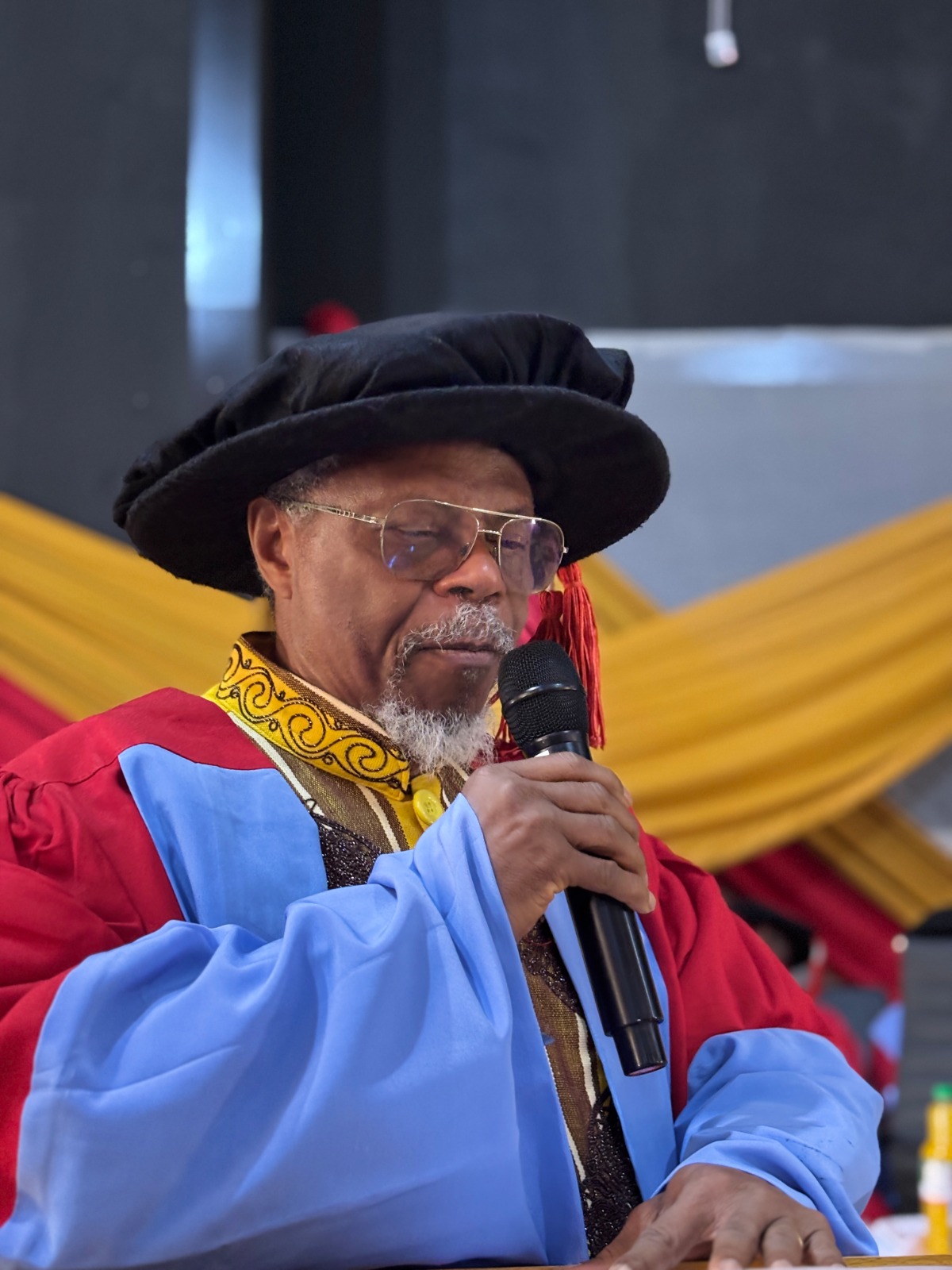
In an era dominated by misinformation and digital distortion, society requires the expertise of historians more than ever, Professor Toyin Falola asserted while delivering the keynote lecture at the inaugural induction of History and International Studies graduands into the Historical Society of Nigeria (HSN) at the University of Jos.
Falola emphasized that historians play a critical role in insisting on facts, context, and evidence, especially during times of political instability and cultural confusion.
“Now more than ever, with the propagation of misinformation and distortion through technology, society needs historians, and the governments, foundations, and academic institutions must fund historical activities to secure their country.
As young historians, you should remain steadfast, practice your craft until you achieve excellence, and watch as opportunities and purpose follow you,” he said.
He urged students to embrace their role as custodians of truth, stating, “Even as undergraduates, you are custodians of the truth on behalf of society.
History is not just the collection of facts; it is humanity’s repository of morals. Thus, your works, whether the ones you preserve or the ones you submit, will outlive you; they will remain to be interpreted in classrooms or public spaces for several generations to come and implemented to shape policies or identities, even when your name might have lost relevance.”
Falola also cautioned against ethical pitfalls in the study of history. “I warn you against pitfalls that may obstruct your journey. You must first reject anti-intellectualism; you must shun ethnic or religious bigotry because when you weaponize history out of hatred, your work becomes falsified and jaundiced.
Other News
Your scholarship should not be for mercenary purposes – no certificate can restore your integrity once it is lost. Most importantly, do not think of history as a fallback course – that is, regardless of what fate has brought you here. You are here now; as the cliché goes, ‘whatever is worth doing at all is worth doing well.’
From you, history demands passion, humility, and courage, and in exchange, it will instill in you discipline and character that will ensure you are employable and invaluable to society.”
Addressing concerns about career prospects, he acknowledged the challenges faced by history graduates: “My young historians, I know you have fears, and I understand them. There are questions over your choice of discipline even from your homes. There are questions about what job you take to fend for yourself after studying history.
These questions are especially justified given the small, heavily contested employment pool in Nigeria and the fact that the roles of a historian are hardly recognized or designated. This situation has led many promising minds away from this discipline, and those currently studying it treat it as a fallback course. I want to assure you that your fears about your future as historians are not new; they have existed since the time of Professor Ayandele, the historian and the first head of Jos, when scientific disciplines became prominent in the Nigerian academic scene and the humanities faltered. History survived this period because it produced thinkers who remain relevant across generations and professions.”
Falola highlighted the global recognition of historians who pursue their craft seriously: “To put it in plain terms, history is a discipline that is largely misunderstood, and society often fails to recognize the value of historians. However, there is glaring evidence that historians who take their craft seriously can become influential, mobilize, and be employable at home and abroad. I currently lecture at the University of Texas at Austin, but I find myself moving away from myself and talking about other scholars. They owe their global relevance to the discipline of history.
Their scholarship activities earned them international research grants. Historians in Nigeria have recorded many recent successes. Their success was borne of their intellectual prowess, which is valued and rewarded worldwide. Therefore, if you fulfill your duties well here, History will open doors for you beyond Nigeria.”
He also outlined career paths for history graduates beyond academia: “Also, many of you have little idea of what job fits your knowledge. Historians are not restricted to classrooms or libraries; you can also easily play the role of a policy analyst – the job requires your expertise as a historian to interpret conflicts, developments, and institutions.
Journalists are trained to conduct investigations, dismiss falsehoods, and state the facts – a duty like that of a historian, which is why it is another field you can pursue for employment. The job of a diplomat or an ambassador is also an avenue of employment suited to the skills of a historian – you have the skill of cross-cultural understanding, which is needed here. Also, a historian can find employment in an archive as an archivist or in a museum as a curator. You can choose to remain a historian-cum-writer. In this state, you become a problem solver through research and academic submissions that transfer knowledge and counter distortions.”