Follow Us on Google
…Backs expansion of centralised housemanship
…Senate hails NAFDAC’s anti-fake drug war
From Adesuwa Tsan, Abuja
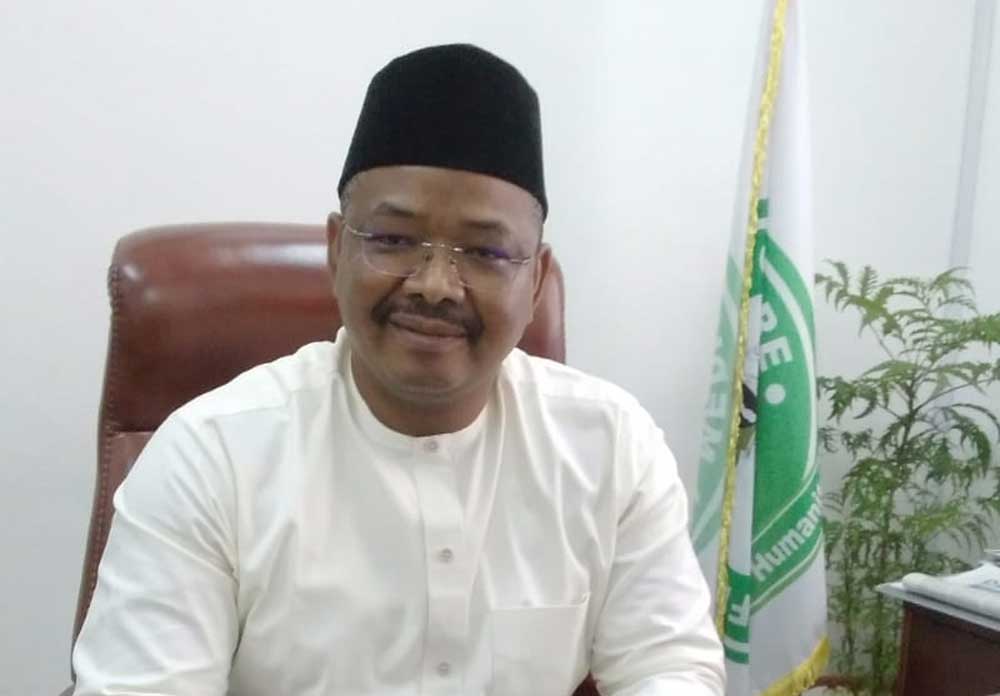
The Chief Medical Director (CMD) of the Federal Medical Centre (FMC), Abuja, Professor Saad Ahmed, has explained that the hospital could not save 26-year-old Abuja-based singer, Ifunanya Nwangene, who died after a cobra bite, because she arrived for treatment more than two hours after the incident, by which time the venom had already spread through her system.
He spoke on Saturday in Abuja when he appeared before the Senate Committee on Health, for the 2026 budget defence session of the centre.
Nwangene, an aspiring singer who gained national attention after appearing on The Voice Nigeria in 2021, reportedly died after being bitten by a cobra in her Abuja apartment, sparking widespread public debate about hospital preparedness to manage snakebite emergencies
Ahmed also dismissed claims circulating on social media that the hospital lacked anti-snake venom, stressing that two doses were promptly administered upon her arrival.
“First, I want to extend my condolences to the family and friends of the deceased. But I would say this is a case of a cobra,” Ahmed said.
“Cobra is the most poisonous snake that we know. And time is of essence from when one gets bitten and then to access that care.
“She presented to our hospital over two hours after she was bitten by that cobra. And by that time, she had already started manifesting with some systemic envenomation.
“And contrary to what we see on social media, that we didn’t have anti-snake venom, two doses were promptly given. First dose was given through infusion. After that, another dose was administered.
“So she had two doses of anti-snake venom. But the venom had already gone systemic. And we all know the cobra being highly poisonous.
“If she had presented probably much earlier, within 10 to 15 minutes, usually that’s when anti-venoms become most effective. But she came over two hours after the deadly incident.”
.
Ahmed described the incident as a wake-up call for hospitals nationwide to strengthen emergency response systems.
“This should serve as a wake-up call, particularly for hospitals that may not be prepared for such emergencies. But for FMC Abuja, we had anti-snake venom in stock, our emergency services are top-notch, and our staff were fully on ground,” he said.
Other News
Beyond the snakebite controversy, the FMC Abuja CMD told the committee chaired by Senator Ipalibo Harry Banigo, that urgent reforms of Nigeria’s centralised Housemanship system is needed, warning that limited placement capacity in federal hospitals is fuelling yearly backlogs and worsening the brain drain crisis.
According to him, the growing mismatch between the annual output of medical graduates and available training slots threatens the future of healthcare delivery.
“We are facing a situation where the quota allocated for housemanship in federal tertiary hospitals is no longer sufficient,” Ahmed said.
“Housemanship is not like classroom admission. It depends on available beds, the number of specialists, infrastructure and facilities. You cannot simply increase numbers without the capacity to train them properly.”
His remarks followed disclosures by the Medical and Dental Council of Nigeria (MDCN) that although about 6,000 doctors graduate from Nigerian medical schools annually, only about 4,000 can be absorbed under the federal government’s centralised Housemanship scheme, leaving roughly 2,000 stranded each year.
The Registrar of the council, Dr. Fatimah Kyari, during the 2026 budget defence session on Friday, told lawmakers: “While about 6,000 doctors graduate from Nigerian medical schools annually, the Centralised Housemanship Scheme can only absorb about 4,000.”
Kyari said the backlog fuels frustration among young doctors and pushes many to seek opportunities abroad. Adding to his presentation, Ahmed supported the MDCN’s call for urgent intervention, advocating the inclusion of state-owned and capable private hospitals in the centralised scheme.
“It’s not just about federal hospitals. If state governments and capable private hospitals key into the centralised system, it will help a great deal,” he said.
“There are private hospitals already doing housemanship training. Once the system is properly centralised and expanded, this recurring problem will become history.”
Ahmed also highlighted funding challenges confronting federal health institutions, particularly delays in the cash backing of budgetary releases.
“Our major challenge is the non-release of funds for 2025. We have started receiving warrants, but we are still waiting for cash backing,” he said.
“Overhead costs are another serious issue. Electricity, diesel and other recurrent expenses are enormous, and they come from overheads. We appealed to the Senate Committee to look into this so hospitals can continue delivering quality services.”
During the same budget defence session, Senator Natasha Akpoti-Uduaghan commended the National Agency for Food and Drug Administration and Control (NAFDAC) for its crackdown on fake and substandard drugs.
“This interception is not just about seizures; it is about saving lives and reassuring Nigerians that their health matters,” the senator said.