Follow Us on Google
By Juliana Taiwo-Obalonye
September is a special month that casts light on voices that don’t always get heard—the voices of the deaf community, many of whom were born with disabilities that shape how they experience the world from the very start. For these individuals, life is a daily navigation of silent landscapes, where communication barriers are more than inconveniences; they are obstacles to basic necessities like healthcare, education, and social inclusion.
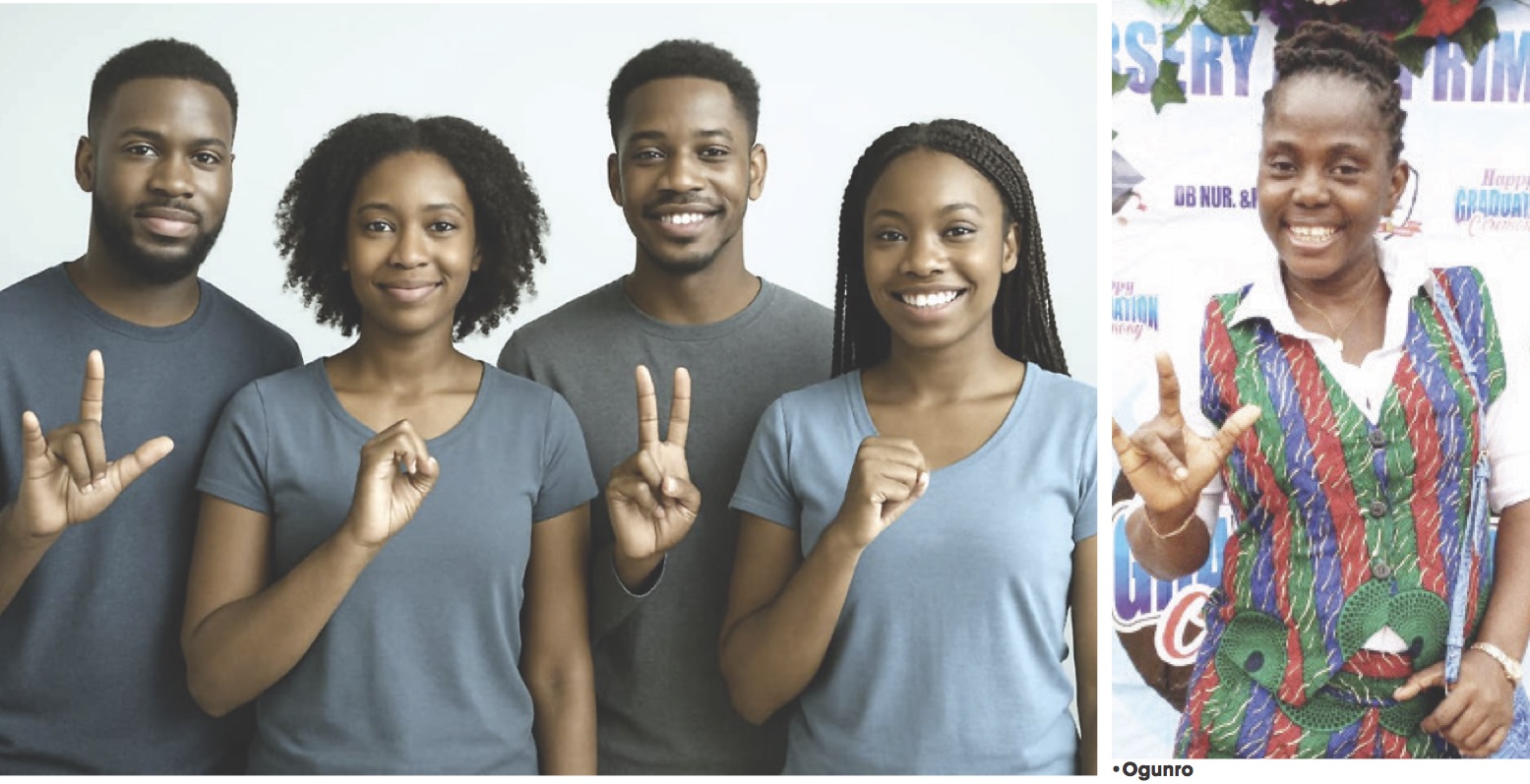
It was a cold, unwelcome reality that shook Funmilola Arike Ogunro’s world like never before—the death of her younger sister. Olushola Abidemi Shenkoya, known affectionately as Shollyz, was a vibrant final-year student at the University of Ilorin, full of dreams and promise. But a cruel twist of fate struck when she contracted typhoid. What should have been treatable turned fatal—not just because of the disease, but because the healthcare system simply could not communicate with her. Shollyz was deaf. Doctors and nurses did not know sign language, and the precious moments when words could have saved her life passed in silence.
For Funmilola, that loss was more than heartbreak. It was a call to action.
“The communication gap between the hearing and the deaf is so wide, and it cost my sister her life,” she said her voice steady despite the lingering pain. “I couldn’t stand the thought of others suffering the same fate.” Out of that grief, the Friends of the Deaf International Foundation (FDF) was born—a beacon of hope and learning, bridging the gap between the two worlds.
From her living room in Ikorodu, Lagos, Funmilola started teaching sign language, determined to transform how society perceives and supports the Deaf community. By 2020, in the middle of a global pandemic, she launched the FDF Academy—a low-cost school offering inclusive education to indigent children with disabilities, including over 80 young learners. Many of these children, born deaf or with other impairments, had never seen a classroom that understood their needs.
“Most are born with disabzzz zilities, and right from the start, they face a world built without them in mind,” she explained. “It’s not just about hearing loss but about access, inclusion, and dignity.”
Her foundation runs the Inclusive Spelling Bee, which has brought thousands of children—some Deaf, blind, or living with cerebral palsy and autism—onto the same stage, under the same spotlight. This event is more than a competition; it’s a powerful statement that children of all abilities belong in schools and society. And slowly, more schools are answering the call, opening their doors to children previously locked out by stigma and ignorance.
Funmilola’s dedication is part of a larger, urgent conversation playing out across Nigeria, where millions live with disabilities but face barriers that seem impenetrable. For many deaf Nigerians, the world is muted by misunderstanding. Hospitals lack interpreters, schools lack resources, and public institutions often overlook the deaf in policy and practice.
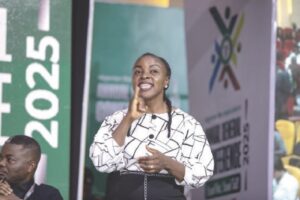
Maria Chidimma Alufo-Ekpo knows these barriers intimately. As the South East Zonal Women Leader of the South East Deaf Women Association, Maria’s daily life is shaped by the silence that surrounds her. “Communication outside my home is a constant struggle,” she shared. “Trying to navigate hospitals, buses, government offices—it’s like being invisible sometimes.”
Workplaces present another challenge. The absence of sign language knowledge among colleagues can lead to feelings of isolation and exclusion from critical discussions. “I often feel left out, like a shadow in the room,” Maria says, speaking softly but firmly. “Everyone deserves to be heard.”
She believes the answer lies in education and awareness. Deaf culture is rich and vibrant, yet invisibility and misrepresentation in media perpetuate harmful stereotypes. “If we taught sign language in schools as a matter of course,” Maria urged “it would open doors, not just for Deaf people but for society as a whole.”
Catherine Edeh, a lawyer and Executive Director of the Voice of Disability Initiative, sees this lack of communication as a devastating barrier to human rights and dignity. “For Deaf people, communication is security, access, and identity,” she explained. Without interpreters, a hospital visit or court appearance can be a terrifying ordeal rather than a healing or fair moment.
Catherine’s experience overseas, during her Mandela Washington Fellowship in the United States, showed her a model of inclusion where sign language is treated as a fundamental right. “There, communication is respected, and Deaf people thrive as equals,” she said. But back home in Nigeria, she knows the journey is uphill.
The fight is not just about sign language—it’s about shaking a system that has long neglected Deaf Nigerians. “Inclusion is not charity, it’s justice,” she stressed. “We need laws that enforce sign language services in schools, hospitals, courts, and media. This is not optional.”
Behind the scenes, interpreters like Mrs. Didigwu Uzoamaka Onyinye are the unsung heroes who make this fight possible. Choosing a career inspired by a passion for special education, Didigwu knows how demanding sign language interpreting is—both physically and emotionally. “You have to prepare yourself to interpret words, emotions, culture,” she explained. “Facial expressions, body language, everything matters.”
She also addresses misconceptions—challenging the myth that learning sign language can make a hearing person Deaf—and celebrates how technology has opened doors for remote interpreting, enhancing communication possibilities for the Deaf community. Still, she believes the biggest leap forward would come from official government recognition of sign language as a national language.
“That would be transformative,” Didigwu smiled. “Access is a right, not a privilege. Sign language deserves to be part of everyday life, not an afterthought.”
Many in Nigeria are born into these quiet struggles, their lives marked by exclusion and misunderstanding. Take Ezenwata Nasa, born deaf in a small village in Anambra State. Growing up, she was left out of religious programmes and social events simply because no one understood her language or her world. The isolation left its mark on her spirit.
“I withdrew into myself,” she recalled. “I wanted to be part of the community but felt like a ghost.”
Ezenwata’s story is not unique but reflects the harsh reality many deaf Nigerians face daily—the lack of clear communication creates borders that separate families, friends, and neighbours. Access to education, vocational training, and healthcare remains limited, perpetuating cycles of poverty and exclusion.
Yet, amidst these challenges, resilience shines bright. The leaders, families, and individuals transforming tragedy into opportunity remind us that inclusion is a choice society must make. The government, community organizations, and citizens all have roles—whether it’s passing laws to recognize sign language officially, training interpreters, or simply learning a few signs to communicate compassion.
“Learning sign language is learning a new way to see the world,” Funmilola said. “It’s about giving voice to those silenced by circumstance.”
This September, as Deaf Awareness Month and the International Day of Sign Languages invite the world to listen with eyes open, the stories of Nigerian Deaf advocates remind us: Behind every silent struggle is a call for understanding, equality, and human connection.
Through their words, their work, and their unyielding hope, a new chapter is being written—not in spoken words, but in the eloquent language of signs, inclusion, and heart.