Follow Us on Google
•Why place of birth shouldn’t decide child’s fate
For thousands of Nigerian families, the joy of welcoming a new born is often overshadowed by an invisible threat; Sickle Cell Disease (SCD). For many, the diagnosis marks the beginning of a lifelong journey of pain, resilience and hope.
And for millions of people living with sickle cell, survival is only the first battle. The larger fight is for dignity, affordable healthcare, access to life-saving medicines, freedom from stigma and the opportunity to live full, productive lives.
As Nigeria continues to battle the world’s highest burden of sickle cell disease, the challenge remains enormous.
Every year, on June 19, the world marks World Sickle Cell Day, dedicated not only to raising awareness but also to demanding action for millions living with one of the world’s most common inherited blood disorders.
The 2026 global theme, “Closing the Survival Gap: Equity in Sickle Cell Disease,” highlighted that no child should be denied the chance to live simply because of where they were born.
United Nations Children’s Fund (UNICEF), noted that Sub-Saharan Africa, carries more than 70 per cent of the global burden of sickle cell disease. Through its advocacy, UNICEF continues to champion equitable access to life-saving healthcare, early diagnosis and comprehensive treatment, insisting that geography should never determine a child’s chances of survival.
According to the Federal Ministry of Health and Social Welfare and the World Health Organisation (WHO), an estimated 150,000 to 200,000 babies are born with sickle cell disease in Nigeria every year, representing one of the largest proportions of global births with the condition. While about 25 per cent of Nigerian adults carry the sickle cell trait (HbAS), making the disease one of the country’s most pressing public health concerns.
UNICEF described the disease as a national crisis in Nigeria, noting that as many as 20 out of every 1,000 live births are affected.
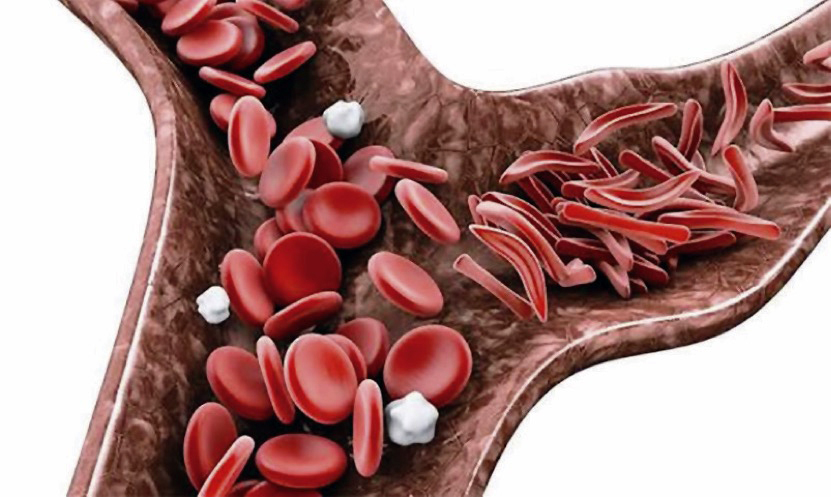
It explained that sickle cell disease is a group of inherited blood disorders that causes red blood cells to become hard, sticky and crescent-shaped instead of round and flexible. “Unlike healthy blood cells that move easily through blood vessels, sickled cells can block blood flow and break down prematurely. The result is a lifetime of severe pain, chronic anaemia, recurring infections and progressive damage to vital organs including the brain, lungs, kidneys and heart.
“Although there is currently no universal cure for most patients, early diagnosis and consistent medical care have been shown to dramatically improve survival and quality of life.”
When pain becomes crisis
According to experts, perhaps the most feared complication of sickle cell disease is the sickle cell crisis sudden episodes of intense pain and life-threatening complications caused by blocked blood vessels or rapid destruction of red blood cells.
Medical experts identify four major forms of sickle cell crisis: verso-occlusive crisis, splenic sequestration crisis, aplastic crisis and hyper haemolytic crisis.
They further disclosed that the most common is the verso-occlusive crisis, which occurs when sickle-shaped blood cells become trapped inside small blood vessels, cutting off oxygen supply to tissues.
“Patients often experience sudden, severe and throbbing pain affecting the arms, legs, ribs, back, joints and abdomen. In infants and young children, it commonly appears as painful swelling of the hands and feet, a condition known as dactylitis.
“Common triggers include: dehydration, infections, exposure to extreme cold, emotional stress and physical exhaustion. For many families, these painful episodes mean repeated emergency hospital visits, missed school days, interrupted careers and enormous financial strain.”
How it affects the body
According to experts, normally, red blood cells are round and flexible. In sickle cell disease, many become rigid and crescent (sickle) shaped. “These abnormal cells can; block small blood vessels, reduce oxygen delivery to tissues, break down more quickly, causing chronic anemia:
While common symptoms may include: Severe pain episodes (pain crises), chronic anemia and tiredness, frequent infections and swelling of the hands and feet in infants, delayed growth and puberty as well as stroke and organ damage in severe cases:
Other News
Why it is common in Nigeria
“The sickle cell trait (AS) is common in Nigeria because it provides some protection against severe malaria. However, when two carriers (AS × AS) have a child: 25 per cent chance of a child with normal haemoglobin (AA), 50 per cent chance of a child with sickle cell trait (AS) and 25 per cent chance of a child with sickle cell disease (SS).”
Federal Government action
Commemorating the 2026 World Sickle Cell Day, the Federal Ministry of Health and Social Welfare launched the Universal Newborn Screening Policy for Sickle Cell Disease in selected healthcare facilities across Lagos State, Kano State and the Federal Capital Territory.
The initiative it disclosed is designed to ensure babies are diagnosed shortly after birth, allowing treatment to begin before serious complications develop.
Coordinating Minister of Health and Social Welfare, Prof. Ali Pate, described sickle cell disease as one of Nigeria’s biggest public health challenges. He noted that although advances in medicine have made it possible for people with sickle cell disease to live longer, healthier lives, many Nigerians still lack access to timely diagnosis, quality treatment and essential medicines.
According to the minister, approximately 100,000 Nigerian children die annually from complications associated with the disease, many from preventable causes.
He said the Federal Government, under President Bola Ahmed Tinubu’s Renewed Hope Agenda, is strengthening the country’s health system through the Nigeria Health Sector Renewal Investment Initiative to improve healthcare access, financial protection and better outcomes for all Nigerians.
Among the interventions announced are the review of the National Guidelines for the Prevention, Control and Management of Sickle Cell Disease, expanded use of evidence-based treatments such as Hydroxyurea therapy, and nationwide training for primary healthcare workers, beginning in the South-West.
The ministry also announced the establishment of six Centres of Excellence for Sickle Cell Disease, one in each geopolitical zone. These centres it stated will be equipped with High-Performance Liquid Chromatography (HPLC) machines and other diagnostic equipment to strengthen new born screening and comprehensive care.
Government has also adopted SickleSCAN, a rapid point-of-care testing technology expected to make diagnosis faster, more affordable and more accessible, particularly in underserved communities.
In addition, sickle cell services are being integrated into primary healthcare facilities and the Nigeria Package of Essential Non-Communicable Disease Interventions (Nigeria-PEN), bringing counselling, screening, referrals and treatment closer to communities.
Affordable new born screening
The Federal Ministry is also engaging the National Health Insurance Authority (NHIA) to include affordable new born screening, essential laboratory tests and subsidised Hydroxyurea therapy within the national health insurance benefits package.
There are also global initiatives beyond Nigeria as organisations across the world are intensifying efforts to improve survival for people living with sickle cell disease.
The Global Alliance of Sickle Cell Disease Organisations (GASCDO) hosted a 24-hour global campaign drawing attention to persistent health inequalities and the need for stronger support systems for patients and caregivers.
In countries including Nigeria and the United Kingdom, advocacy groups such as the Sickle Cell Society amplified the voices of young people living with the disease, challenging stigma while encouraging early diagnosis and improved healthcare access.
UNICEF has continued to push for expanded new born screening programmes, supporting the deployment of rapid diagnostic tools such as HemoTypeSC in immunisation and paediatric clinics to ensure early detection and prompt medical intervention.
The organisation estimates that about 300,000 babies worldwide are born with sickle cell disease every year. In some low-resource settings, as many as 90 per cent of children born with severe forms of the disease die before their fifth birthday because they cannot access early diagnosis or comprehensive care. These are deaths that experts say are largely preventable.