Follow Us on Google
By Ndubuisi Orji, Abuja
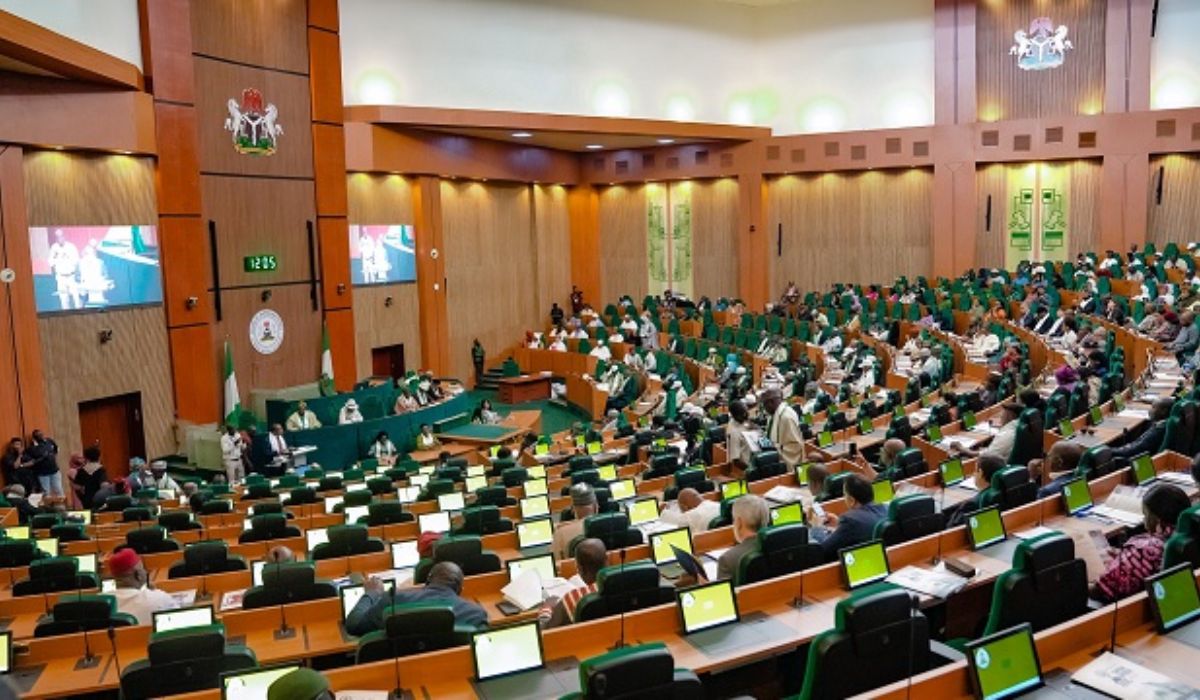
In the aftermath of the All Progressives Congress (APC) House of Representatives primaries conducted on the 16th May, the losers in the exercise, particularly serving members of the House who failed to secure their return tickets, are counting their losses in the cold. However, the worst hit are lawmakers who were elected on the platforms of the Labour Party (LP) and the Peoples Democratic Party (PDP), defected to the ruling party in the hope of guaranteeing their return to parliament in the 2027 polls, and have now crashed out of the APC primaries with nothing to show for their calculated political gamble.
For this group, the betrayal is doubly painful. They abandoned the parties that gave them their mandates, severed ties with the movements that carried them to power and staked their political futures on a ruling party that ultimately showed them little mercy when it mattered most.
To understand the depth of the crisis facing these lawmakers, it is necessary to revisit the extraordinary political circumstances of 2023. In that general election, a total of 35 lawmakers were elected to the House of Representatives on the platform of the Labour Party, riding on the wave of what became known as the Obidient movement. Peter Obi, the former Anambra State governor who was the LP presidential candidate, had transformed what was ab initio a marginal player in Nigerian politics into a genuine mass movement.
The implication was that several obscure politicians, who under normal circumstances would have struggled to win a ward election, rode the crest of Obi’s unprecedented popularity straight into the Green Chamber. Their victories owed less to individual political structures than to the collective energy of a generation of young Nigerians who turned out in their millions to vote for a candidate they believed represented a new beginning.
That euphoria, however, proved fragile. Within months of the election, the LP was convulsed by a leadership crisis of considerable severity. As Obi and the party leadership struggled to navigate the turbulence, 15 of the 35 LP lawmakers made the fateful decision to abandon ship. They severed ties with the presidential candidate on whose back they had ridden to power and crossed the aisle to the rival All Progressives Congress (APC), citing the interests of their constituents as justification for a move that many observers described as a straightforward act of political opportunism.
The remaining 20 LP lawmakers largely followed Obi in his subsequent moves, first to the African Democratic Congress (ADC) and later to the Nigeria Democratic Congress (NDC), while a small number, particularly those from Abia State, remained in the LP.
The LP lawmakers who defected to the APC included Fom Chollom, Daniel Asama and Ajang Afred from Plateau State; Mathew Donatus from Kaduna State; Kama Nkemkama from Ebonyi State; Tochukwu Okere from Imo State; Chimaobi Atu, Sunday Umeha, Dennis Agbo, Chidi Obetta and Paul Nnamchi from Enugu State; Akiba Bassey from Cross River State; Ngozi Okolie from Delta State; Esosa Iyawe from Edo State; Umezuruike Munachim from Rivers State and Chinedu Obika, who represents Abuja Municipal Area Council and Bwari Federal Constituency of the Federal Capital Territory.
Each of them had rationalised their defection from the floor of the House, insisting that the move was driven by a genuine desire to attract federal government intervention to their constituencies. Sunday Umeha, for instance, framed his decision in terms of the infrastructural needs of his predominantly rural constituents, saying the move was a choice made by the people and not by him. The reality, however, was that every one of these lawmakers understood that the Labour Party’s internal crisis and dwindling electoral fortunes made remaining on its platform an increasingly risky proposition ahead of 2027.
That gamble has now backfired spectacularly for nine of the fifteen former LP lawmakers. Their desire to return to the House in 2027 under the APC banner was extinguished at the party’s primaries, as they were defeated by candidates with deeper roots in the APC’s existing structures.
Other News
The affected lawmakers are Umeha, Akiba, Iyawe, Asama, Ajang, Okolie, Umezuruike and Donatus. Their defeats are a sobering reminder that a ruling party’s structure, built over years of patronage, loyalty and grassroots organisation, does not simply open its doors to newcomers because they arrive bearing the credentials of sitting legislators. In the brutal arithmetic of APC internal politics, incumbency in the House carries less weight than incumbency within the party itself.
One lawmaker who apparently read the writing on the wall in time was Chinedu Obika of the Federal Capital Territory. Obika, evidently aware of the fate likely to befall former LP members in the APC primaries, abandoned the ruling party ahead of the nomination exercise and joined the NDC alongside Obi. The manoeuvre, however, has not spared him considerable public embarrassment. Billboards he had mounted across strategic roads in Abuja in support of the APC had to be hastily replaced with new ones bearing the NDC identity, a visible symbol of his political journey that has provided critics with an easy target.
When recently pressed by National Assembly correspondents to explain his serial defections, Obika struggled to provide a coherent defence, arguing that the focus should be on his legislative record rather than his party affiliations. His path to the NDC ticket for the AMAC and Bwari Federal Constituency is by no means assured, and whether his latest move will be rewarded with another term in the House remains deeply uncertain.
The suffering of the former LP lawmakers was mirrored, though in slightly different ways, by colleagues who arrived in the APC from the Peoples Democratic Party. Among those whose 2027 ambitions were derailed are Emeka Chinedu, member representing Ahiazu and Ezinihitte Federal Constituency of Imo State; Awaji-Inombek Abiante, member representing Andoni, Opobo and Nkoro Federal Constituency of Rivers State; and Boma Goodhead, member representing Akuku-Toru and Asari-Toru Federal Constituency, also of Rivers State. While Emeka’s dream of a third term was crushed at the APC primary, Abiante and Goodhead did not even have the opportunity to present themselves to party members at the primary, having been among 14 aspirants disqualified by the ruling party from participating in the exercise. For them, the dream ended not in defeat at the polls but in rejection at the gate.
The broader implications of these developments are significantly worsened by a legislative amendment that the affected lawmakers themselves helped to enact. Section 77(4) of the new Electoral Act mandates political parties to submit a digital register detailing the names, genders, dates of birth, addresses, states, local government areas, wards, polling units, National Identification Numbers and photographs of members to the Independent National Electoral Commission not fewer than 21 days before the date fixed for their primaries. INEC set 10th May as the deadline for submission of digital registers ahead of the 2027 cycle.
The practical effect of this provision is that the window for defection by any politician wishing to contest the 2027 general elections is now firmly shut. The irony of lawmakers who actively participated in passing this electoral law now finding themselves trapped by its provisions is not lost on political observers, who note that the legislation was designed precisely to curb the serial party-switching that has long plagued Nigerian democracy.
With the defection window closed and their APC tickets gone, the affected lawmakers now find themselves in a uniquely uncomfortable political limbo. Political analysts say they are essentially left with two unattractive options: remaining within the APC as onlookers, supporting candidates who defeated them, or deploying their residual influence and resources against the party as a form of political retribution. Neither path leads back to the House of Representatives in 2027.
A third, quieter option involves lobbying the APC’s National Working Committee to invoke its powers and override primary results in constituencies where they believe the process was compromised, a strategy that several of the aggrieved lawmakers are reported to be quietly pursuing through back channels in Abuja.
The story of these lawmakers is, in many ways, a parable of the extraordinary political turbulence that has characterised Nigeria’s legislative politics since 2023. Swept into office by a movement they did not build, they abandoned that movement at its moment of crisis, sought shelter in the ruling party and have now been discarded by it. Their predicament will do little to discourage future acts of political opportunism in a system where loyalty has rarely been rewarded and betrayal has seldom been punished. But for now, in the cold aftermath of the APC primaries, they are a cautionary tale of what happens when a politician mistakes a borrowed wave for a foundation.