Follow Us on Google
From Adesuwa Tsan, Abuja
The Senate has called for a total ban on all importation of textile materials into Nigeria as part of efforts to revive the nation’s industry.
This is just as it called on the Federal Government, Ministry of Agriculture and Ministry of Trade and Investmnent to, as a matter of urgency, ensure the revival of textile industries in Nigeria to create job opportunities for the unemployed, thereby addressing youth restiveness and attendant insecurity.
It also asked the executive to provide additional funds to the Bank of Industry for reviving textile industries nationwide, while encouraging cultivation and production of cotton since there will be no cotton industry without them.
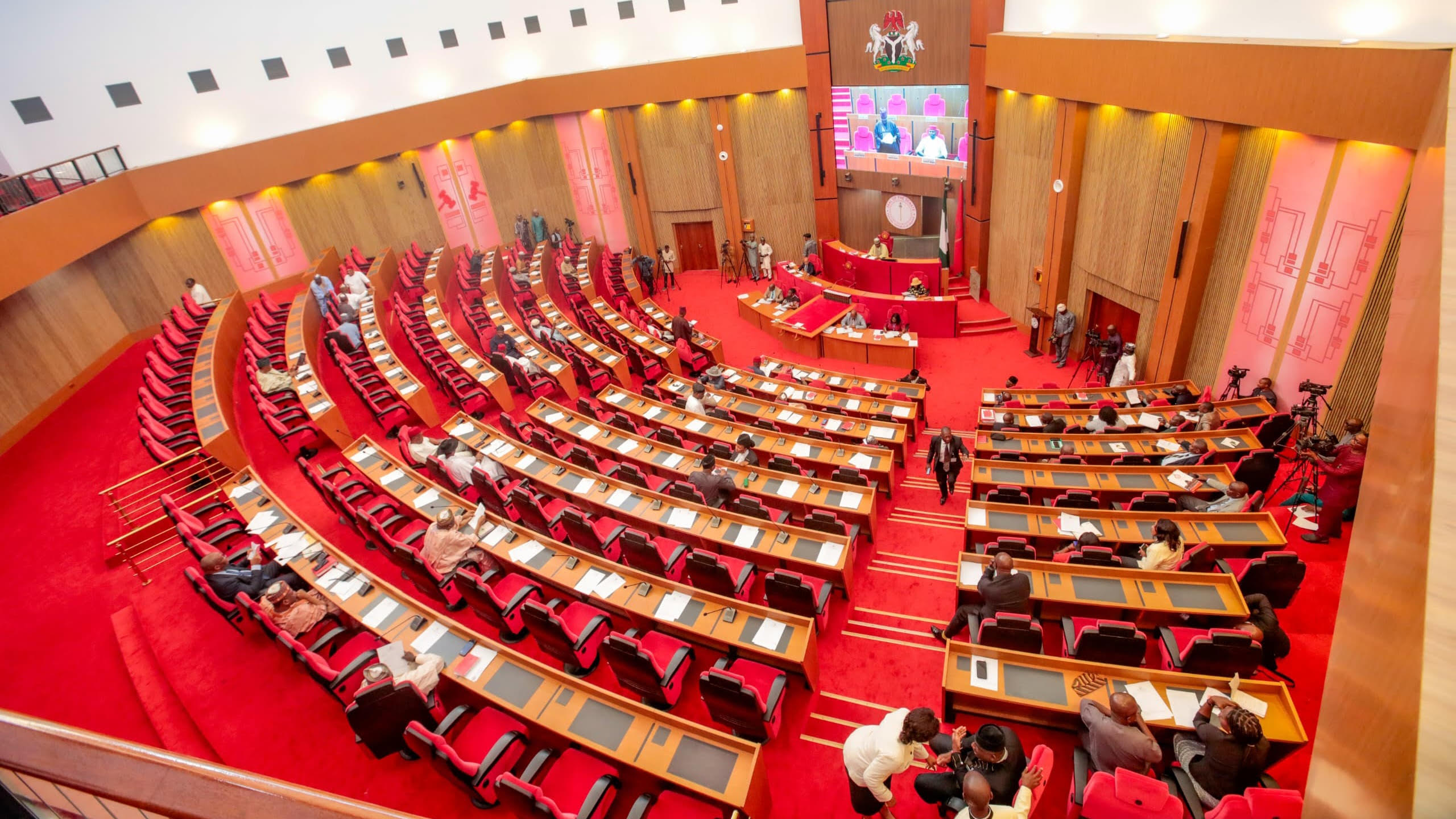
This followed the adoption of a motion on the urgent need to revive the textile industries in Nigeria sponsored by Katung Marshall and nine others in plenary on Tuesday.
Leading debate on the motion, Katung noted that the first large textile-manufacturing mill in Nigeria was built in Kaduna State and began production
in 1957 and this was replicated in all the regiobs in the country, especially the Eastern and Western regions, resulting in tremendous growth in the textile industry:
He recalled that Nigeria’s textile industry blossomed in the 1960s and 1970s following committed government interventionist schemes such as the ban on importation of textiles. which ultimately drove many investors into
the sector and led to the establishment of 167 textile mills in the country that provided 500,000 direct employments, thereby making the textile industry the highest employer of labour in Nigeria, after the Federal Government.
“Kaduna was referred to as the Textile City because it housed giant integrated mills and had the headquarters of the Nigerian Textile Manufacturers Association (NTMA) when the state could actually boast of about 11 textile companies operating at optimal capacity, including the Arewa Textile Plc, Fantext Nigeria
Ltd, Notext Nigeria Ltd., Super Text Ltd.. United Nigeria Textile Ltd, providing employment and business opportunities to thousands of people,” he recounted.
The lawmaker lamented that by 1997, KTL, Arewa Textiles and UNTL were barely functioning, operating with obsolete equipment without capital to obtain spare parts coupled with irregular source of electricity; 2007, and shut down by 2007, with over 7000 employees losing their jobs, and the once admirable structures that used to house those industries becoming a derelict shadow of themselves.
Marshal said it was regrettable that 65 years after the textile boom, the fortunes of the once flourishing industrial sector have tumbled and reduced the sector to the unenviable status of the weakest segment of Nigeria’s industrial
sector with no new investments and Nigeria currently a net importer of textile products to meet over 99 per cent of its domestic needs.
He expressed concern that the Nigerian textile industry which once occupied an enviable spot of being the third largest in Africa in the 80s,
generating as much as $2 billion annually and with a capacity of producing more than 1.4 billion different pieces of textile products, including African prints, shirting, bed sheets, furnishing fabrics, towels, embroidery lace, table and bed linen, guinea brocades, wax prints, java prints, jutes and fishing nets, has gone comatose.
“Despite the introduction of an Industrial Revolution Plan aimed at revamping and fast-tracking the growth and development of the cotton, textile and garment (CTG) sector, and addressing the various problems facing it, it is obvious that, at the moment, one of the most daunting challenges staring the sector on
the face is the influx of foreign textiles into the country.
“With the lifting of the ban on textile importation in 2010, Nigeria now has almost 80% of its
textiles imported from China, Indonesia, Taiwan and other countries. This trend is definitely not helping the Nigerian economy, in terms of employment/job creations and needed foreign exchange,” he stated.
Remarking on the motion, the Deputy Senate President, Barau Jibrin, who presided over the session, said the Senate will follow up on the motion to ensure that it is not just passed, but implemented by the executive due to the high impact it will have on livelihoods of Nigerians nationwide.