Follow Us on Google
…as Umeh Moves for First-Line Charge Status
From Kenneth Udeh, Abuja
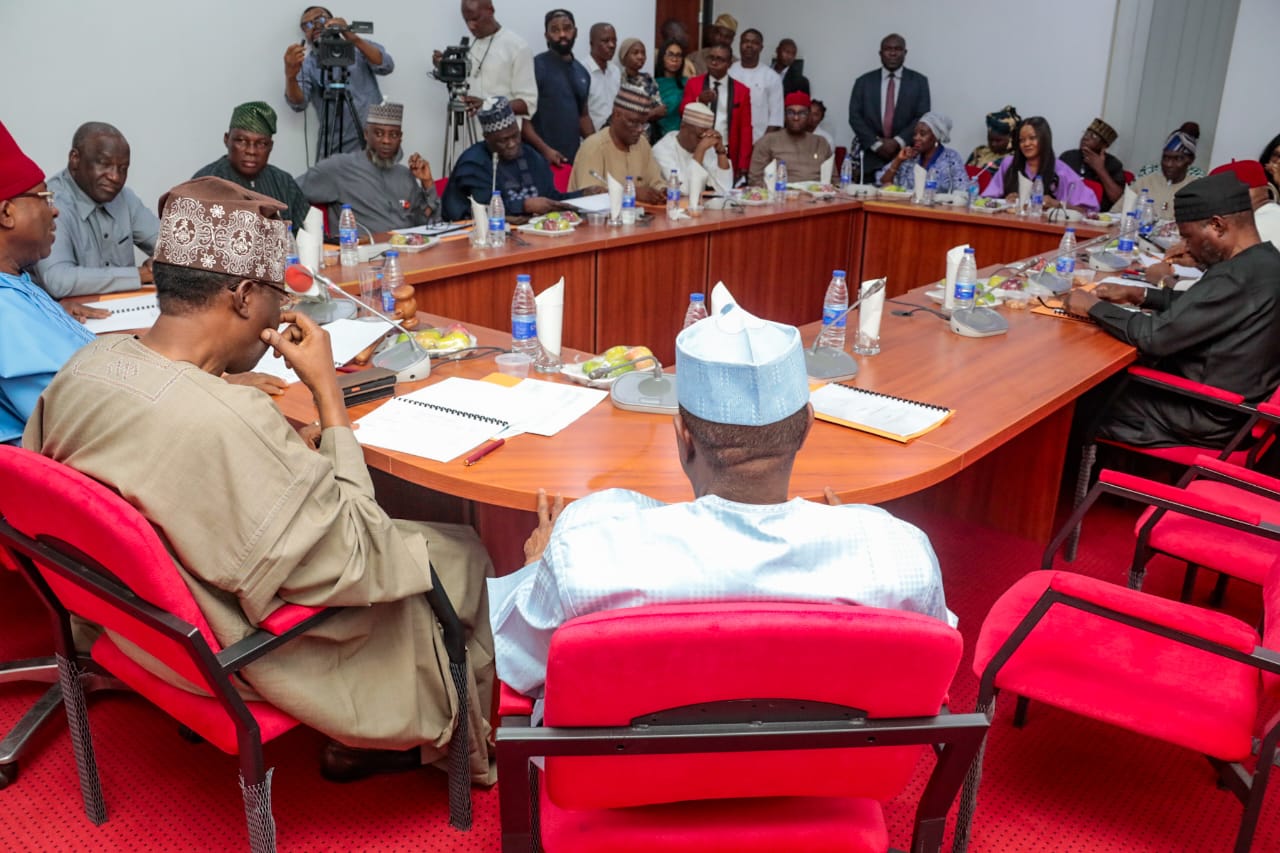
The Senate Committee overseeing the National Identity Management Commission (NIMC) and the National Population Commission (NPC) has strongly criticized the Ministry of Finance and the Office of the Accountant-General of the Federation over what lawmakers described as a “systemic strangulation” of two of Nigeria’s most critical data-driven institutions.
At a comprehensive budget defence and performance review session chaired by Senator Victor Umeh on Wednesday, the Committee expressed alarm over the 0% capital release to the NPC in 2025 and the mere 6% capital disbursement to NIMC in 2024, warning that the country’s identity management and census infrastructure were being exposed to serious risks.
NIMC: 25bn Appropriated, 1.5bn Released, Funds Returned
Engr. (Dr.) Abisoye Coker-Odusote, Director-General and Chief Executive Officer of NIMC, told lawmakers that although ₦25 billion was appropriated for capital projects in 2024, only ₦1.5 billion approximately 6% was released, and that release came in December.
She explained that the Commission’s minimum capital project threshold stands at ₦2 billion, particularly for backend servers, database security architecture, and national enrollment infrastructure.
“The 1.5 billion released is less than the cost of our smallest capital project… we could not legally commence any procurement. The money is currently unutilized because we cannot split it to start a project we cannot finish,” she said.
Senators were further informed that the funds were subsequently returned to the Federation Account due to non-utilization, compounding public frustration over delays in National Identity Number (NIN) services and card issuance.
Senators React
Senator Abdul Ningi questioned the structural bottlenecks:
“This is an agency that caters for all Nigerians across 36 states. You appropriated 25 billion and accessed only 1.5 billion. What explanation were you given?”
He urged the DG to formally escalate non-release issues to the Committee in real time rather than waiting until year-end.
Senator Sani Musa raised concerns about the World Bank-assisted ID4D (Identity for Development) facility, approved by the National Assembly but domiciled under the Office of the Secretary to the Government of the Federation. He sought clarification on its accessibility and implementation timeline.
In response, Coker-Odusote confirmed that NIMC remains the implementing agency and that restructuring of project components delayed disbursement, with access expected in the first quarter of 2026.
“National Emergency” — Umeh
Chairman Victor Umeh described the situation as a national risk:
“If NIMC servers go down today, banking stops, SIM registration stops, international travel verification stops. This is technology infrastructure, not a regular agency.”
He vowed to summon the Minister of Finance and Accountant-General to explain why 23.5 billion naira remained unreleased.
NIMC 2025 Budget Proposal
For 2025, NIMC proposed:
Personnel: ₦18.43bn
Overhead: ₦749.4m
Total Recurrent: ₦19.17bn
Capital: ₦17.94bn
Grand Total: ₦37.12bn
Lawmakers questioned why capital estimates dropped from ₦25bn in 2024 to ₦17.9bn in 2025 despite expanded digitization needs across 774 local governments.
The DG attributed this to ceilings provided by the Budget Office and expectations that 70% of the previous allocation would roll into 2026.
Other News
NPC: Zero Capital Release in 2025
In a more dramatic revelation, the NPC delegation led by Dr. Aminu Yusuf disclosed that of the ₦18.28 billion appropriated for capital projects in 2025, not a single kobo was released.
The Commission’s total 2025 appropriation stood at ₦36.21 billion:
Capital: ₦18.28bn
Overhead: ₦1.17bn
Personnel: ₦16.76bn
Budget performance showed:
Personnel: 100% release (₦15.12bn)
Overhead: 58% release
Capital: 0% release
Umeh described the non-release as:
“A violation of the 2025 Appropriation Act. You cannot starve a constitutional commission of funds simply because a census is not holding this year.”
Senators Decry “Standing Army” of 4,000 Staff
Senators repeatedly questioned the sustainability of maintaining over 4,000 NPC staff nationwide without a census proclamation.
Ningi likened the situation to:
“A standing army waiting for a war that has no start date.”
Lawmakers demanded a performance audit of grassroots staff and justification for personnel variances, including overspending beyond appropriation without clear supplementary approval.
Deputy Senate Leader Senator Shuaibu Isa Lau warned that any virement without legislative approval would contravene the Fiscal Responsibility Act.
Census Delay, Equipment Risks, and Proclamation
Senators warned that postponing Nigeria’s digital census increases financial and technological risks. Devices procured in 2022–2023 could become obsolete, batteries may degrade, and retraining costs may escalate.
Umeh emphasized:
“Governance begins with knowing your numbers. We prioritize INEC, but fail to prioritize the institution that holds the country’s demographic data.”
He confirmed sponsoring a constitutional amendment bill to place the NPC on first-line charge status, insulating it from executive release bottlenecks.
2026 NPC Proposal
The NPC’s 2026 proposal includes:
Capital: ₦12.79bn
Overhead: ₦1.17bn
Personnel: ₦15.54bn
Lawmakers urged upward personnel adjustments to accommodate retirements and recruitment gaps, insisting vacancies must be documented before Appropriations engagement.
Committee Resolutions
At the close of the exhaustive session, the Committee resolved to:
Invite the Minister of Finance and Accountant-General over withheld capital releases.
Demand detailed breakdowns of personnel variances and LG infrastructure conditions.
Advocate for field-oriented budgeting over administrative overhead.
Push for urgent Presidential Proclamation of the national census.
Advance constitutional amendments for NPC financial autonomy.
The session was adjourned sine die following a motion moved by Senator Abdul Ningi and seconded by members.
Across both agencies, the Senate’s central message was clear: appropriations without releases render governance ineffective.
With identity management and population data forming the backbone of security, planning, and economic development, lawmakers warned that continued fiscal bottlenecks risk leaving Nigeria “planning blindly” nearly two decades after its last census.
The Committee pledged sustained oversight to ensure that funds approved by the National Assembly translate into operational capacity for institutions tasked with knowing and securing Nigeria’s numbers.