Follow Us on Google
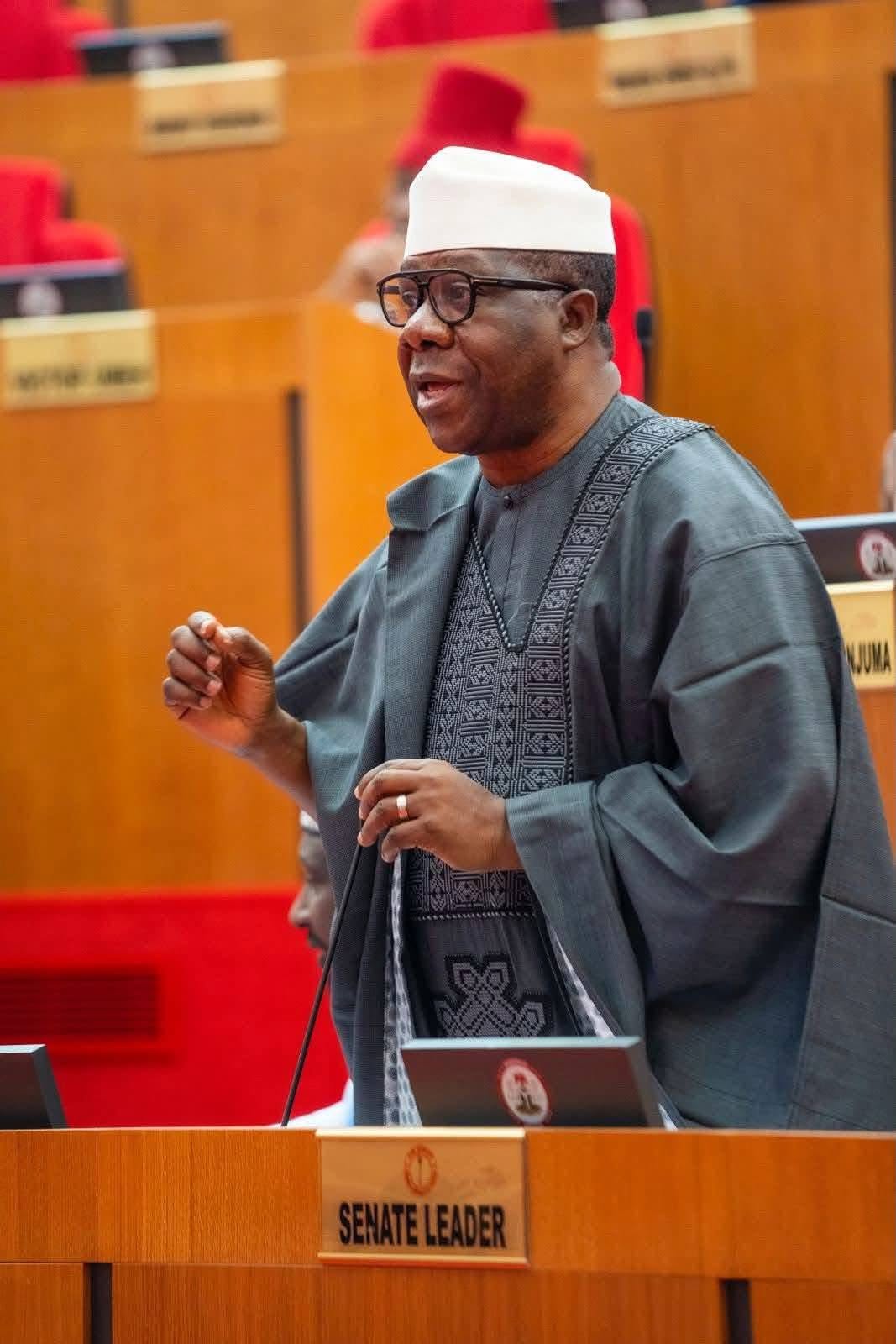
The Senate on Tuesday extended the implementation period of the capital component of the 2025 Appropriations Act from 30 September to 31 December 2026, amid concerns over delayed budget execution and the growing number of uncompleted public projects across the country.
The extension, which gives Ministries, Departments and Agencies (MDAs) an additional three months to implement capital projects and utilise funds already appropriated and released, was approved through the passage of the Appropriations Repeal and Enactment Act 2025 Amendment Bill 2026.
The bill, numbered SB 1067, was passed after the Senate considered and adopted the report of the Committee of Supply, following its passage through second and third readings on the same day.
Presenting the bill, Senate Leader Opeyemi Bamidele said the extension was necessary to enable MDAs to complete capital projects for which appropriations had already been made and funds released.
Bamidele said capital budget implementation involved several stages, including procurement, contract execution, mobilisation, certification of works and payment, which could not always be completed within the existing timeframe.
According to him, allowing the 30 September deadline to expire could create avoidable difficulties for MDAs implementing projects already at advanced stages.
“The essence of this proposed extension is to provide the necessary legal and administrative window for ministries, departments and agencies of the Federal Government to fully implement capital projects for which appropriations have been made and funds released,” he said.
The Senate Leader added that a significant amount of capital funds released to MDAs remained unutilised, stressing that the extension was aimed at ensuring that public resources already appropriated were not wasted.
He said: “Allowing the current implementation deadline to lapse without providing additional time could create avoidable difficulties for MDAs in completing projects for which resources have already been appropriated and released.”
Bamidele further warned that critical infrastructure projects at various stages of completion could be affected if the statutory implementation period expired before they were concluded.
“Allowing such projects to stop or remain incomplete merely because of the expiration of the current statutory implementation period could have serious implications for value for money and could further contribute to the proliferation of abandoned or uncompleted projects,” he said.
However, he stressed that the extension did not amount to a fresh appropriation, but only provided additional time within the existing legislative framework to implement the capital component of the 2025 budget.
“The bill does not seek to introduce a new appropriation. Rather, it seeks to provide additional time within the existing legislative framework for the implementation of the capital component of the 2025 appropriation, thereby ensuring that appropriated funds are utilised effectively, transparently and for the intended purposes,” he said.
Bamidele also cautioned MDAs against treating the extension as a relaxation of accountability requirements, insisting that expenditure during the extended period must comply with existing financial and procurement regulations.
“I wish to emphasise that the extension should not be interpreted as a relaxation of the principles of accountability, fiscal responsibility or legislative oversight.
“On the contrary, MDAs must continue to ensure that all expenditures arising from the extended implementation period are made strictly in accordance with the Appropriation Act, extant financial regulations, procurement laws and other applicable statutes,” Bamidele said.
According to him, the extension was intended to protect ongoing public investments, facilitate completion of critical projects and maximise the value of funds already appropriated and released.
He further linked effective capital expenditure to infrastructure development, employment generation, support for local contractors and businesses and improved public services.
Other News
Bamidele said the efficient implementation of already approved public investments was particularly important as the Federal Government pursued economic reforms aimed at restoring macroeconomic stability, strengthening productivity and attracting investment.
Speaking on the bill, Senate Chief Whip Tahir Monguno said delays in budget implementation were caused partly by the centralised payment system domiciled in the Office of the Accountant-General of the Federation, urging the Executive to review the policy.
He warned that unless the system was reviewed, the National Assembly would continue to receive requests for extensions of budget implementation periods.
“So long as that system is not consigned to the dustbin of history, so shall we continue to have this ugly scenario of non-implementation of the budget, necessitating the National Assembly to extend the lifespan of the budget.
“So, I think there is a need for the Executive to have a look at this policy that has continued to constitute a cork in the wheel of implementation of the budget,” he stated.
The committee recommended amendments to Section 12 of the 2025 Appropriation Act, as well as the short title, explanatory memorandum and long title of the bill.
The Senate subsequently reverted to plenary, considered and adopted the committee’s report and, after suspending the relevant rule, proceeded to the third reading of the bill.
The Senate President, Godswill Akpabio, while commenting after the passage, said the extension was necessary to prevent further proliferation of abandoned projects across the country.
Akpabio said it would have been inappropriate to allow the 30 September deadline to expire when several contractors were yet to complete their projects or receive full payment for work executed under the 2025 Appropriations Act.
He said: “It is not good for us to have abandoned projects littered across the nation since most contractors have not either completed their jobs or have been fully paid in respect of the 2025 Appropriations Act.
“It would have been wrong for us to just allow the 30th of September to come and go without extending the period within which the Minister of Finance and the Federal Government can settle most of these contracts.”
The Senate President urged the Executive to use the additional period to settle outstanding payments and advance ongoing projects to completion.
“I hope that this extended period will be utilised to ensure that all payments are made and all necessary contracts are done for the benefit of the Nigerian people,” he said.
Akpabio added that effective implementation of the capital budget would enable Nigerians to see and benefit from infrastructure projects funded with public resources.
“And this extension will really help to make sure that payments are made and the infrastructure reaches a level that people can see and feel and then benefit from the dividends of democracy,” he said.
The legislation, which had earlier passed first reading on Tuesday, now extends the lifespan of the capital component of the 2025 budget, originally due to expire on 30 September 2026, to 31 December 2026.