Follow Us on Google
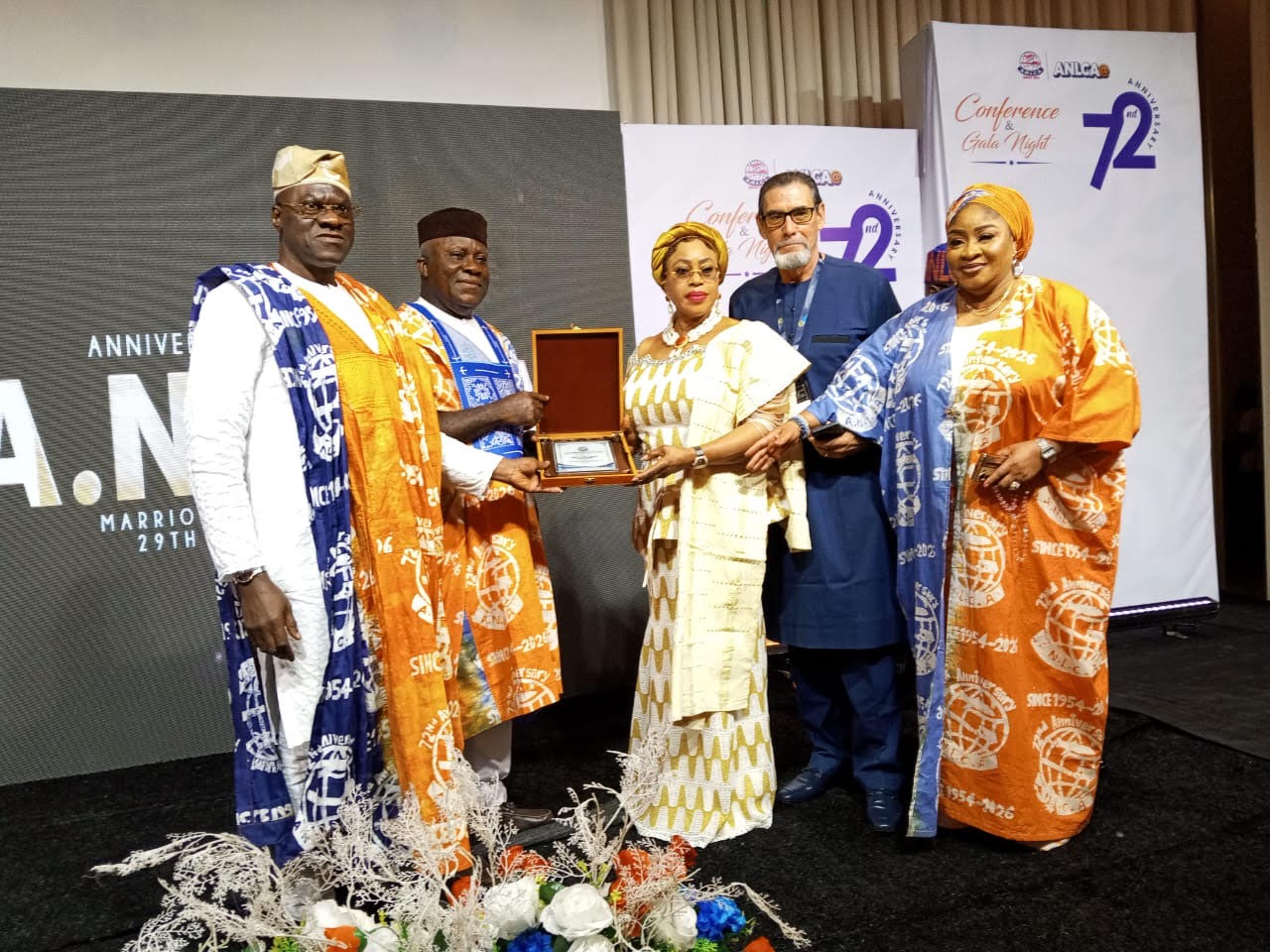
The Association of Nigerian Licensed Customs Agents (ANLCA) has called for coordinated reform of Nigeria’s port system, warning that high costs and inefficiencies in cargo movement could undermine the country’s ambition to become a global trading hub.
The National President of ANLCA, Mr Emenike Nwokeoji, said at the 72nd anniversary celebration of the association in Lagos on Tuesday, themed “ANLCA Celebrating a Legacy of Professionalism, Advancing Trade Facilitation and Shaping the Future of Customs Brokerage”, that Nigeria could not achieve its trade ambitions while the cost of moving cargo through its ports remained unnecessarily high.
According to him, Nigeria cannot aspire to become a global trading hub while the cost of moving cargo through its ports remains unnecessarily high.
“We must confront the persistent challenges of congestion, cargo examination, access roads, truck movement, storage, demurrage, detention, multiple regulatory interventions and fragmented processes. Every unnecessary hour that a container spends in the port represents an additional cost. Ultimately, the Nigerian consumers bear that cost.
“We therefore call for a coordinated port reform strategy in which every agency, terminal operator and service provider is measured against one central objective: how quickly, transparently and efficiently can legitimate cargo enter or leave Nigeria? The port should serve as a gateway to economic prosperity, not a bottleneck to economic growth,” he said.
He therefore said that ANLCA welcomed the development of the National Single Window as one of the most significant opportunities to transform Nigeria’s international trade environment.
He added that for decades, stakeholders have advocated the elimination of duplication, the reduction of physical interfaces, improved transparency and the creation of a seamless process for international trade.
“Technology now provides us with the opportunity to make that vision a reality. However, we must implement it correctly. A single window must not become merely a collection of separate windows on one platform. It must genuinely simplify trade.
“It must reduce documentation, it must eliminate duplication, it must improve transparency, it must minimise unnecessary human intervention, it must reduce the time and cost of doing business in Nigeria. ANLCA is prepared to contribute its practical experience to this historic reform.
“We urge government to institutionalise the participation of frontline stakeholders in its implementation, because those who operate the system every day understand its strengths, weaknesses and unintended consequences,” he said.
He said that ANLCA commended the Federal Government for its continuing efforts to reform Nigeria’s economy and reposition the country for sustainable growth.
He hinted that the administration’s focus on improving the business environment, increasing revenue, promoting non-exports, strengthening border security and modernising trade processes is consistent with objectives ANLCA has advocated over the years.
However, he said reforms succeed not merely because they are announced; they succeed when they work at the point of implementation.
“We fully appreciate government’s legitimate interest in revenue mobilisation. ANLCA is equally committed to protecting government revenue,” he stated.
However, he said there is an important principle we must never lose sight of: revenue and trade facilitation are not mutually exclusive, adding that a system that facilitates legitimate trade attracts investment, expands the tax base and ultimately generates more sustainable revenue.
He stressed that a system that unnecessarily obstructs legitimate trade can drive business to neighbouring countries, encourage under-declaration and create incentives for informal channels.
“Our objectives should therefore be to collect the right revenue from the right transactions through a transparent and predictable system, while facilitating legitimate trade, that is the balance required of a modern Customs administration,” he said.
Also, Lagos State Governor Babajide Sanwo-Olu, represented by the Commissioner for Commerce, Cooperatives, Trade and Investment, Mrs Folashade Ambrose, said ANLCA had reached a significant milestone and remained an important part of Nigeria’s Customs and maritime ecosystem.
He said ANLCA played a critical role in navigating the processes involved in the movement of goods through the nation’s seaports and airports.
Other News
He noted that the association had also contributed to the development of the maritime sector through its activities, trade facilitation efforts and revenue generation.
However, Chairperson of the Seaport Terminal Operators Association of Nigeria (STOAN) and Executive Vice-Chairman of ENL Consortium, Princess (Dr) Vicky Haastrup, described members of ANLCA as indispensable partners in the nation’s port ecosystem, saying that without licensed customs agents, terminal operators cannot function.
According to her, ANLCA remains a noble profession and a critical pillar of trade facilitation across seaports, airports and other port corridors.
“72 years is a testament to endurance, readiness, professionalism and an enduring commitment to Nigeria’s maritime and trading community. Without ANLCA, we cannot function. Whether seaport, airport, wherever you have any ports, you are very key to our trade facilitation,” she said.
She congratulated the National President of ANLCA and the National Executive for sustaining the association, adding that the efficiency of the port depends on effective collaboration among all stakeholders.
According to her, Customs agents are at the heart of Nigeria’s port business and their professionalism, compliance and engagement with terminal operators and government agencies directly impact the speed and ease of cargo movement.
“For this reason, we regard ANLCA and its members as our partners in progress. We have enjoyed tremendous support and understanding from ANLCA,” she stated.
Haastrup noted that the theme of the anniversary – professionalism, trade facilitation and the future of customs brokerage – is fitting for building an efficient, competitive and business-friendly port environment.
She stressed that the shared objective of all players must be to eliminate avoidable delays, improve transparency, embrace technology, promote compliance and create an environment where legitimate trade can flourish.
She also commended the Federal Government for creating an enabling environment for business in the maritime sector.
“I want to seize this opportunity to thank the Federal Government for creating an enabling environment for business in the maritime sector. What we are experiencing today under the leadership of this President is something we have not enjoyed for a very long time,” she added.
On behalf of STOAN, Haastrup congratulated ANLCA on its 72nd anniversary, wishing the association more years of service to the nation and stronger partnership with terminal operators towards making Nigerian ports more efficient and competitive.
Meanwhile, Chairman of the Board of Trustees of ANLCA, Alhaji Taiwo Mustapha, said that despite the challenges faced by the association, it continues to grow quantitatively and qualitatively.
“Our members continue to encounter the realities that confront our industry, which include changes in government policies, evolving and modernising Customs procedures, technological transformation, disruptions in global economic order and, at various times, internal disagreements, as much as natural behaviours permit.
“ANLCA of the next five, 10 and 20 years cannot operate exactly as ANLCA of the past seven decades. We must become more professional, more digital, more knowledge/data-driven and more compliant, so we can be globally competitive,” he said.
He urged members to become a stronger voice in national trade and fiscal policy discussions, an association whose members are recognised for competence, integrity and professionalism and an institution that uses technology, training, capacity building and research to continuously improve the quality of Customs brokerage services and cargo delivery.
“Also, we must prepare our younger members to take leadership roles, use their youthfulness to renew their purpose and their ambition to global standards within a shorter time. We must invest in continuous professional education and training. We must embrace digital Customs automation, data-driven trade facilitation and emerging, disruptive technologies. Artificial Intelligence is no longer news. Not just coming. It is real, it is here. And the world will not wait for us.
“We must also strengthen our relationship with the Nigeria Customs Service, Nigerian Ports Authority, relevant government agencies, terminal operators, shipping companies, exporters and other stakeholders in the supply and logistics value chain,” he said.