Follow Us on Google

From Ndubuisi Orji, Abuja
The House of Representatives has said that increased budgetary allocation to defence must produce commensurate results.
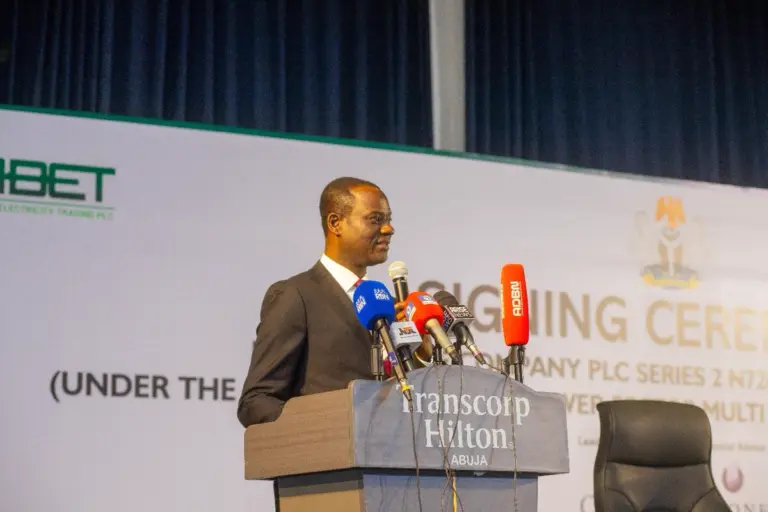
The Chairman, House Committee on Defence, Babajimi Benson, stated this yesterday, when the Chief of Defence Staff (CDS), General Olufemi Oluyede, appeared before the committee for the defence of its 2026 budget proposal.
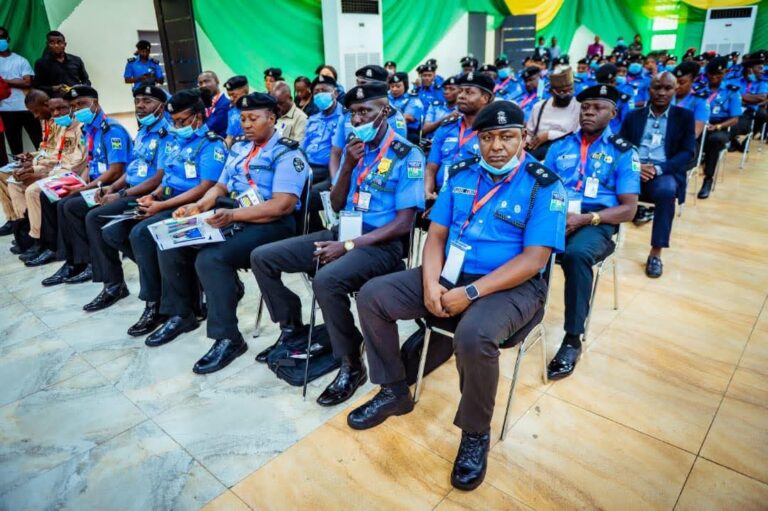
The CDS called for strengthening of the police and the Nigeria Security and Civil Defence Corps (NSCDC) to consolidate the gains made by the Armed Forces in the fight against insurgency and banditry across the country.
Benson noted that the defence and security sector occupy a pivotal position in Nigeria’s developmental discourse, stating that no country can make sustainable progress without guaranteeing the safety of lives, property and critical national assets.
The lawmaker, while acknowledging gains made by the Armed Forces and security agencies in the anti-terror war, said the persistence of security threats in the country underscores the need for deeper institutional reforms, improved coordination and smarter deployment of scarce resources.
According to him, “the expectations of Nigerians are high, and rightly so. They demand results that translate into safer communities, restored livelihoods and renewed confidence in the authority of the state.”
He stated that while the National Assembly has continued to give priority to defence and security in successive budgets, the increase in appropriation for the sector must be matched with measurable outcomes, value for money and strict adherence to principles of transparency and accountability.
He added, “The era of input-focused budgeting without commensurate impact is no longer acceptable. What Nigerians expect and what this Committee insists upon, are clearly defined outputs and outcomes that reflect operational effectiveness and institutional efficiency.
“It is important to emphasise that contemporary security challenges are dynamic and cannot be addressed through kinetic approaches alone. While military operations remain essential in degrading and deterring violent threats, experience has shown that sustainable peace requires a complimentary non-kinetic strategy.
“Issues such as poverty, youth unemployment, illiteracy, weak local governance, misinformation, community grievances and ideological radicalisation continue to fuel insecurity across different parts of the country.
Other News
“Consequently, this Committee strongly advocates a whole-of-government and whole-of-society approach to national security, where we invest significantly in strategic communication to counter extremist ideologies and win the hearts and minds of vulnerable communities.
“We must also fund community peace-building architectures that foster local intelligence, dialogue and reconciliation. We must bolster cyber defence capabilities to protect our digital sovereignty. We must enhance defence intelligence infrastructure for pre-emptive action.
“Furthermore, we must see investment in border security technology, police reforms and inter-agency data fusion centres as critical force multipliers. We must also encourage collaboration with relevant ministries, departments and agencies at the federal, state and local levels.”
The CDS, while speaking at the budget defence session, said the Armed Forces was confronting the security crisis frontally and strengthening the police and NSCDC, would boost the operation of the military.
According to him, the police and civil defence, which have more personnel and wider community reach than the Armed Forces, need to be adequately equipped to take over and secure areas already cleared of criminal elements by the military.
“The soldiers hardly have rest because we don’t have the numbers. Recruiting more personnel comes with other challenges, including housing, logistics and welfare. That is why strengthening the police and civil defence is critical.
They have more men and better reach to fill the gaps after military operations,” he explained.
He said: “If these institutions are strengthened, they can effectively hold and secure territories where the Armed Forces have succeeded, ensuring that such areas remain safe.
“We are doing everything within our capacity to ensure that Nigeria becomes safer. As we speak, the situation has improved significantly in the North-East. In the North-West, we still face serious challenges and the same applies to parts of the North-Central, including Benue, Plateau and even Kwara. But, we are evolving modalities to address these challenges within the resources available to us,” the CDS said.
Oluyede noted that a new Joint Task Force, code-named, ‘Operation Savannah Shield,’ has been set up to cover Kwara State and parts of Niger State, while new special forces had been deployed to Benue and Plateau states.