Follow Us on Google
By Doris Obinna
Nigeria’s push to strengthen equitable access to healthcare has received fresh momentum as experts and policymakers have highlighted the National Social Register (NSR) as a transformative tool for expanding health coverage to vulnerable households.
Participants at a one-day stakeholder engagement held in Lagos, underscored that the NSR is increasingly becoming central to health inclusion and sustainable care delivery
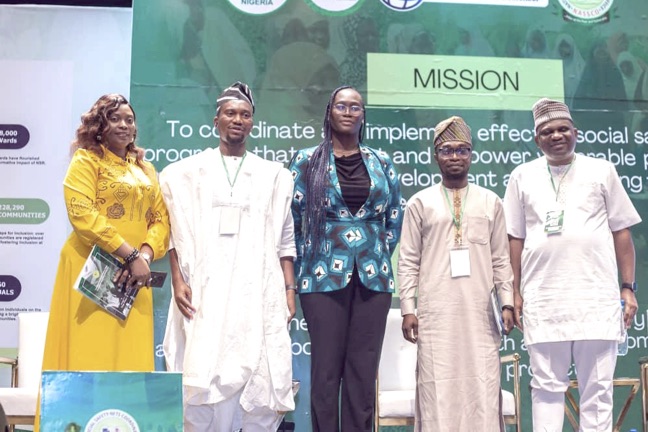
The engagement titled, “Advancing Social Protection through the National Social Register (NSR): A Strategic Tool for a Resilient Nigeria” was convened by the National Social Safety-Net Coordinating Office (NASSCO) with support from United Nations Children’s Fund (UNICEF) and other development partners.
In his remark, Lagos State Governor, Babajide Sanwo-Olu, said the state had integrated the register into its Ministry of Budget and Economic Planning to ensure transparency and accountability in reaching the poor with health and other social interventions.
Sanwo-Olu, represented by Deputy Chief of Staff Sam Egube, stated that the register is not just a database; it is a lifeline for millions of Nigerians. “Lagos is aligning with this vision by ensuring that vulnerable residents are captured and connected to critical services,” he added.
Target health insurance schemes
Speaking, Social Policy Manager, UNICEF, Mohamed Okorie, said the NSR allows government and development partners to shift from guesswork to evidence-driven planning. According to him, by identifying households based on levels of deprivation, the register provides reliable data for targeting interventions, including social health insurance schemes.
“Health agencies can use the register to identify those households that are poor and should be prioritized for inclusion in national health insurance programs. This ensures that government resources are directed at families who need them most, preventing leakages and strengthening accountability,” Okorie explained.
According to him, the register, which is compiled through community engagement, poverty profiling, and proximity tests, currently serves as a foundation for multiple government and donor-led initiatives. He emphasised that it is a living tool constantly updated to reflect people falling into or moving out of poverty.
Okorie noted that the NSR adopts a life-cycle approach, capturing vulnerabilities from childhood through old age. “This makes it especially relevant for addressing child health concerns, maternal care, and preventive health interventions. For UNICEF, one of the critical uses is to identify children who are deprived, including out-of-school children, and ensure their health and education needs are addressed holistically.
“The framework also supports Nigeria’s push toward universal health coverage. With data-driven targeting, state health insurance agencies can expand coverage to those who would otherwise remain excluded due to poverty.”
Civil Society Organizations, Okorie added, play a vital role in monitoring how effectively the NSR is applied. “By ensuring transparency, they help guarantee that families in need are not left behind. Private sector players and philanthropies are also encouraged to leverage the database to fund and implement health-related interventions.
“This is no longer about assumptions or political affiliations. It is about evidence. We know who is poor, where they live, and the specific deprivations they face. That allows us to design health programs that are not just broad but tailored to real needs,” Okorie stressed.
Other News
NSR, protection databases
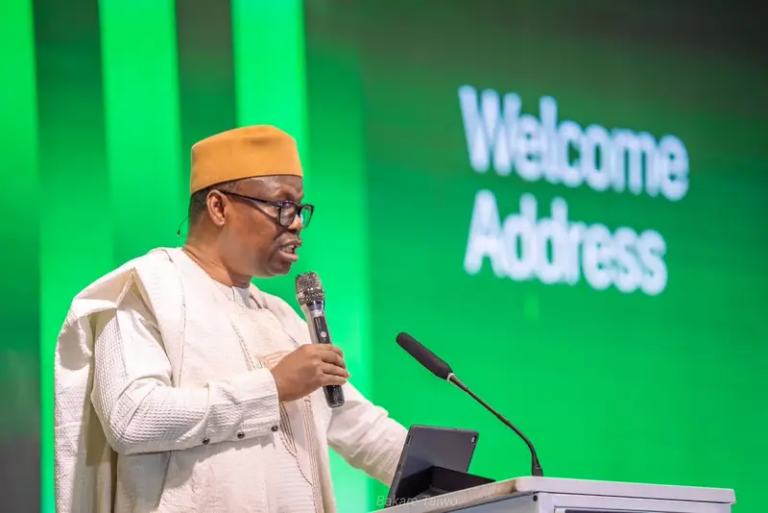
In her welcome address, National Coordinator, NASSCO, Ms. Funmi Olotu, said that the register had become one of the world’s largest social protection databases with more than 19 million households captured.
She said that the recent integration of the National Identification Number (NIN) into the register was transforming it into a more reliable and inclusive system. “As of August 31, 2025, a total of 7.68 million household records had been updated across the 36 states. From these, over 9.5 million NINs were recorded, with more than 8.3 million successfully validated,” Olotu said.
She described the achievement as remarkable. “The real story behind the numbers is that mothers in rural areas, displaced households and young Nigerians seeking opportunities are beginning to see a government that recognises their struggles and is deliberate about supporting them,” she said.
Nasarawa State Governor, Abdullahi Sule, whose state has registered nearly 1.9 million residents, also highlighted the health implications of social protection. He said targeted stipends and business-support programmes, especially for vulnerable groups such as persons with disabilities and the Almajiri, have created resilience in communities where inflation and subsidy removal have hit hardest.
Sustained investment in the NSR, he said, would ensure that vulnerable households gain access not only to economic relief but also to healthcare that improves their quality of life.
Health, welfare services
Director, Social Protection and State Coordinator of the Lagos State Operations Coordinating Unit (LASOCU), Oluwakemi Nadege, said the creation of the Lagos Social and Economic State Identification for Governmental Operations (SESIGO) Register has allowed state agencies to directly map households to health and welfare services.
She explained that with over 213 data points per household, the system enables widows, persons with disabilities, and students to be linked seamlessly to relevant health and social interventions.
This, she disclosed enables agencies to link residents directly to tailored support, ranging from women’s empowerment schemes to disability support and educational scholarships.
According to her, the Lagos State Executive Council has mandated all social intervention agencies to draw beneficiaries from the register. The newly established Social Protection Coordinating Department, she added, is the first of its kind in Nigeria and now oversees implementation, monitoring, and accountability.
“This institutional framework ensures that poverty alleviation is no longer a fragmented effort but a government-wide responsibility aimed at improving livelihoods and tracking progress,” Nadege said.
The Alara of Ilara Kingdom, Dr. Olufolarin Ogunsanwo, emphasised that social protection, including health coverage, should be seen as a state obligation rather than charity. “When government supports the less privileged through a credible system like the National Social Register, it is fulfilling its moral and constitutional responsibility,” he said.