Follow Us on Google
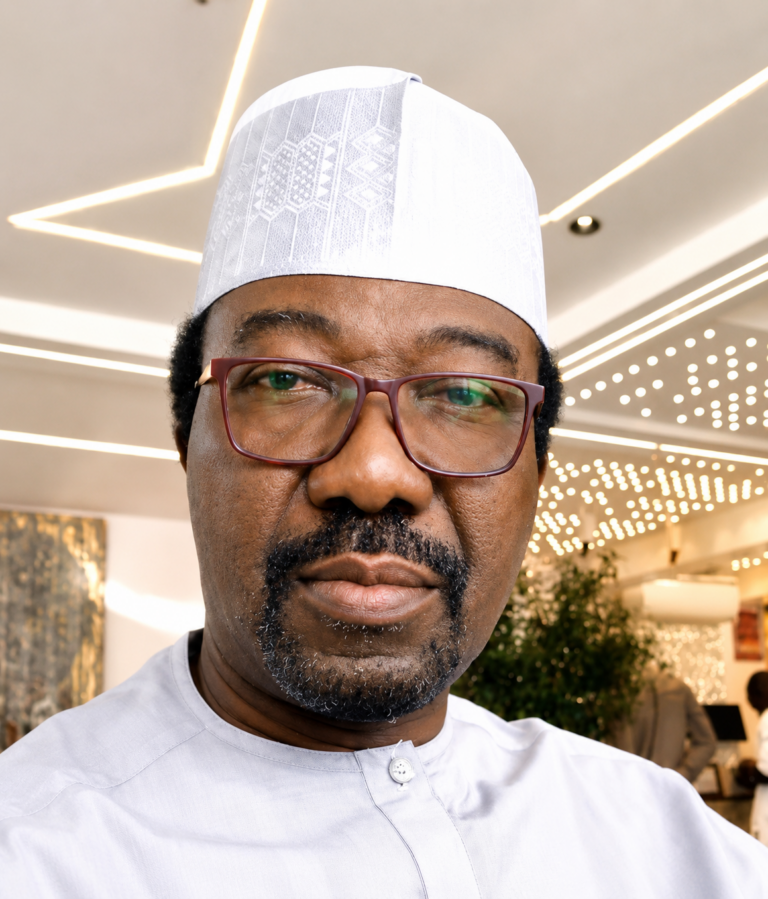
By Kingsley Mutuwa
The announcement that a €10 million modern dairy farm has been established in Damau, Kubau Local Government Area, is more than another government project unveiling. It is a signal of how Kaduna State, under Governor Uba Sani, is steadily reframing agriculture from a subsistence struggle into a structured economic engine. The farm, built in partnership with global dairya giant Arla Foods, is projected to produce between four and five million kilograms of milk annually when it hits full capacity.
Speaking recently on the investment at the unveiling of the Nigeria Dairy Centre of Excellence, the Sedentarization and Climate Change Resilience in Nigeria project, and the inauguration of a new yoghurt factory, Sani, who was represented by the Secretary to the State Government, Dr. AbdulKadir Meyere, said the farm targets an annual milk output of between four and five million kilograms at full capacity.
“In the livestock subsector, Kaduna State has the Kaduna State Livestock Regulatory Authority; the Kaduna State Livestock Transformation Company; and the Kaduna Ranch Development Company, all designed to work in synergy,” Sani said.
“These efforts translate into more income for our farmers, more jobs for our youth, and more nutritious products for our people.”
According to the governor, this initiative would empower smallholder farmers to maximally benefit from modern technologies in milk production. Well, this is a massive transformation. Sani stated that the Damau Milk Farm Project which would be driven by a multi-stakeholder collaboration, would spur growth in Nigeria’s dairy value chain, placing Kaduna as a leader.
The Minister of Livestock Development, Alhaji Idi Maiha, who represented President Bola Tinubu said it was sad that Nigeria only produces only 0.7 million litres of milk annually, a quantity that does not satisfy the national demand.
“Our average per capita consumption of 8.7 million litres per year is well below the global average and significantly less than the World Health Organisation’s recommended 210 litres per person annually,” Maiha said, describing the productivity gap as stark.
He noted that Nigeria’s indigenous cows produce 0.5 to 1.5 litres of milk daily, compared to the global average of 6.6 litres. He also decried the country’s annual expenditure of over $1.5 billion on milk and dairy imports despite its vast livestock population.
Other News
“This is a paradox we must correct. The Ministry of Livestock Development was established to unlock the potential of Nigeria’s livestock value chains, reduce import dependence, mitigate farmer-herder conflicts, and ensure nutrition and prosperity for our citizens.”
As Kaduna is emerging as Nigeria’s dairy hub, with the introduction of Arla Farm, the Damau Household Milk Farm, and other dairy development initiatives, it is key that it should get all the support it can muster. On its own, the Kaduna State government, in collaboration with investors and development partners, has been settling 1,000 households and providing them with improved cows, pasture, veterinary services, and also basic amenities. Thankfully, one of the results of this is that Arla are offtakers of milk from locally-based cows, just as the Danish Government sponsors two projects — the Partnership for Green and Productive Dairy in Nigeria and the Sedentarisation and Climate Change Resilience in Nigeria.
What stands out immediately is that the dairy project is not happening in a vacuum. It sits on top of a carefully built institutional framework that the administration has been constructing quietly but deliberately. Governor Sani emphasised that the state has established the Kaduna State Livestock Regulatory Authority, the Kaduna State Livestock Transformation Company, and the Kaduna Ranch Development Company. These agencies ensure that livestock development follows a coordinated strategy. And by its partnership with Arla, one of Europe’s biggest dairy processors, Kaduna is positioning itself to become a modern dairy hub in northern Nigeria. This is good news.
But more important is how this dairy project fits into the state’s larger agricultural policy. Alongside the cattle facilities, the project includes a yoghurt factory and a Nigeria Dairy Centre of Excellence that will train local farmers, technicians, and students in modern dairy management and processing techniques. While producing milk is only the first step, the inclusion of a yoghurt plant is encouraging. And in a matter of time, other dairy products can be added. Ultimately, the Damau project model is promising and the task before the state government is to scale it up.
While crop farming in staple agricultural products is the norm across many parts of the country and even Africa, in Kaduna, Sani is going further. His movement to the terrain of livestock farming and agro-processing like dairy milk production is not only transformational. It shows a leader that understands how to tap the agricultural value chain.
The amazing thing is that the Sani administration has been consistently investing in agriculture. Earlier this year, the state distributed 400 trucks of fertiliser to 100,000 smallholder farmers, free of charge, and paired this with crop-risk insurance to protect them from unforeseen shocks. Through the “A Koma Gona” (“Get Back to Farm”) initiative, another 40,000 farmers across all 23 local government areas received farming inputs, implements, and agro-processing equipment. Even more telling is the jump in Kaduna’s agricultural budgetary allocation from 0.4 percent in 2023 to 10 percent in 2025. In Naira terms, that is an increase from N1.48 billion to N74 billion. Few Nigerian states commit such a share of their fiscal space to agriculture. But for Kaduna under Sani, such moves indicate that agriculture is no longer an afterthought but a central pillar of the administration.
However, the true test of Kaduna’s agricultural transformation will not simply be the number of litres of milk produced at Damau or the number of cows under improved management. It will be seen in rising farm incomes, reduced dependence on foreign food imports, expanded agro-processing industries, evolution of agriculture as a rural pastime to mainstream economic opportunity.
Agriculture in Nigeria has often been held back by funding, fractured policies, and a lack of vision. However, with budget prioritisation, massive fertiliser and input distribution, livestock reforms and private-sector partnerships, Kaduna is re-imagining its agricultural fortunes. If Governor Sani’s administration continues on this trajectory, then Kaduna may well become one of the clearest demonstrations that Nigerian agriculture can indeed transform when political will aligns with strategic planning. The Damau dairy farm is therefore more than a symbol; it is a marker of intent, a catalyst for change, and a glimpse of what is possible when agriculture is treated not just as tradition, but as a serious and modern economic enterprise.
As it is going, the state’s emerging model is definitely one that should be studied and emulated by others. As a country, we should not have large stretches of arable land, a massive youthful population and still continue to suffer food insecurity. Hence, it is imperative that Kaduna’s experiment should be regarded as a potential template.