Follow Us on Google
By Doris Obinna
Lending voices to Nigeria’s media, to mark the World Children’s Day, stakeholders, representatives from United Nations Children’s Fund (UNICEF), government ministries, media executives, and civil society, converged to discuss the future of the Nigerian children amid rising insecurity and declining social services.
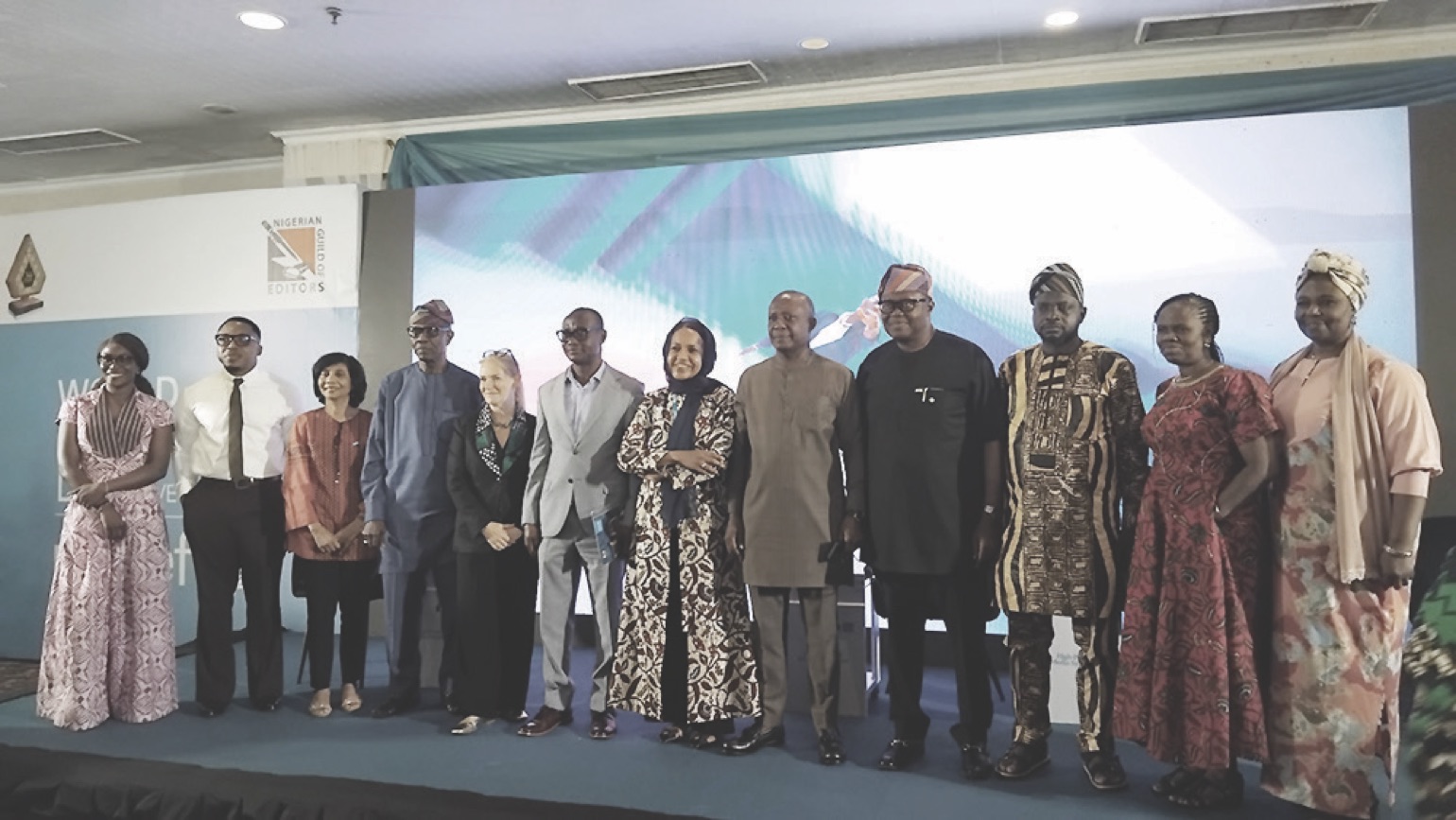
The symposium, held on November 25, at Ikeja-Lagos, was jointly organised by the United Nations Children’s Fund (UNICEF), the Nigerian Guild of Editors (NGE) and Diamond Awards for Media Excellence (DAME).
With the theme, “Equipping the Nigerian Child for the Future: How Prepared Are We?” participants all agreed that the country must accelerate actions to safeguard children amid rising insecurity and declining social services.
The high-profile symposium, which also had in attendance, secondary schoolchildren, parents, students from Nigerian Institute of Journalism (NIJ) and their academic staff also included editors from all platforms and the Managing Director and Editor-in- Chief, The Sun Publishing, Mr. Onuoha Ukeh, who is also the Secretary of NGE.
It also released the “Nigerian Child 2025 Report,” which shows that two out of every three children in Nigeria live in multidimensional poverty, lacking access to education, healthcare, nutrition and safety. The report revealed that over half of all children experience some form of violence before age 18, and that one in three-girl is married before reaching adulthood.
UNICEF Nigeria Representative, Ms. Wafaa Saeed, presenting the key findings of the report, called on the media to be a driving force for change. According to her, the data tells us that millions of children are being left behind, but it also shows where progress is possible. “The media can change how we see these children, from statistics to stories of strength and hope. Every time a journalist gives voice to a child, the nation takes a step forward.”
Saeed emphasized that despite progress over the past two decades, millions of Nigerian children remain unvaccinated, face acute malnutrition and struggle with learning, with three out of four 10-year-olds unable to read and understand a simple text. She warned that at the current pace, achieving acceptable outcomes for children will take far too long, urging accelerated action across sectors.
She highlighted that the solutions are known and effective: routine immunisation, quality education, proper nutrition, and strong child protection systems. Investing in these areas, she said, not only saves lives but also lays the foundation for a stronger and more equitable future for every Nigerian child.
“A key part of this effort is strengthening primary health care and ensuring that community health workers are supported and fairly compensated, given their crucial contribution under challenging conditions.”
She also stressed the urgent need for the full implementation of the Safe School Declaration, noting that children’s physical and emotional safety in learning environments is essential for meaningful educational progress. Reflecting on broader global shifts, Saeed observed that Nigeria, like many African countries, is placing greater emphasis on local capacity, local manufacturing, and national sovereignty.
“Encouraging developments include increased investment in locally produced health and nutrition products, which reduce costs, generate employment, and improve access for vulnerable communities.”
Above all, she called for prioritizing the most disadvantaged children, particularly those in underserved regions, and for integrating climate considerations into all policies and programs affecting children.
“Nigeria’s vast potential, its scale, human capital, and the vibrancy of its young population remains a powerful source of optimism and a vital driver of global progress.”
Saeed concluded by underscoring the indispensable role of the media and strategic partnerships in advancing children’s rights and driving the collective action needed to ensure no child is left behind.
Also, President, NGE, Mr. Eze Anaba, earlier in his opening remarks, warned that Nigeria is in a state of emergency, with children facing unprecedented levels of insecurity and deprivation. Anaba said the situation is the worst since the civil war, noting that recent attacks and abductions show a disturbing pattern of children being killed, injured, displaced or traumatised.
He lamented that despite global commitments to child protection dating back to 1954, Nigerian children now face grave threats, with schools once safe spaces turning into targets of violence. With half of Nigeria’s population made up of children, Anaba said the country’s future is at risk.
He highlighted alarming indicators: millions of out-of-school children, widespread insecurity, low vaccination rates, rising child labour, early marriage, and cases of minors being recruited as combatants. These, he stressed, are not just statistics but they lived the reality of children whose dreams are being derailed.
Anaba outlined critical roles for key stakeholders. He urged the media to amplify children’s voices, report with accurate data, pursue solution-driven investigative journalism, and highlight successful interventions. Civil society groups, he said, must continue providing community-level support, generating solutions, and holding institutions accountable. He also commended UNICEF for its consistent partnership with the media.
On his part, Consul General, the Kingdom of the Netherlands in Lagos, Mr. Michel Deelen, said many Nigerian schools lack roofs, water, sanitation facilities, and teachers, describing the situation as unacceptable.
Reaffirming the Netherlands’ support for UNICEF, he said: “As long as schools are not functioning the way they should without roofs, water, and teachers cannot say things are getting better. Education is the engine of national progress, and it must work everywhere in Nigeria.
“The future is bright because the Nigerian child is brilliant and full of potential. Our responsibility, working with UNICEF and the government, is to help create the environment where that potential can truly flourish.”
The mood shifted when schoolchildren performed special rendition and another highlight, from Master Tinafi Akawu, a seventeen-year-old visually impaired coder and child-rights activist, who also rendered, Unstoppable.
Earlier, Akawu, who is also UNICEF ambassador, urged policymakers to adopt technological solutions for school safety, including AI-driven early-warning systems to prevent kidnappings, and called for government-funded digital training for vulnerable children.
“The reality our children face today from flooded schools to relentless insecurity is truly alarming. But technology gives us a real chance to change this story, if we are bold enough to use it.
“Imagine an AI-powered security system that flags kidnapping risks before they happen or digital tools that ensure every child in Nigeria, no matter where they live, can learn and innovate. With the right policies and support, the Nigerian child can be unstoppable.”
At the panel session moderated by health influencer, Dr Chinonso Egemba, popularly known as Aproko doctor, who examined Nigeria’s child-rights challenges and possible solutions, UNICEF Deputy Country Representative, Ms. Rownak Khan, said UNICEF allocates resources strictly based on evidence, noting Nigeria’s wide regional disparities.
She pointed to recent demographic and health survey data showing that while almost 90 per cent of Lagos households have access to safe water, only three percent do in Kebbi State. “We invest where the data tells us children are most deprived. A child in Kebbi or Maiduguri deserves the same chance as a child in Lagos, and evidence guides us toward those who need support the most.
“None of us chose where we were born, and no child should suffer because of geography. Our work focuses on ensuring that every Nigerian child can reach their full potential today, not just in the future.”
According to her, UNICEF focuses heavily on northern states due to higher deprivation levels but also works in the south through policy and technical support. “Where we invest depends on what the data tells us,” she said, adding that Nigeria’s progress has global implications because of its large child population. She stressed that all children, regardless of birthplace, deserve equal opportunities.
In her submission, the Deputy Director, Federal Ministry of Women’s Affairs, Mrs. Mariam Fitumi Shaibu, outlined government programmes targeting out-of-school children, including the National Commission for Out-of-School Children, the Adolescent Girls Initiative for Learning and Empowerment (AGILE), and the Lumina Project, which links women’s economic empowerment to girls’ school enrolment.
She also announced a National Policy on Menstrual Health and Hygiene, currently before the Federal Executive Council, to reduce absenteeism among girls due to a lack of water, toilets, and private changing facilities while also emphasizing that all government policies are developed jointly with multiple ministries, development partners, and community-based child protection networks.
Director, Public Communication, National Orientation Agency (NOA), Mr. Henshaw Ogubuike, said the Ministry of Information has intensified nationwide sensitisation campaigns on child rights and safety. He said the ministry leverages its state offices and federal information centres to counter misinformation and promote child protection messages.
Senior editor and NGE member, Mr. Ehi Braimah, urged government and development partners to prioritise safe schools, healthcare access, and protection services. He warned that over 800 schools have been shut in parts of the north due to insecurity and criticised states yet to domesticate the Child Rights Act. He said media organisations must interrogate policy implementation, not just policies on paper.
Another NGE member and senior editor, Mrs. Ijeoma Popoola, said the media must also highlight the role of parenting, warning that harmful practices persist at home despite laws. She urged parents to be more intentional about guiding and protecting children.
In his vote of thanks, Chairman, DAME Awards, Mr. Lanre Idowu, called for collective responsibility for the welfare of the Nigerian child. He praised the contributions of media partners, civil society groups, policymakers, development experts, donors, students, resource persons, and UNICEF, noting a shared belief in the Nigerian child’s potential and vulnerability.
Idowu highlighted ongoing initiatives such as the Girls to School Programme and the development of a national policy on menstrual health, stressing the need for good governance to reduce existing challenges. He underscored the vital role of the media as agents of change, urging more nuanced, analytical, and solution-driven reporting beyond episodic coverage and negative headlines.
He called for dedicated child-focused desks in newsrooms and commended the NGE for renewed commitment to child-related issues. Idowu reminded stakeholders that governance responsibilities span federal, state, and local levels, and encouraged accuracy, context, and credibility in public communication.
Addressing young participants, he urged them to use their voices, write, and contribute to national discourse. He also emphasized the importance of responsible parenting and mindful-media consumption by children.
He concluded by calling for sustained public-interest reporting and stronger policy action to ensure improved attention to issues affecting the Nigerian child ahead of next year’s celebrations.